#76 Nursery, Fertilizer & Irrigation (January/February 2024) 
Slugs are Snails Too

By: Darcy Yogi
Most people don’t think much of snails and slugs, other than “gross.” Many species we see around our communities today are invasive pests and major vectors of the Rat Lungworm parasite (Angiostrongylus cantonensis). However, a morning spent with Dr. Norine Yeung, Bishop Museum Malacology Curator, quickly dissolved this frame of thinking. Dr. Yeung emphasizes that slugs are shell-less snails, therefore anything we deploy for pest slug control will directly affect native snails too. So, it’s critical to be aware of what snails are around you before you control pests in your nurseries and backyards.
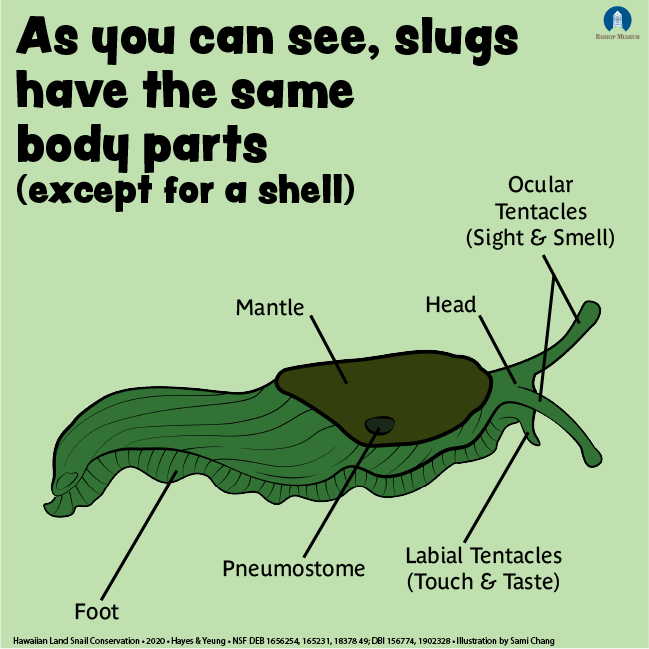
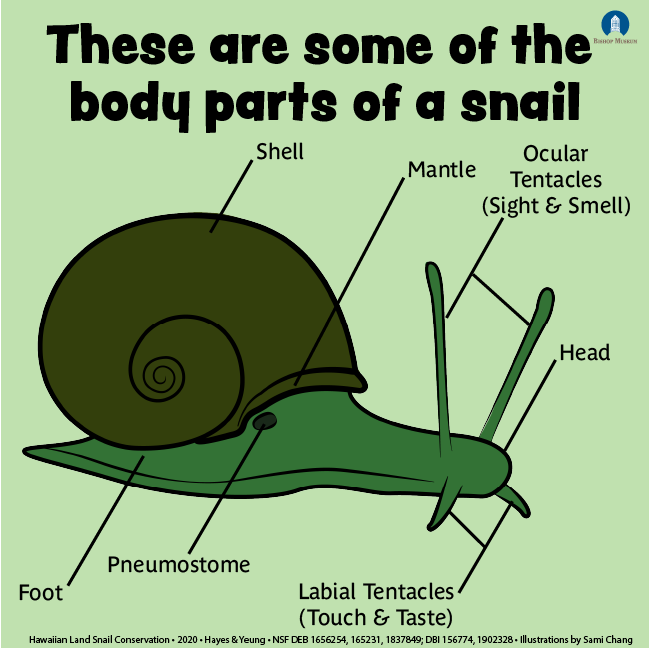
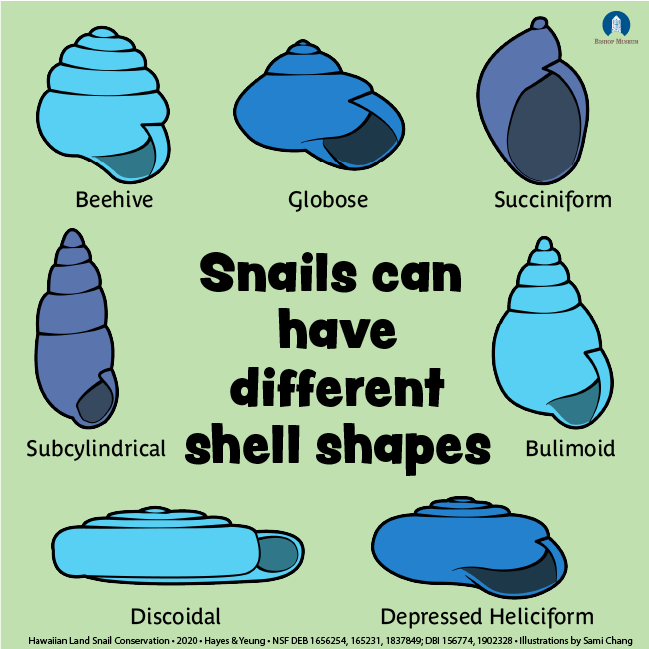
Figures 1-3. These images show how snails can have shells of many shapes and sizes to no visible shells at all. However, it’s important to know that regardless of shell, snails and slugs have the same body parts. Illustration source: Sami Chang.
We can’t conserve what we don’t know
Dr. Yeung has spent her career passionately working to conserve Hawaiʻi’s native land snails, which along with other mollusks have the highest recorded extinction rate of any major animal taxonomic group in the world. Hawaiʻi is no stranger to this kind of loss being a biodiversity hotspot, which means high extinction rates and high species diversity. From 21 colonization events, Hawaiian land snails went through a spectacular radiation over 500 million years and exploded to over 750 known species.
Unfortunately, Dr. Yeung admitted that our snails are going extinct faster than we can study them with about 500 species already listed as threatened and endangered. Regardless of that fact, she has been a part of the Hawaiʻi land snail survey for over 10 years and their findings amazed everyone. Before 2012, it was falsely assumed that 90% of all native land snails were extinct but after surveying that number was brought down to 65%. By 2023, their team detected over 350 known and some new native species many of which remain highly threatened.
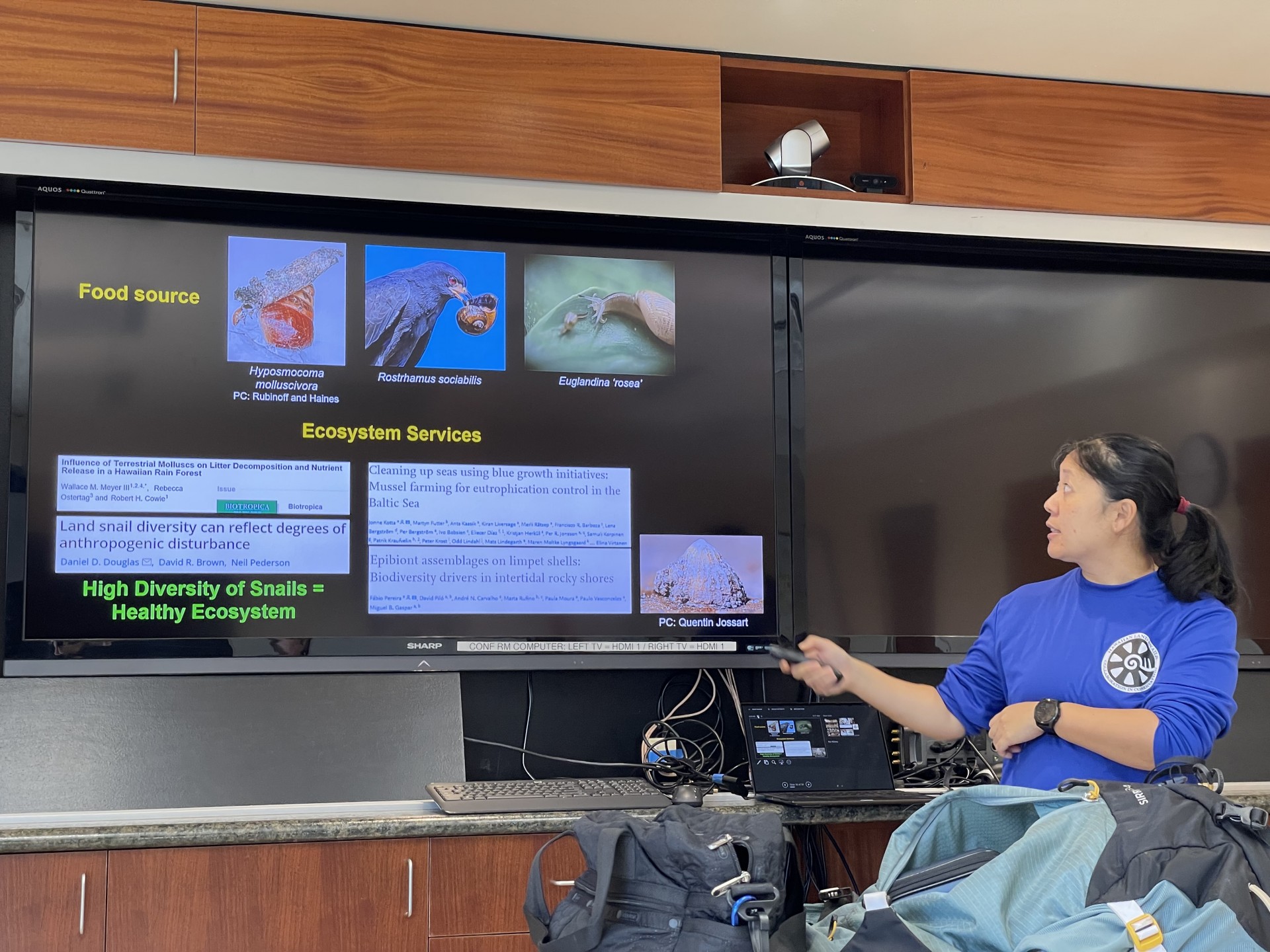
Figure 4. Dr. Norine Yeung presented at her snail workshop on the importance of our native land snails or kāhuli. She emphasized how we cannot begin to talk about invasive snails without understanding our native snail biodiversity first. The photo shows her highlighting native snails as a food source for the invasive and failed bio-control, rosy wolf snail (Euglandina rosea). Source: Darcy Yogi, BIISC.
Losing ecological and cultural connections
Our land snails live in the forests, in the canopy, and under the leaves. Unless we know where to look, then we may never see them. This almost “invisible” loss of some of our tiniest forest creatures makes it harder for people to grasp the enormity of the impact. Our native snails are just as beautiful as they are functional because they perform vital nutrient cycling for our low-nutrient tropical forests. Native snails are essential cleaners of the forest, scraping off fungus, breaking down organic waste, and excreting “fertilizer packets.” Through those processes, snails have helped to maintain the health of the forests and down to the reefs.
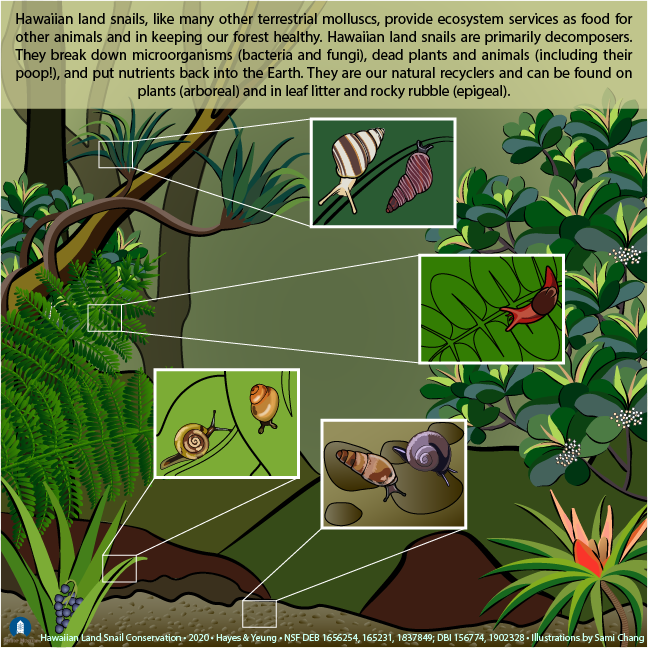
Figure 5. Our native land snails live in the highest canopies of our native forests, down to sub-canopy ferns and shrubs, and even within the herbaceous and forest floor layers. This has implications for invasive snail control because our native snails also travel across the forest floor, which puts them at risk of any pesticide or snail bait that is deployed. Illustration source: Sami Chang
When we think about the impact and loss of snails, the ecological losses rival the cultural losses as many people today are not even aware we still have kāhuli or native snails left. This is heartbreaking as snails were once the voice of the forest. Many old stories and songs talk about when snails were plentiful enough to sing in the canopy while the winds sifted through the trees. Their colorful shells were highly prized jewels of the forest as they glistened in the sunlight and their image was often associated with romance. The Hawaiian name kāhuli means to turn or change, which could refer to how it moves, its swirling shell growth, and its ability to change forms. This significance of land snails in Hawaiian culture spotlights the compounding loss of the intimate relationship society once had with our snails.
The native land snails left today face many threats like land use change, pollution, species overexploitation, climate change, invasive species, and disease. However, Dr. Yeung and her team are working hard to conserve these fierce survivors by conducting snail surveys, describing newly discovered species, sharing engaging outreach, and advocating for more conservation funding. Without this kind of work, it is predicted that our native land snails would lose 11 genera and about 100 species within the next 5-10 years.
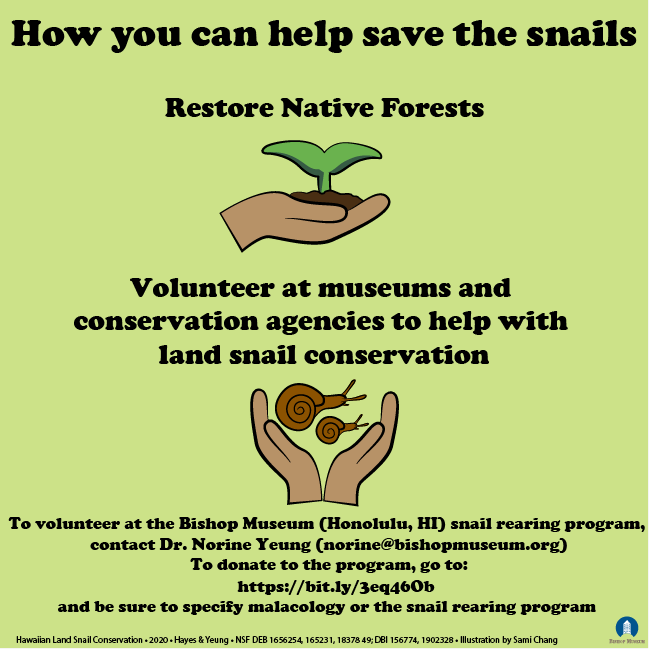
Figure 6. If you’re interested in how you can do more for our native snails after reading this article, please volunteer with your local conservation, forestry, or museum agency. To learn more, visit the Bishop Museum’s Land Snail Conservation Program. Illustration source: Sami Chang.
The rise of invasive snails
Unlike native snails, their non-native counterparts have seen dramatic increases in the number of species and individuals due to the globalization of trade via ships and planes. Most of these new species are unintentionally introduced through agricultural and horticultural products like Christmas trees, ornamental plants, and flower bouquets. Dr. Yeung noted specifically that the worst snail invaders come from temperate areas like Europe and the Pacific Northwest because of the large elevational range these species can inhabit.
Dr. Yeung and colleagues conducted nursery surveys across the State and recorded over 40 non-naive snail species across 62 facilities. They found a maximum of 17 species at one facility, recorded 8 new species to the State, and 27 new island records. Results from these surveys are foundational to understanding a snail pest’s biology, behavior, habitat range, and its impacts on nurseries, native forests, and community health. However, Dr. Yeung notes it has been about a while since the last time these surveys could be funded. So, researchers are having to rely more on community reporting to understand what snail pests are present and where and what their impacts are.
I found a weird snail, now what?
Slugs and snails are common nursery and garden pests with voracious appetites. Unlike our native snails which feed on fungus and detritus, our pest species will munch down on plants leaving behind a gooey slime trail and damaged leaves. Some can carry a higher parasite load than others (like semi-slugs), but you should treat all slugs and snails with caution. We recommend always handling with gloves or tools, never with your bare hands.
If you need help identifying a snail (which includes slugs!), please first check out the Big Island Invasive Species Committee (BIISC) Slugs and Snails Pest page (biisc.org/pest/slugs-and-snails) to view a visual guide of common snail pests. To learn more about priority snails, slugs, diseases, and other pests, you can explore the Plant Pono Pest Grid. Within each pest info page, you can dive into the details of each pest’s impacts, identifying characteristics, distribution, and best management practices.
Like with all integrated pest management, the first step is identifying what pest you’re dealing with. If you are on Hawaiʻi Island, you can submit a clear picture of the specimen at multiple angles with something in the photo for scale like a coin or pencil. The photo can then be submitted to our slug reporting app here. BIISC will work to identify the slugs and get back to you. On other islands, take the animal to your Hawaiʻi Dept. Of Agriculture or Invasive Species Committee. Once you can confirm the snail or slug you’re dealing with, then extension and invasive species staff can help you determine appropriate control methods.
Darcy Yogi lives in Hilo and works as the Invasive Plant Prevention Technician for the Big Island Invasive Species Committee. She helps to support the Plant Pono program, which focuses on preventing the spread of invasive plants and insect pests within the nursery trade on Hawaiʻi Island.
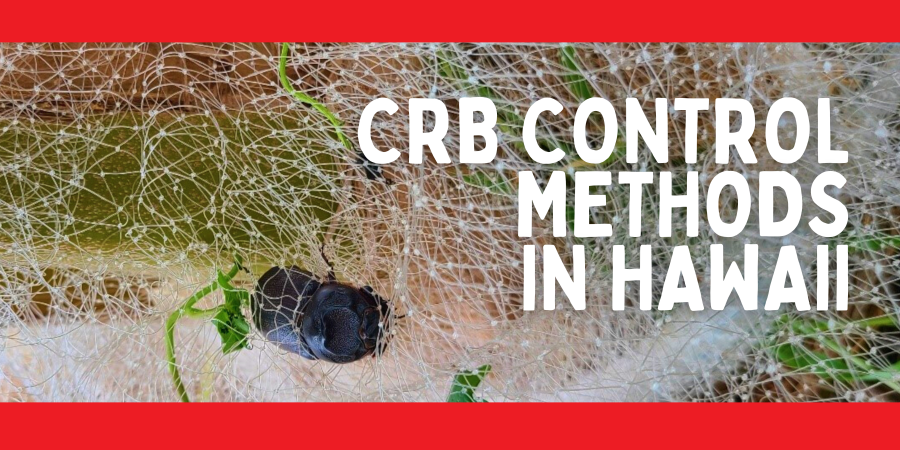
Coconut Rhinoceros Beetle (CRB) management options for Landscape and Nurseries in Hawaii
By: Alberto Ricordi and Joshua Silva
BACKGROUND
This article summarizes the current methods available for Coconut Rhinoceros Beetle (Oryctes rhinoceros), commonly known as CRB, management in landscape and nursery settings in Hawaii. CRB was first detected on Oʻahu in 2013 but since then has become a major pest of coconut and palm species (Figure 1). CRB damage in Hawaii has been reported on other hosts as well, such as banana, taro, royal palms, foxtail palms, pigmy date palms, hala, and vegetables. CRB eat the meristem (e.g., growing tissue) located in the middle of the palm crown, causing either leaf damage or possibly complete crown death. Management of CRB can take an integrated pest management (IPM) approach of various preventative, cultural, physical, biological, or chemical practices. Management focuses either on the palm tree to target adults (e.g, insecticide sprays), or on mulch piles that serve as breeding sites for CRB larvae (e.g., mulch avoidance, heat treatment). However, practices to control CRB can be limited in landscapes and nurseries that do not use synthetic insecticides or need to use mulch for water management. Below is a list of most of the current methods available for CRB control in Hawaii.
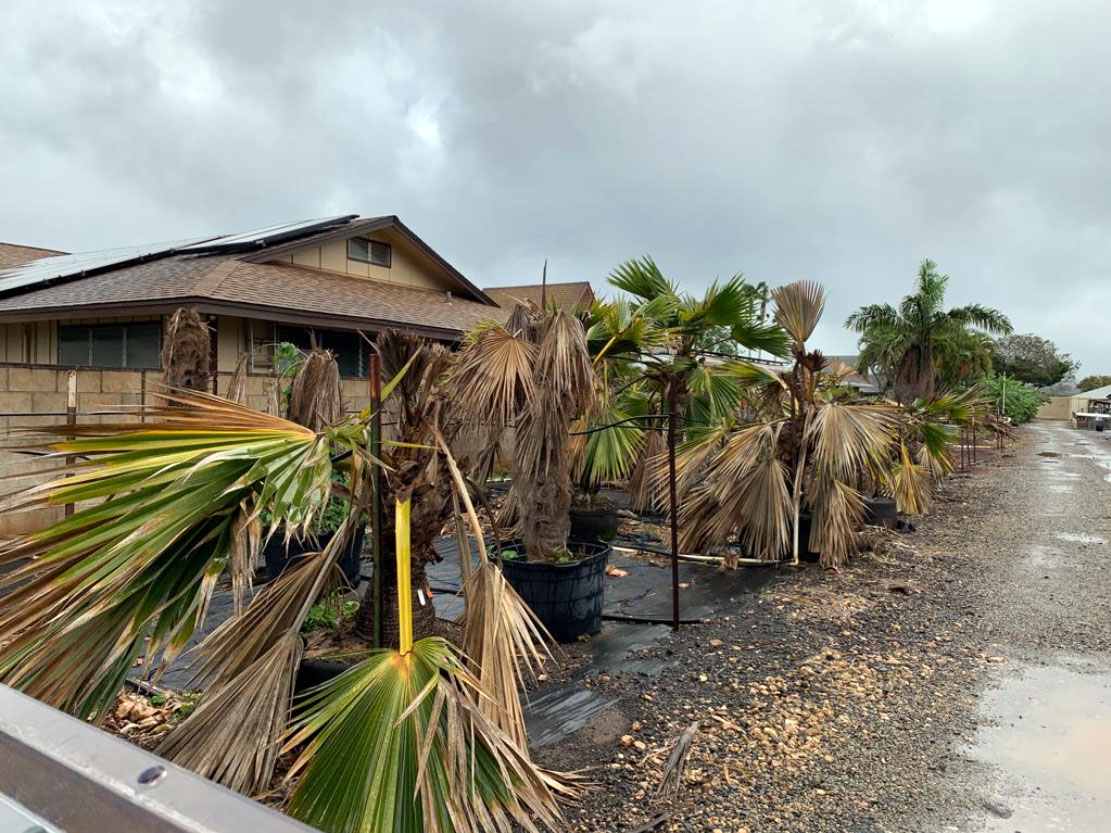
Figure 1. Loulu palm (Pritchardia sp.) damaged by CRB at a nursery in Central Oahu. Photo taken March, 2023.
PREVENTION
Prevent introducing CRB to your landscape or nursery by avoiding the movement of and inspecting:
- mulch
- potting mix
- plants
- and any other breeding or host material entering your property.
The mulch treatments can be categorized into three levels (adapted from CRB Response – Hawaii, accessed 2023):
Best: Incineration, heat treatment, fumigation, and/or chipping
Intermediate: Grinding, submersion, and/or manual Search
Minimal: Spread thin, and/or till in
Alternatives: Water-permeable weed mat, landscaping rock, gravel, rubber chips/pellets, and recycled asphalt gravel are a few common choices. For water retention, products that are incorporated beneath the soil surface work best. Water retention crystals hold much more water than mulch and are not very expensive.
Some of these treatments may be more practical than others for landscape management and nursery operations. Grinding green waste is common practice in tree work and will kill some CRB but kill rates have not been tested. Finer (smaller particle size) grinding is more likely to kill more CRB (CRB Response – Hawaii, 2023).
Digging through the material and searching for CRB is an effective way to monitor mulch piles. However, it is not a reasonable method for eradication of eggs and small larvae, which are very small and easy to miss. However, digging through the material and rotating if every 4 months is an effective way to monitor piles and eradicate large larvae before they become adults, since the eggs and small larvae will most likely grow to 3rd instars (approximately 2.5”) and therefore be easier to find.
Spreading mulch and compost thinner than 2 inches dries out the material faster and allows predators (chickens and mongoose) to find CRB (Figure 2). If the material stays moist or is irrigated this is not a treatment for CRB. Continuous addition of thin layers of compost might eventually build up the amount of organic matter in the soil, increasing its potential as a CRB breeding site.
Tilling material into soil reduces the scent, access, and calories per volume available to CRB. The smaller the organic component of the soil is, the lower the attractiveness will be to CRB.
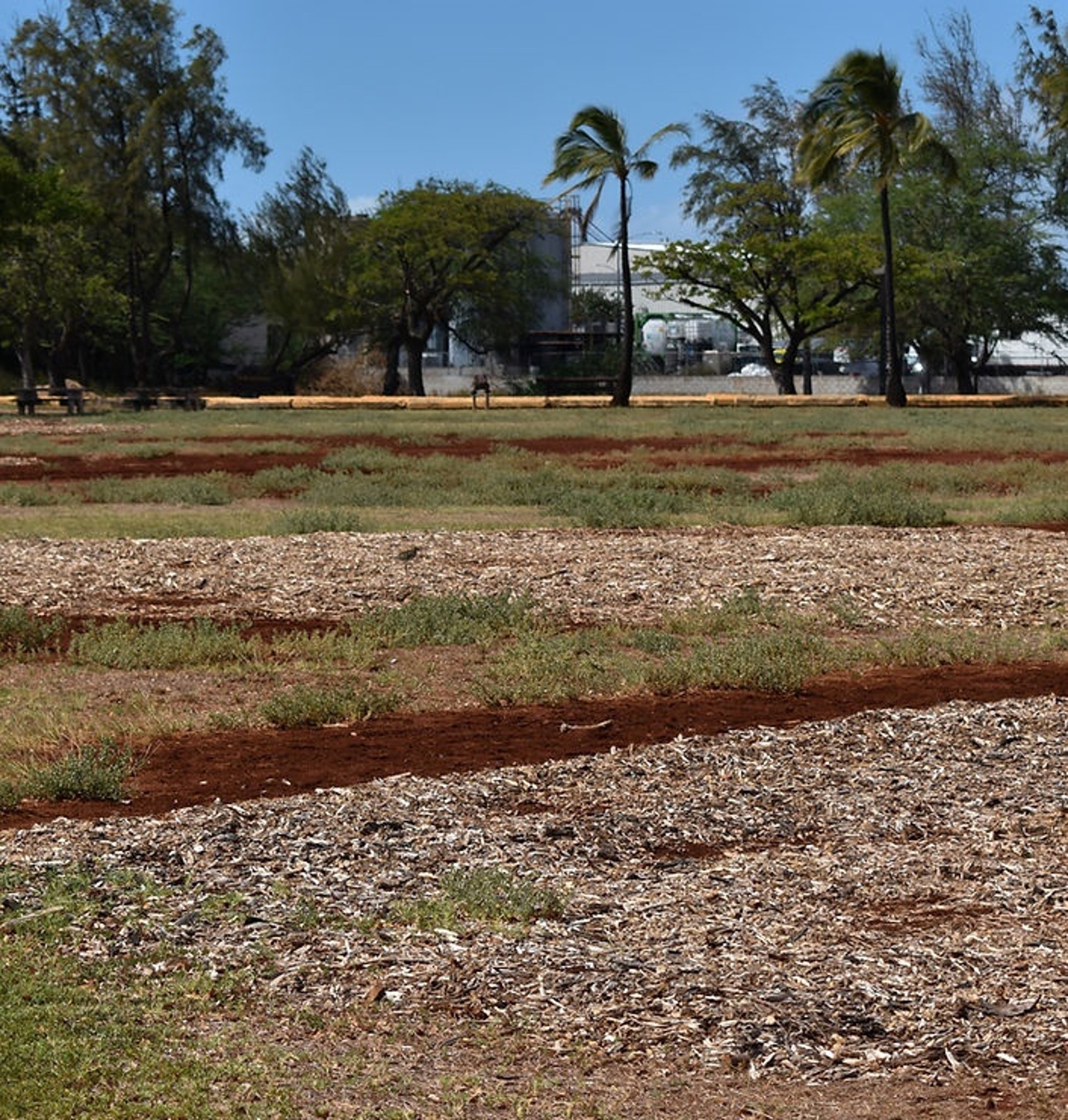
Figure 2. Mulch spread thin (source: CRB Response Team)
NETTING TYPE, SIZE
Netting is a physical IPM practice that can trap and kill CRB adults on trees and mulch piles. Netting has been used in other locations such as Guam and India to catch or deter CRB (Moore et al. 2014, Sujithra et al. 2022). Monofilament netting is preferred for its flexibility, strength, and thinness to catch CRB. Netting of ~0.33mm thickness with ½” x ½” square or side measurements effectively catches CRB with minimal wrapping (Fig. 3). Larger nets (e.g., ¾” or 1” side measurements) can also be effective but require multiple wrappings to overlap net openings. Although not an exhaustive list nor an endorsement, Lee Fisher Fishing Supply or Memphis Net & Twine are two example companies where monofilament netting of this size can be purchased.
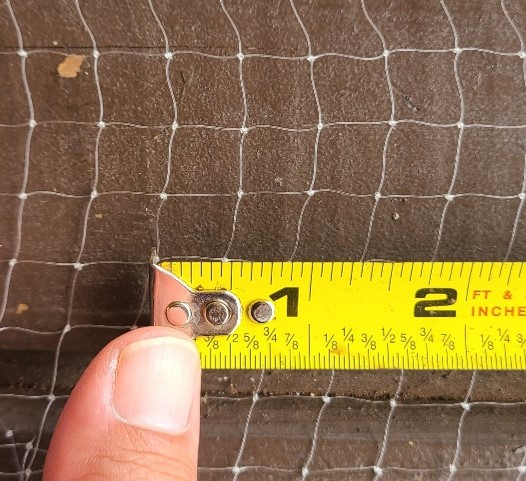
Figure 3: Netting size (Source: Silva, 2023)
NETTING TREES
Netting coconut and palm trees can prevent CRB from damaging the plant and is most feasible for low-bearing trees that can be easily managed. Here are some tips to net trees effectively.
- Use the appropriate type of net and size described in the previous section (monofilament, ½” square eye).
- Trim off old branches or flowering parts that may tangle the net during the wrapping process.
- Utilize a technique that fully covers entry points and prime feeding zones (Fig. 4). Prime feeding zones are typically between the lowest/oldest and youngest fully-expanded leaf frond.
- One easy method is to simply wrap a bundle of net around the inner crown, weaving up to the next frond layer after wrapping the lower layer about twice (Fig. 4). Depending on the width of the net, a typical good net length to measure is approximately twice the height of the feeding zone needing protection. No zipties are required, as zipties can create gaps as the coconut fronds grow and expand (Fig. 5). Here is a QR code for a video with more information on this technique.
- Other techniques include the Bow-Tie method developed by the University of Guam (2015) and netting the whole tree. However, we have not evaluated the effectiveness and labor of these methods yet.
- Ensure no gaps are in the net wrapping (Fig. 5).
- Keep the net “fluffy”. This will increase the likelihood of tangling and catching CRB.
- Readjust the net wrapping at least monthly. The coconut or palm will continue to grow, creating gaps in the wrapping. This is one step that can make netting traps very labor-intensive.
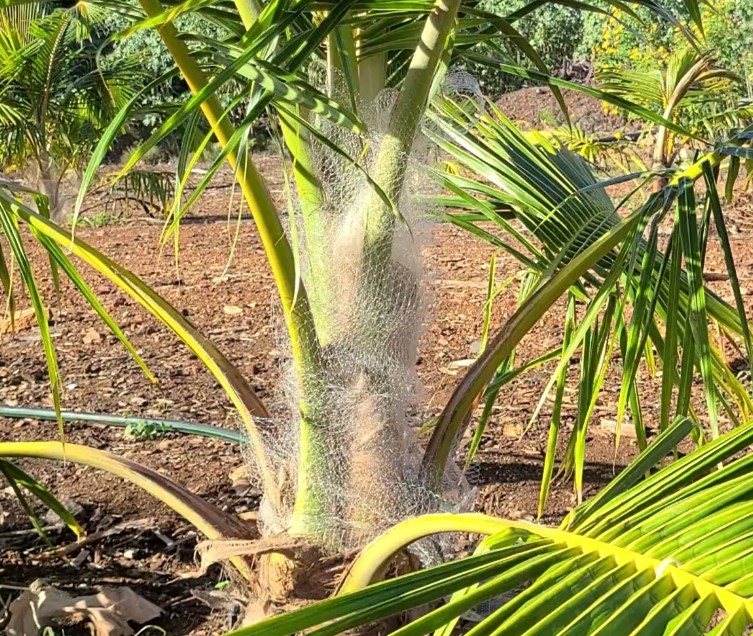
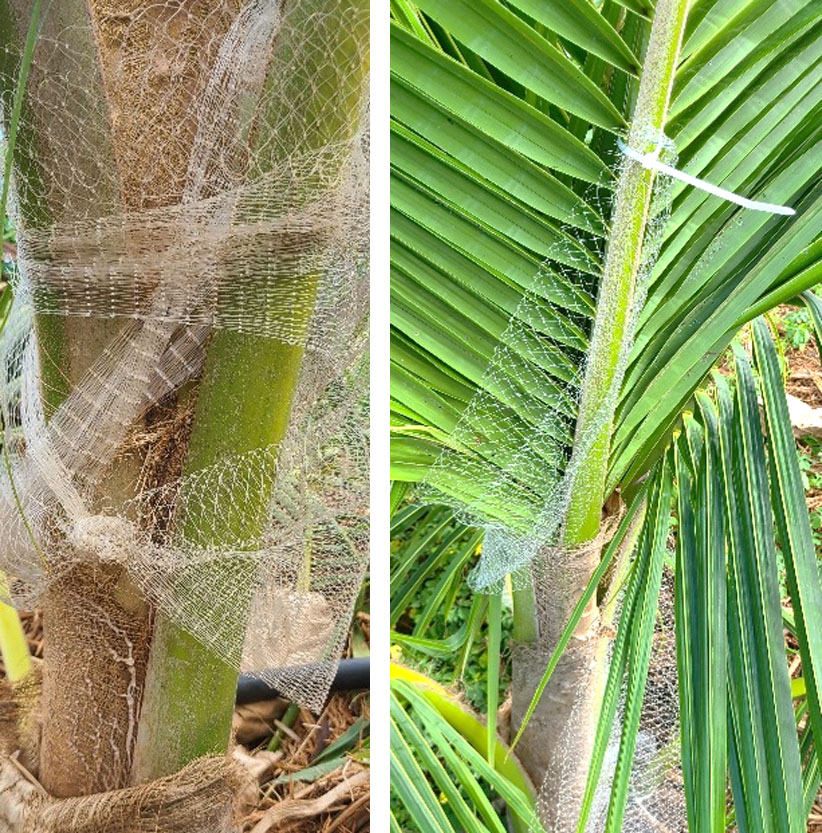
Figure 5: Examples of poor net wrapping techniques leaving exposed frond layers or using fixed zipties (Source: Silva, 2023).
NETTING MULCH PILES
Minimizing mulch thickness via spreading thinly or completely eliminating mulch from your area are critical management practices to prevent the increase of CRB populations as CRB larvae live in mulch piles. However, if you choose to use mulch in your growing areas, netting mulch piles and debris along with other practices (e.g., avoid storing infested mulch, mulch heat treatments, etc.) can prevent CRB from breeding in mulch piles and reduce the population in an area, as a Guam study found netting mulch piles caught 25x more CRB adults than pheromone traps and other trapping methods (Moore et al. 2014).
As seen in Fig. 5, one “fluffy” layer of ½” monofilament netting is an adequate barrier that catches both CRB adults that try to enter mulch piles but also newly emerged adults attempting to leave and feast on coconut trees. Once caught, CRB adults desiccate and die in the sun. During an on-farm trial of netting a fresh 20’x6’x2’ mulch pile, netting the pile caught a considerable number of CRB adults entering and exiting the pile (Fig. 6 and 7).
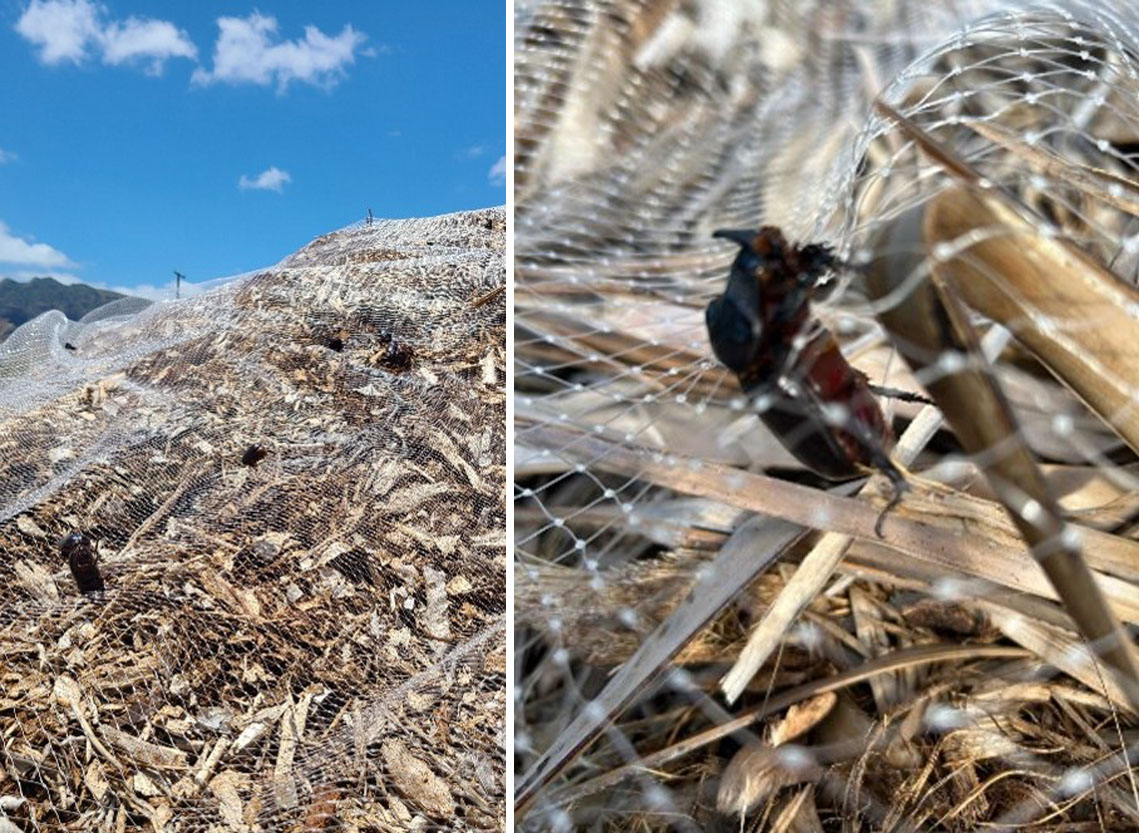
Figure 6: Mulch piles covered with monofilament netting that catches entering and exiting CRB adults (Source: Silva, 2023).
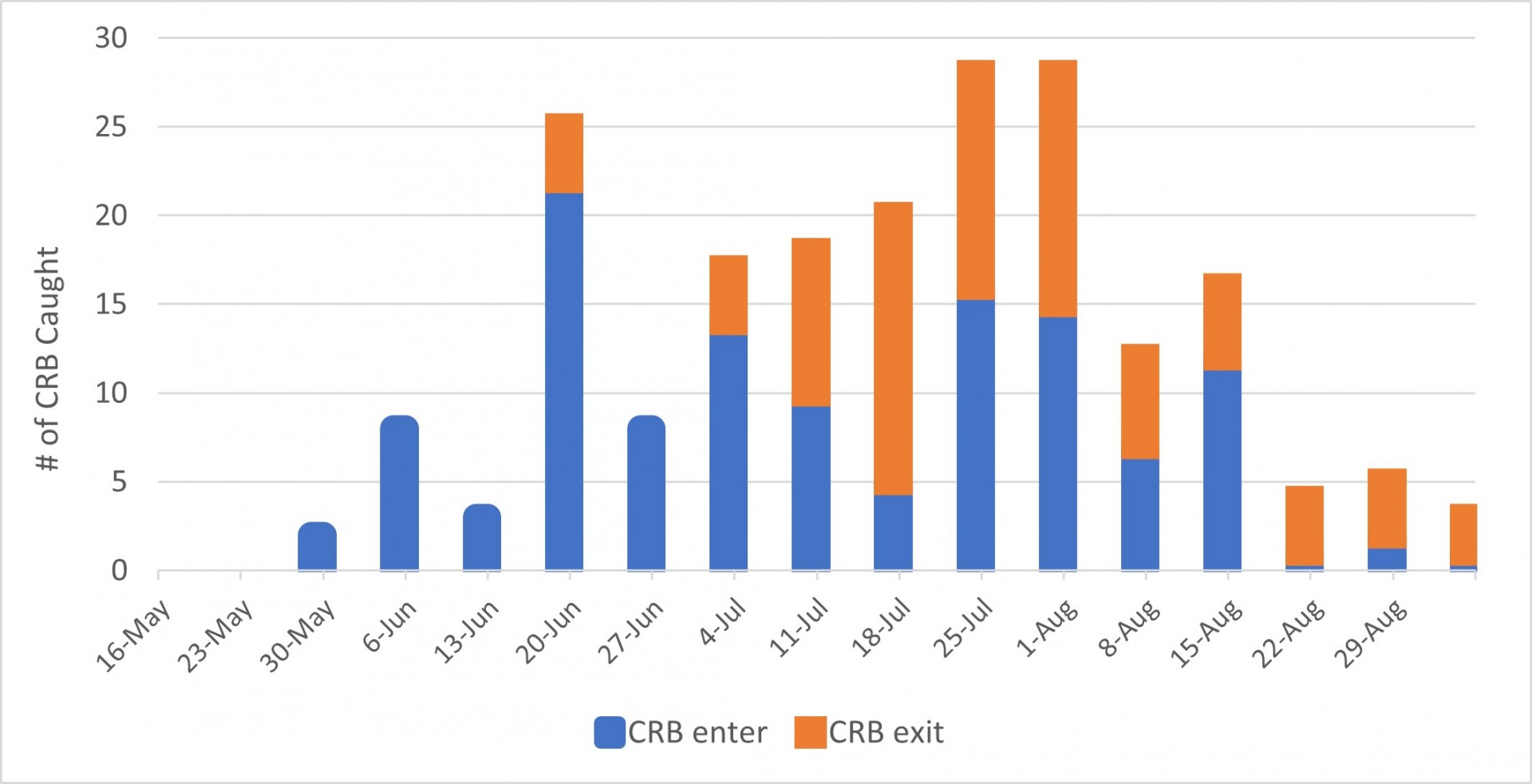
Fig. 6. Netted mulch pile trial (20ft x 6ft x 1ft) monitoring number of CRB caught over 4 months (May 16-Sept 6) (Source: Silva, 2023).
SAND
Sand can be applied to the crown so that it sits between the bases of the fronds surrounding the spear. The efficacy of this treatment has not been tested in Hawaii. Sand requires regular reapplication as it washes away and new fronds grow out from the spear. In India, the use of “botanical cakes” that include neem oil or other botanical compounds have been documented as a method for CRB IPM control (Ravindran, 2019).
SYNTHETIC INSECTICIDES (summary from CRB Response – Hawaii website)
Pesticides may be applied as foliar sprays, systemic injections, or systemic root drenches. Since systemic pesticides require CRB to feed on the palm to die, damage will still occur but will be reduced when there is a reduction in the local CRB population.
Injection:
Soil drench:
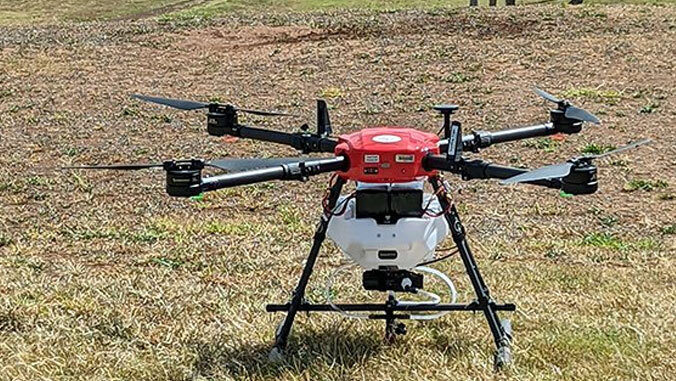
Fig. 7. Drone used for foliar application (Source: UH Press, 2022).
ESSENTIAL OILS (adapted from an article in press for CTAHR’s Hana 'Ai Oct-Dec 2023 Newsletter)
Essential oils have been reported in India to cause mortality of CRB larvae and adults. Preliminary trials on Oʻahu indicated that essential oils have the potential to be used as an IPM practice for CRB management. Below are results from preliminary trials for the use of essential oil on CRB control.
Previous research from India (Ravindran et al, 2019) revealed that essential oils extracted from basil (Ocimum basilicum), eucalyptus citriodora (Eucalyptus citriodora), ajowan (Trachyspermum ammi) and thyme (thymol oil derived from Thymus sp.) caused electrophysiological response in the antennae of O. rhinoceros adults. The behavioral response of beetles was tested in ‘Y’ tube olfactometer having a choice between an odor arm containing essential oil and a control arm without essential oils. Over 70-85% of the beetles moved towards the control arm, indicating the potential of these essential oils to repel CRB. The same essential oils caused over 90% mortality when beetles were placed in containers lined with a 6% essential oil solution for 48 hours (Figure 8).
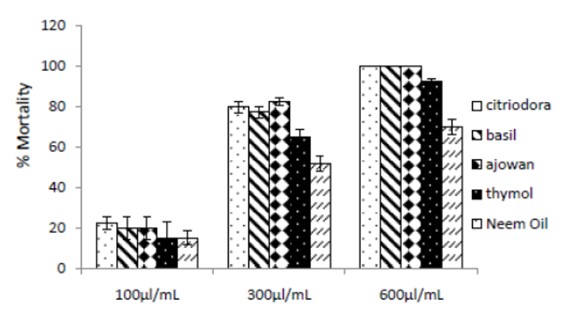
Fig. 8. Contact toxicity of essential oils to adult O. rhinoceros (Ravindran et al, 2019)
Recent field trials demonstrated the potential for essential oils as an IPM tool in Hawaii. On 11/02/2023, several coconut trees with CRB symptoms on the North Shore of Oʻahu were trimmed and sprayed with a solution of 6% Eucalyptus citriodora oil and Excel 90 spreader-sticker at the manufacturer’s recommended rate (1/2 ounce per gallon). A 1-gallon pump sprayer was used to spray directly inside holes bored by CRB and to cover palm frond stems (Figure 9). Two beetles retreated from the crown of one palm. One beetle appeared dead once collected from the ground, while the second beetle was still alive and active. The beetles were transferred to an uncovered container and sprayed with the solution. Both beetles were dead 2 hours after being sprayed with a 6% solution of eucalyptus.
On 11/16/2023, five coconut palms at the Department of Urban Forestry Nursery in Waipiʻo were trimmed and searched for CRB adults. Only one adult was found, placed on a jar, and lightly sprayed with 6% ajowan oil. The CRB beetle sprayed with 6% ajowan oil was reported dead 4 hours after spray.
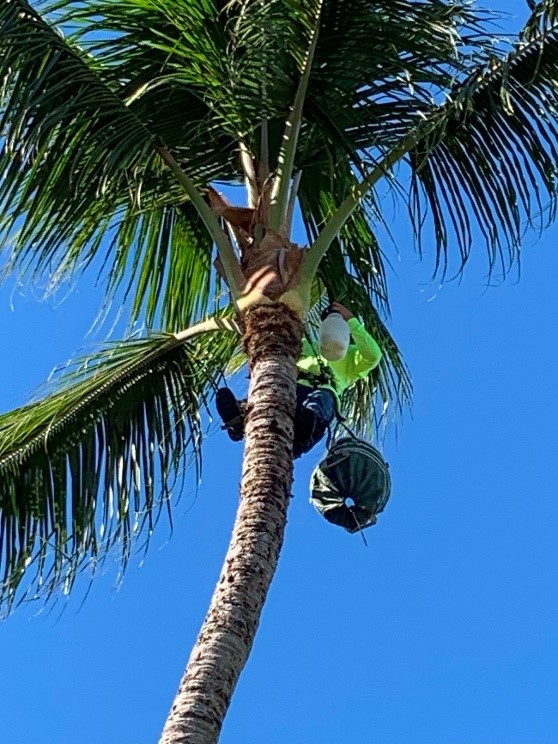
Fig. 9. Tree climber spraying the crown of a coconut palm crown with CRB damage using a pump sprayer.
ESSENTIAL OIL CONTROLLED TRIALS
On 11/07/2023, CRB adults and larvae were collected from a mulch pile in Waiʻanae. The mulch pile was approximately 40” tall, with a mix of chipped wood and leaves. Pitchforks and rakes were used to graze through the mulch. Most of the larvae were found in the bottom layer near ground level, in fine mulch and compost. Adults were mostly found in coarse mulch in the upper half of the pile. The collected CRB were kept with mulch, overnight, indoors, in coolers and buckets.
Adults were sorted and placed in containers for treatment approximately 18 hours after collection (Figure 10). At this point, less than 2.5% of adults (1 of 40) and larvae (2 of over 100) were dead (note: most of the dead specimens had signs of injury from collection).
- Control (tap water only)
- Basil essential oil 6% + spreader-sticker
- Eucalyptus citriodora essential oil 6% + spreader-sticker
Each container was treated with 3 sprays of the respective solution. Beetle mortality was assessed at 5, 10, and 30 minutes, and 1, 2, 3, 4, 24, and 48 hours after treatment. On 11/09, 48 hours after the initial treatment, the beetles were treated again. They were transferred to a clean container, sprayed 5 five times to ensure the beetles were coated with the solution, and then transferred to the same container they were kept before, with clean mulch from the same mulch pile added to the containers. This was to simulate a beetle fully coated with the solution that retreated from the bored hole in the coconut crown then hid into mulch. The beetles were evaluated 3 hrs, 24 hrs, and 96 hrs after treatment.
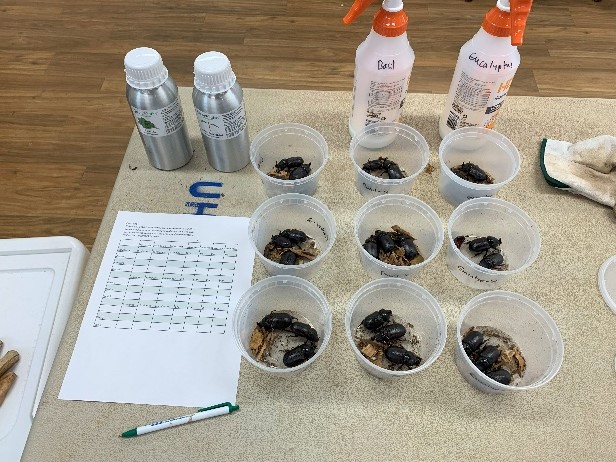
Fig. 10. Trial setup.
Basil caused beetles to become very agitated when sprayed with basil solution. Click here to see video, control is top row, basil is middle, eucalyptus is bottom row. However, all beetles remained alive 48 hours after the first treatment. This was unexpected since previous research and preliminary field trials indicated that beetles were supposed to die within 2 to 48 hours. One hypothesis is that beetles were not sprayed with enough solution to cause their death, or a higher concentration is required. After the second and heavier treatment, all beetles in the control treatment remained alive and active after 96 hours. Basil caused a 22% and 66% mortality rate after 24 hours and 96 hours (second treatment), respectively (figure 11). Eucalyptus oil caused only 1 beetle to die 24 hours after treatment. These results indicate that basil essential oil has the potential to be part of Integrated Pest Management for control of CRB in Hawaiʻi, and further studies are necessary to confirm its efficacy and applicability to field use. Recently, commercial products containing herbal essential oils have been introduced in the local trade.
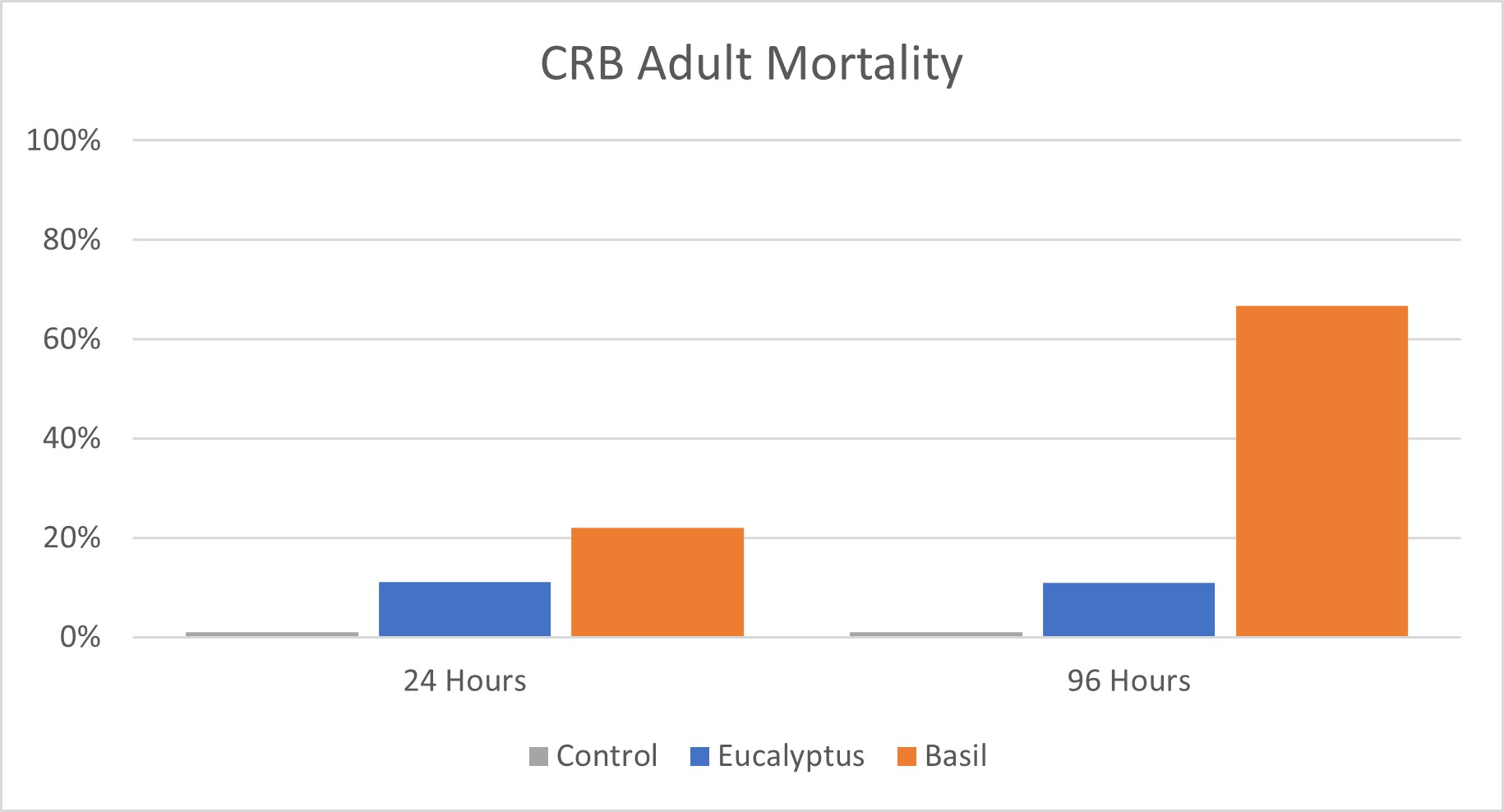
Fig. 11. CRB adult mortality 24 and 96 hours after second treatment.
SUMMARY
In summary, currently available IPM methods include:
- Prevent movement of infested material and inspect for host and breeding material
- Mulch treatment: rotating, spreading thin, and tilling
- Netting mulch piles and palms
- Chemical control with synthetic insecticides and essential oils
FUTURE WORK
Future research is looking into other biological and chemical approaches to kill CRB and protect coconut and palm trees. These include fungal species like Metarhizium spp. that infest and kill CRB larvae, application and essential oil deterrents, drone application of pesticides, and pesticide rotation studies. Be on the lookout for news of these other IPM approaches in the pipeline.
Acknowledgements:
Thank you to: the Coconut Rhinoceros Beetle Response Team for their support and sharing information regarding net sources; Dr. Aubrey Moore with the University of Guam for providing resources regarding his team’s successful work in Guam; Kyle Bennett (Coconut Landscapes) and Brandon Au and his team from the Department of Parks and Recreation, Division of Urban Forestry, for their support with essential oil field trials.
References:
CRB Response Hawaii, https://www.crbhawaii.org/
DeFrank, Joe and D. Jenkins. UAS (drones) for Agriculture. Workshop at UHM Oahu Urban Garden Center, April 20, 2023. https://www.ctahr.hawaii.edu/defrankj/NON_HOMEPAGE_PAGES/DIA_04232023.htm
Moore A, Quitugua R, Siderhurst M and Jang E. 2014. Improved traps for the coconut rhinoceros beetle, Oryctes rhinoceros. Presentation, Entomological Society of America Annual Meeting, Portland Oregon, November 19, 2014.
Ravindran, P., Subaharan, K., Venugopal, V., Chandran, K. P., Prathibha, P. S., & Sujithra, M. (2019). Essential oil in management of coconut rhinoceros beetle Oryctes rhinoceros L. In Indian Journal of Entomology (Vol. 81, Issue 3, p. 603). Diva Enterprises Private Limited. https://doi.org/10.5958/0974-8172.2019.00136.6
Silva, Joshua. Netting for Physical IPM of Coconut Rhinoceros Beetle. CTAHR Hana Ai Newsletter, Jul-Sept 2023.
Sujithra, M., M. Rajkumar, V., Hegde, P., Subramanian, and G. Govindharaj. 2022. Nylon nets: a simple pest exclusion barrier technique to manage rhinoceros beetle menace in coconut plantations. Int. J. Pest Mngmt.
University of Guam, CNAS. 2015. CRB / Bow Tie Trap. https://www.youtube.com/watch?v=2CSX1p-2kJg
University of Hawaii Press, Aug 9, 2022. Killer drones target fruit tree pests. https://www.hawaii.edu/news/2022/08/09/drones-target-crb/
Alberto Ricordi and Joshua Silva, Department of Tropical Plant and Soil Sciences, Cooperative Extension, Oahu County, CTAHR, University of Hawaii at Manoa
Irrigation Technology
By: Sean Harrington and Lorna Heller
Irrigation technology has evolved over the years to be more efficient and environmentally sustainable. New technologies include weather-based irrigation controllers, efficient spray nozzles and rain collection systems. Upgrading older irrigation systems with these pieces of equipment can help save and evenly distribute water. Even with these new technologies, it is best practice to conduct irrigation audits to ensure the equipment is operating as intended.
Weather Based Irrigation Controllers
Weather Based Irrigation Controllers are recommended by the EPA due to their water savings ability. These devices work by communicating via Wi-Fi with local weather stations to get data that is used to turn on sprinklers when needed instead of always following a timer. This prevents sprinklers from turning on while it’s raining outside for example. These controllers account for temperature, humidity, rainfall, and other information resulting in more efficient water usage and healthier plants.
Efficient Spray Nozzles
Several types of sprinkler nozzles are used in irrigation systems. Spray-type nozzles are popular and found in many irrigation systems today. Because the spray nozzles distribute the water in tiny droplets, there is more surface area that is exposed to the environment. This can lead to higher evaporation rates and wind can carry the water away from the target landscape. This is often seen on sidewalks near turf grass where water is running onto the cement. Other sprinkler nozzles utilize multiple streams that rotate to evenly distribute the water to the landscape. This style nozzle has thicker streams that will lose less water to evaporation and wind. This will also increase distribution uniformity which is a metric of how evenly the water is distributed to the target landscape. Figures 1 and 2 show the difference between spray and rotary multi-stream nozzles.
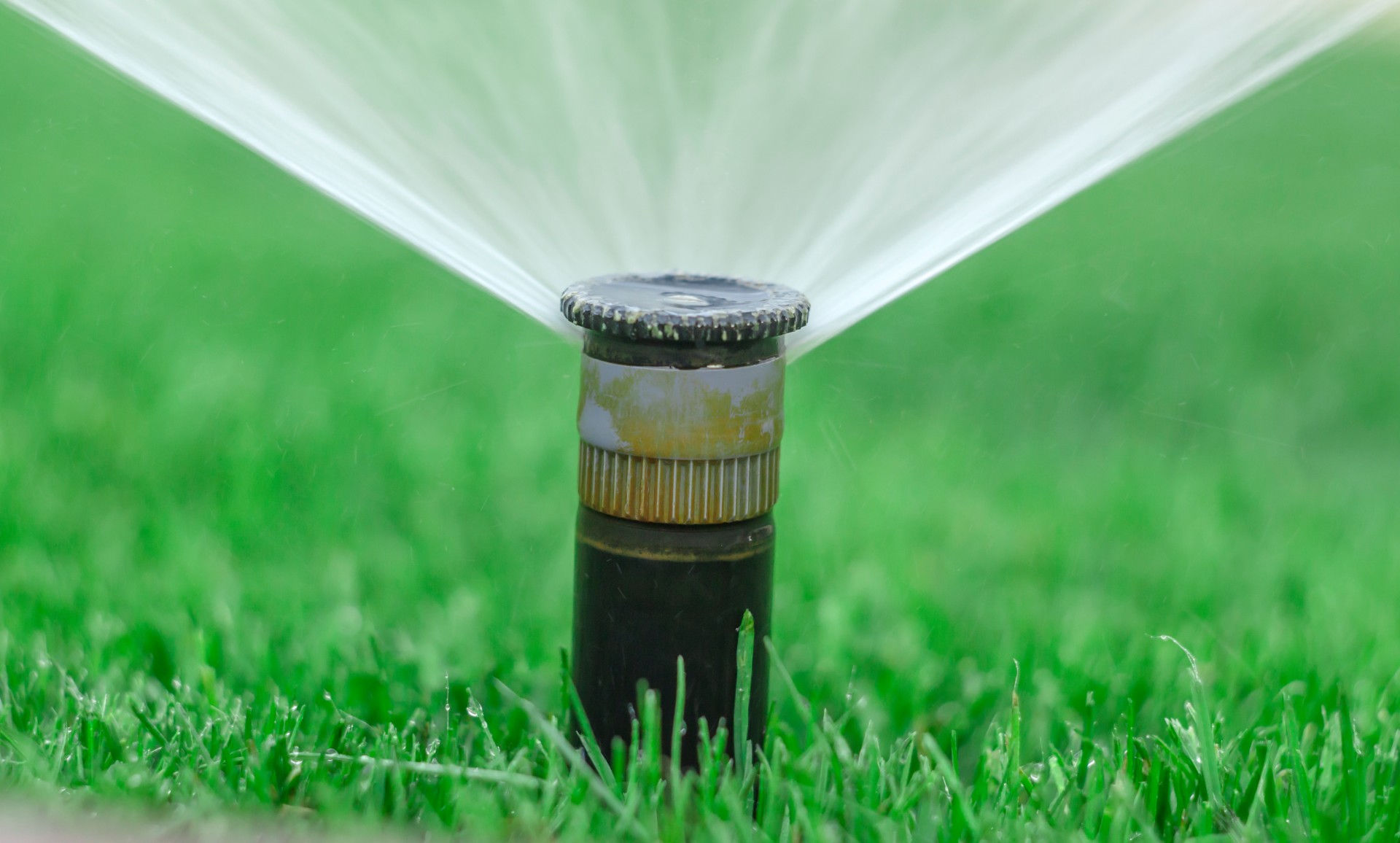
Figure 1. Spray Style Sprinkler Nozzle.
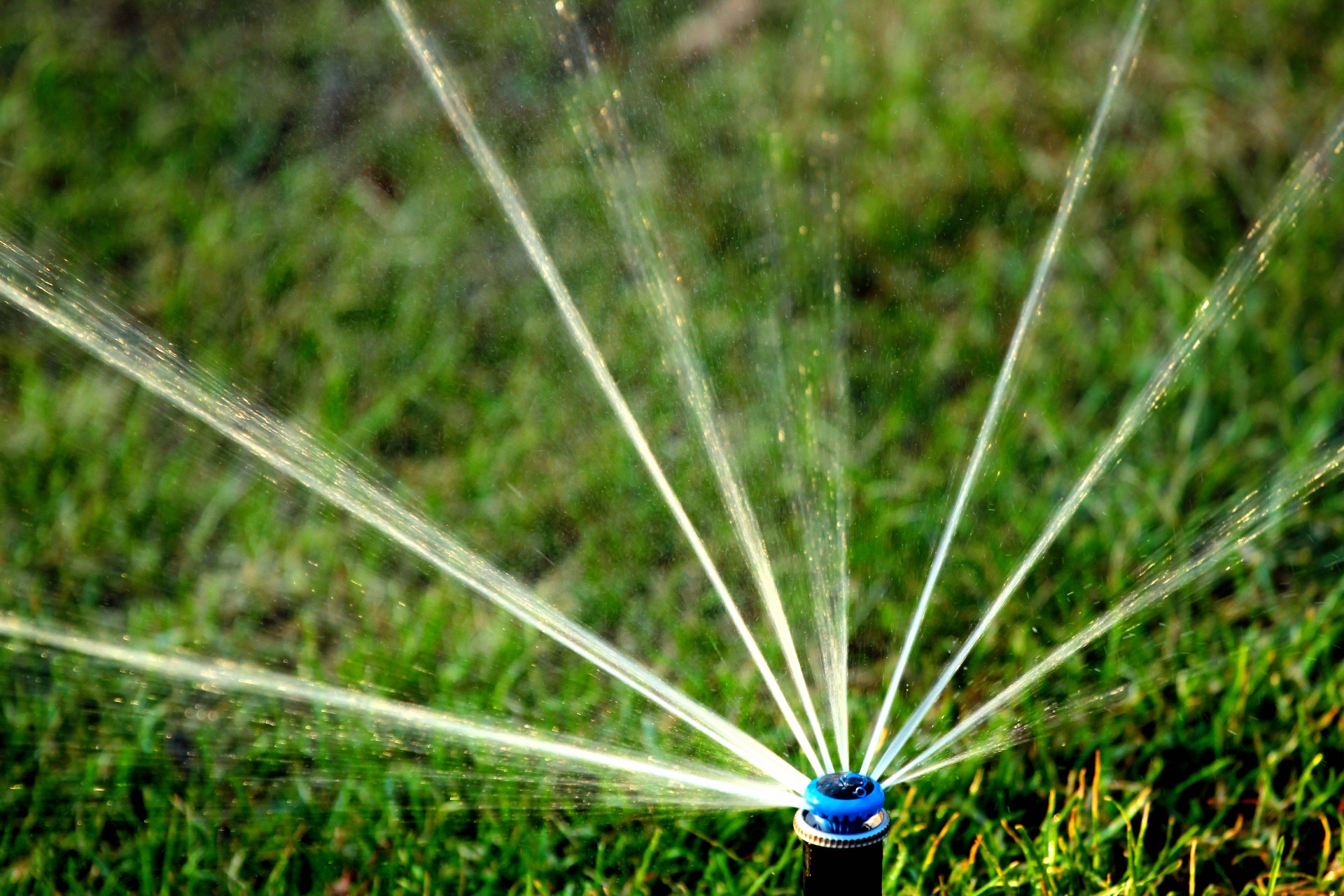
Figure 2. Rotary Multi-Stream Style Sprinkler Nozzle.
Rain Collection Systems
Rain is water that we don’t have to pay for, so it can be a great way to reduce the amount of potable water used for irrigation. A common technique for collecting rainwater is to connect a rain barrel or tote to the downspout of a roof gutter. When it rains, the water on your roof drains to the gutter and then goes into the rain barrel. Rain barrels have spigots near the bottom that can be used to fill watering buckets or attach a hose for watering nearby plants or grass. For larger homes or businesses with a larger roof, you can link multiple barrels together with a siphon or use a larger tote. Rain barrels are usually 45 – 55 gallons while larger collection totes can range from 100 – 2,000 gallons.
Irrigation Audits
While all of these technologies can have multiple benefits to your irrigation system, parts and components can break or malfunction and need to be maintained. Irrigation audits are a great way to ensure that the irrigation system is operating correctly. It is best practice to have a landscape professional assist with the irrigation audit. Audits can vary in scope and detail, but some basics include checking for; leaks, overspray or runoff, distribution uniformity, rain shutoff ability, controller, clean sprinkler heads, seasonal watering schedules, and system operating pressure. Visit the EPA Water Sense website for more information on best practices for irrigation audits.
Summary
Irrigation technology has improved and allows for more efficient watering of landscapes. Upgrading systems can often lead to a favorable return on investment with rising utility costs and conserve a precious resource. To learn more about these technologies, visit the EPA Water Sense website.
The Honolulu Board of Water Supply also offers rebates on certain technologies discussed in this article. For more information, check out the Water Sensible webpage.
Sean Harrington is a project engineer working on the Honolulu Board of Water Supply’s Water Sensible program. He has a background in water engineering and works to quantify water savings for water-efficient technologies. He also networks with various vendors and distributors to discuss existing and future water conservation measure rebates.
Lorna Heller is a Civil Engineer with the Honolulu Board of Water Supply's Water Resources Division, Water Conservation Branch where she helps administer the various programs to institute sustainable water use behaviors and practices across the island of Oahu.
Pig Proof Turf for Hawaii’s Commercial and Residential Landscapes.
By: Dr. Joseph DeFrank
Feral pigs are destructive agents for Hawaiian turf grass in both commercial and residential landscapes. Wild pigs plow through turf in search of grubs and worms to add much needed protein to their omnivore diet, refer to Figure 1. Both homeowners and commercial turf managers have suffered with this constant threat to the integrity of their turf and have little recourse to prevent future damage.
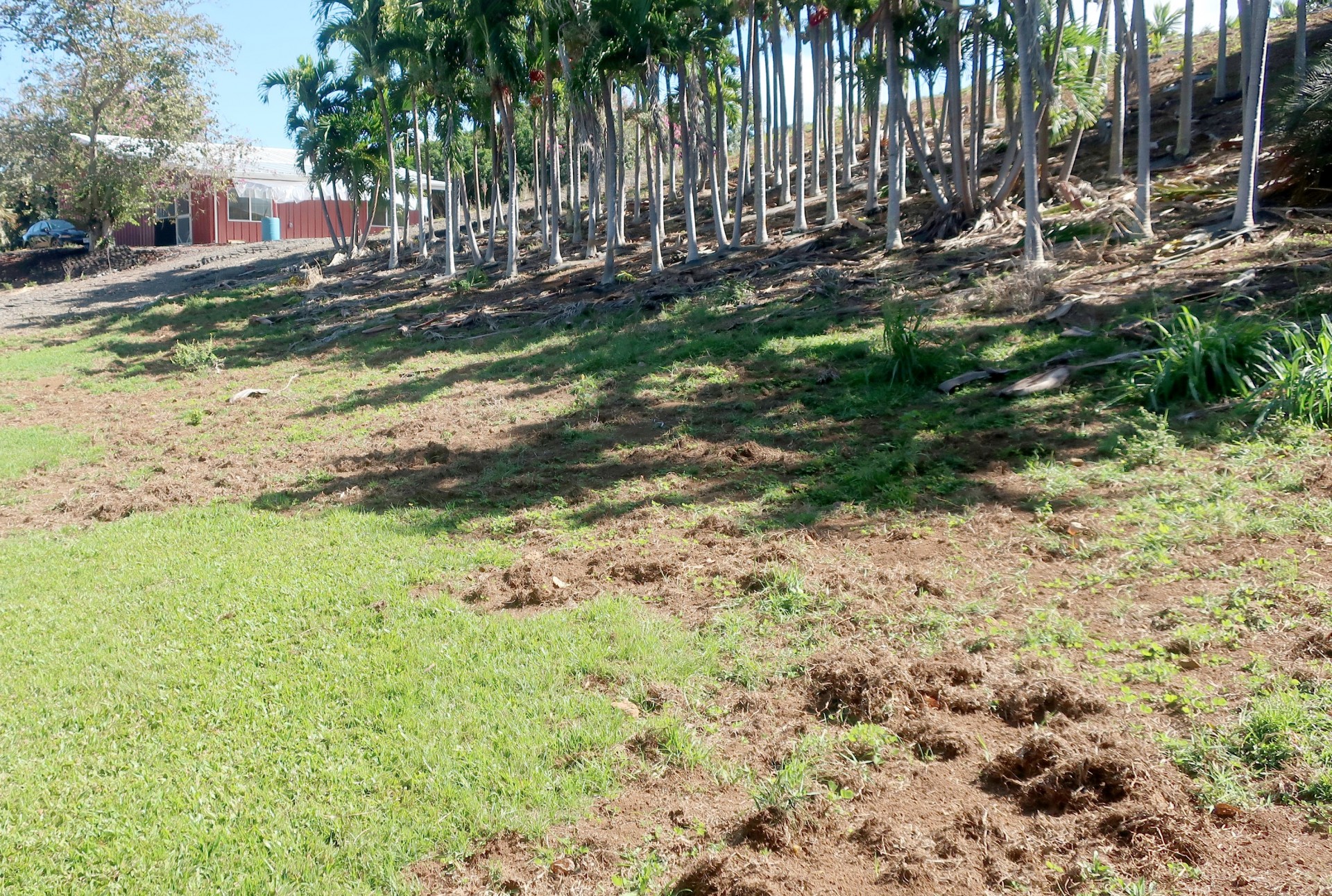
Figure 1. Wild pigs plow through turf in search of grubs and worms. Major repair efforts are needed to return this site to a mowable turf surface. Pig damge stops where gravel-filled geocells start.
As with most useful discoveries, my pig-proof turf revelation was an indirect result of my need for an all-weather work surface for the preparation of large landscape palms for off-farm plantings, refer to Figure 2. Many land managers know that simply laying down a 3-4 inch layer of loose gravel will only provide a measure of clean large equipment operations during dry weather. However, rainy conditions will turn a gravel surface into a muddy mess when large equipment is used to maneuver heavy loads and gravel is pushed into a wet subsoil.
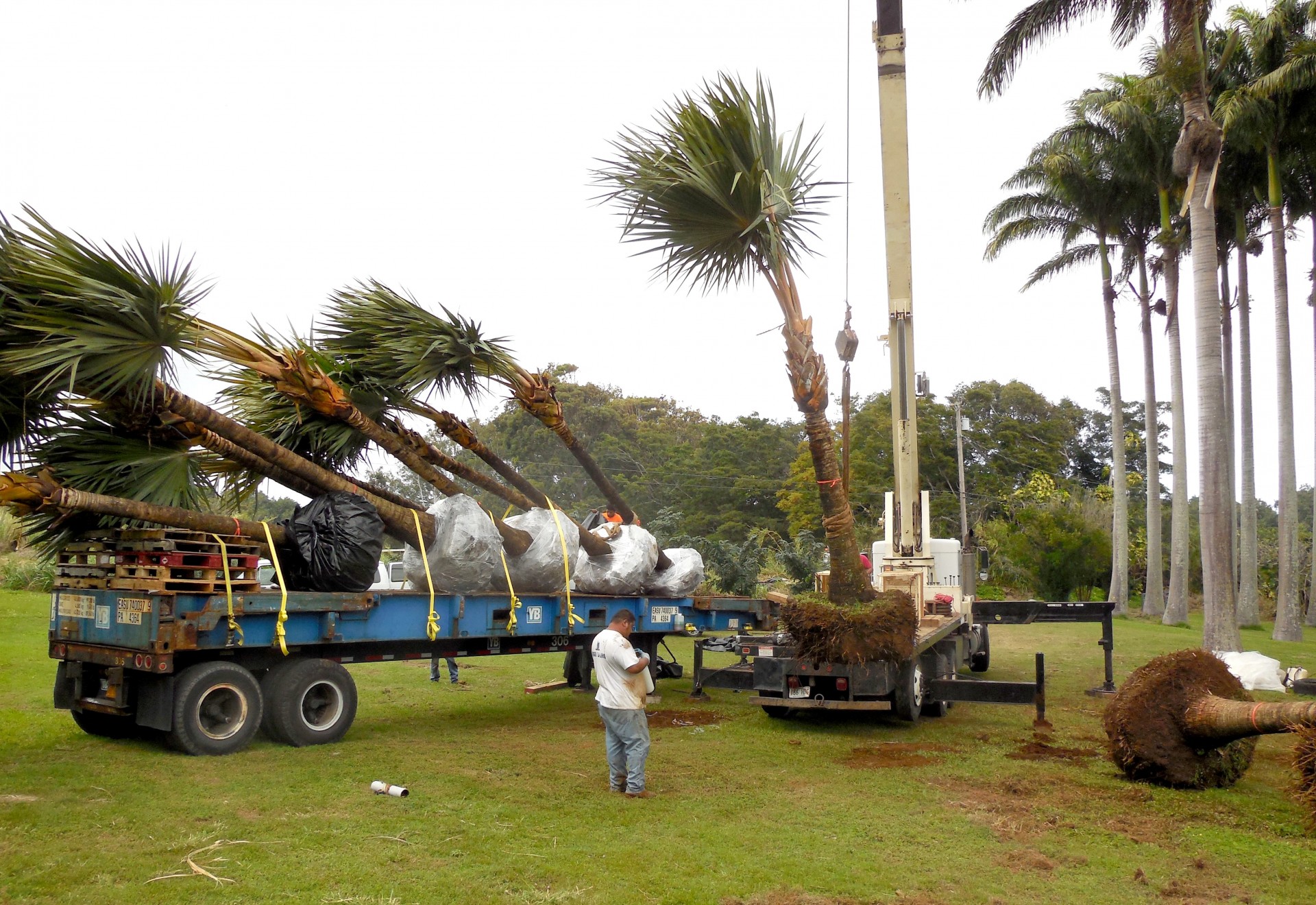
Figure 2. Turf covered gravel-filled geocell areas provide an all-weather surface for the movement of large-scale equipment moving very heavy loads.
Pig-proof turf sites have been installed at my nursery on the Big Island through the use of geocell panels filled with fine gravel with an underlying layer of woven polypropylene fabric (often referred to as “weed mat”). Geocell panels are honeycomb-shaped plastic cellular confining systems filled with aggregates of various materials such as blue-stove gravel or course volcanic cinder. Geocells have many uses in road construction and armoring waterways, allowing for heavy stormwater flow without loss of the gravel layer in-fill, see Figure 3. In 2000, geocell panels filled with sand were used at Waimea Bay on Oahu to build an emergency road across the beach after a dangerous rockslide closed Kamehameha Highway.
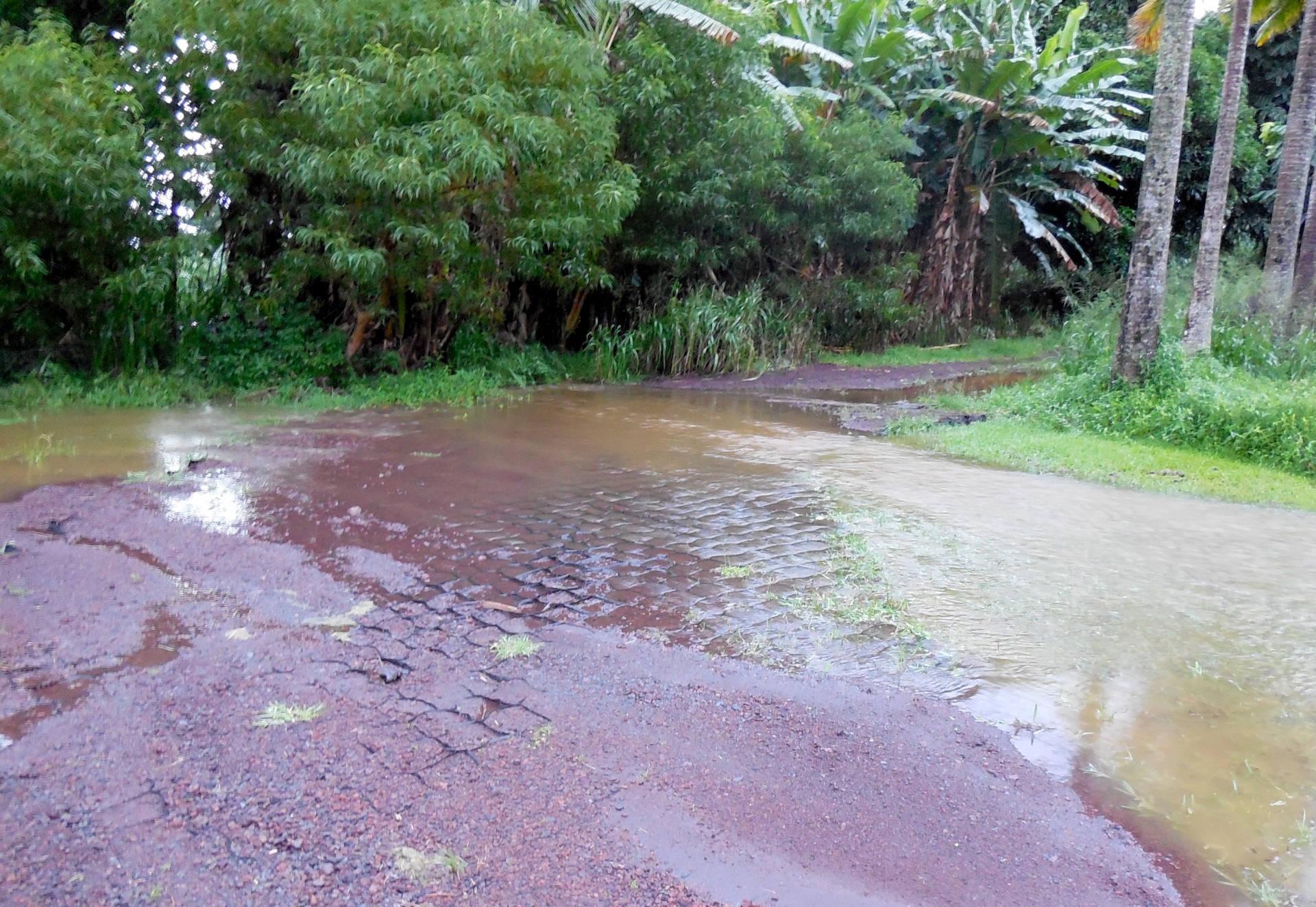
Figure 3. Gravel-filled geocells can accept stormwater with a minimal loss of in-fill while also allowing for immediate vehicular traffic once water levels recede.
My pig-proof turf covered staging area was installed in 2003, refer to Figure 4. Geocells filled with a mix of very fine gravel with larger pieces make a well-drained all-weather work surface and receptive medium for healthy turf growth. In Figure 5, wild pig damage to the turf area (left side of image) stops where the gravel-filled geocells start.
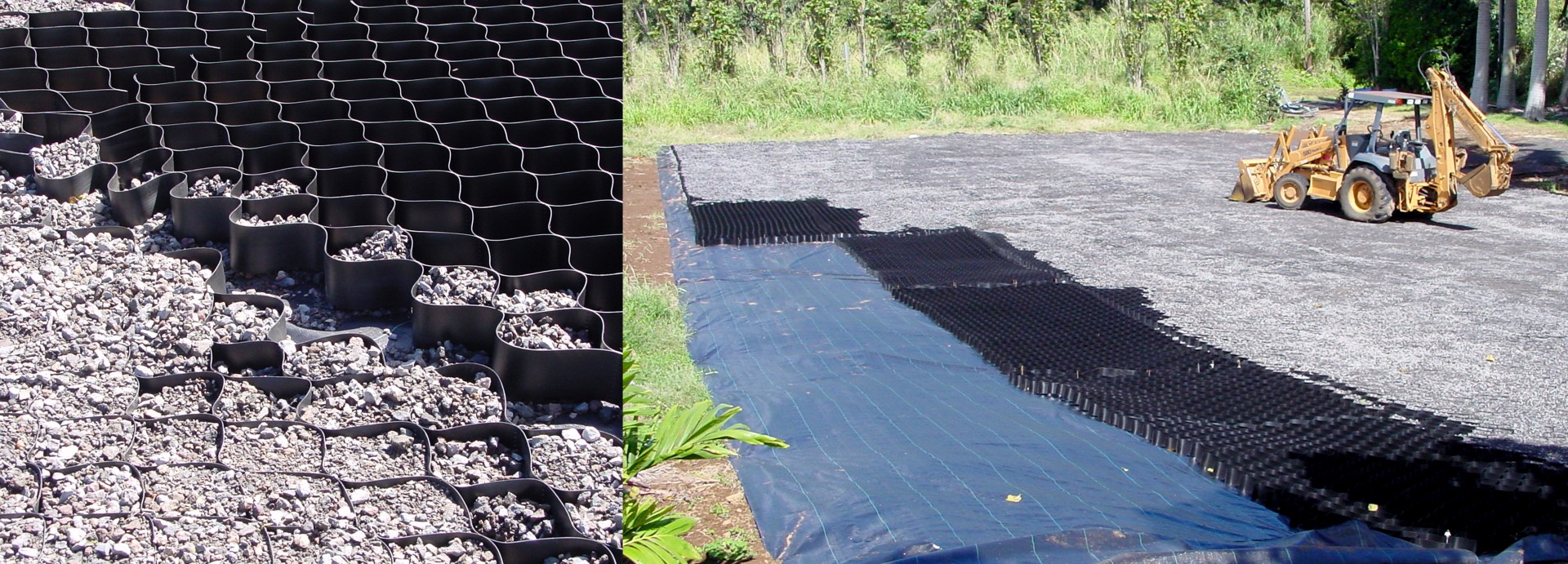
Figure 4. Geocell filled with a mix of fine and coarse blue-stone gravel. Gravel-filled geocell areas, underlaid with woven geotextile fabric, provide the foundation for a pig-proof turf for all-weather parking lots, farmer's markets, and stormwater collection structures.
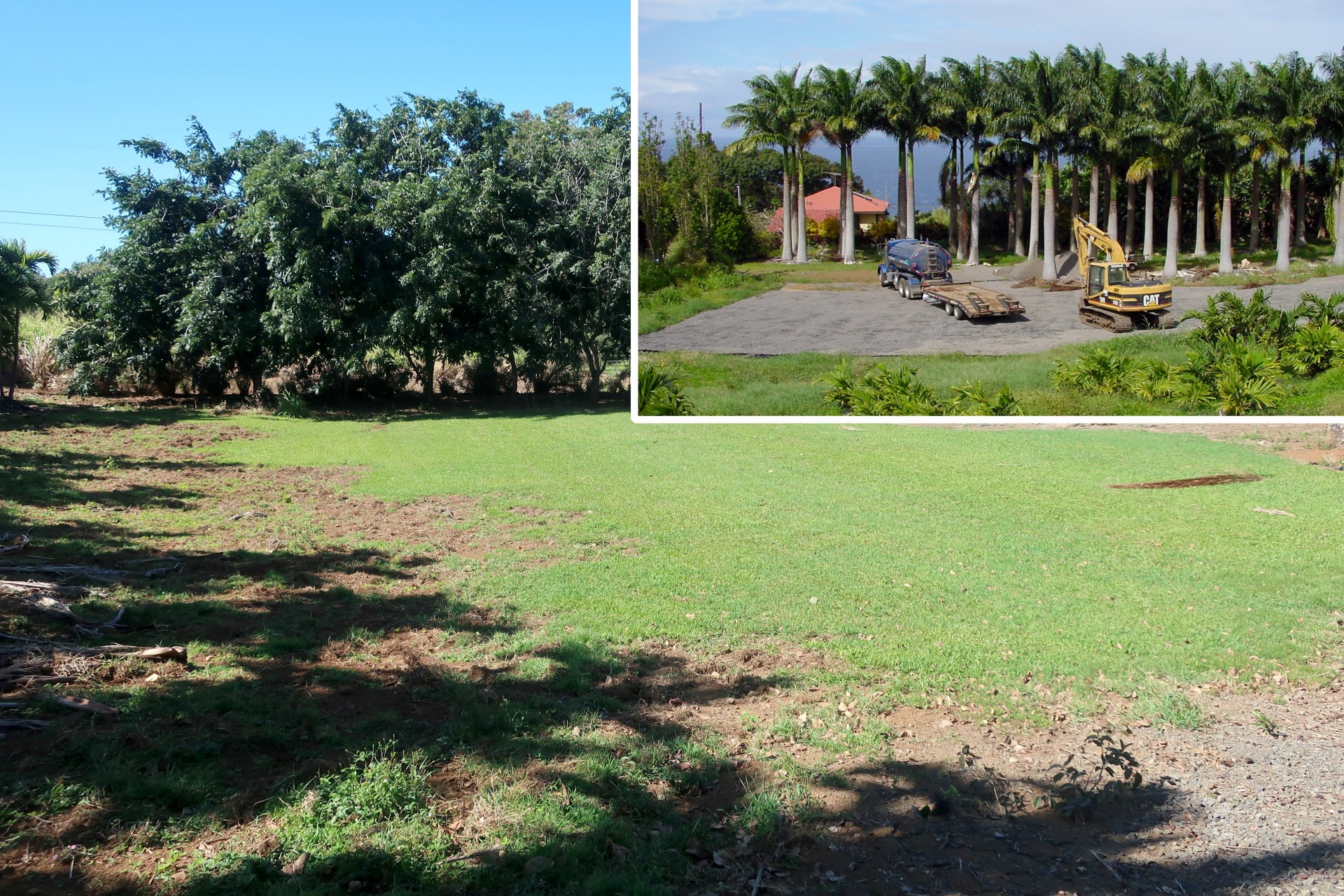
Figure 5. Wild pig damage to turf area stops where the gravel-filled geocells start, see upper right image for geocell boundary.
Gravel-filled geocell areas can be grassed over with sprigs planted during installation. Commercial turf sites such as farmer’s markets, church parking lots, or open spaces that accept stormwater runoff are ideal uses gravel-filled geocells where pig damage is limited to surface scrapping of the turf. A 4-inch deep gravel-filled geocell, planted with a hard stemmed grass like Zoysia, can provide a pig-proof turf with all-weather traffic potential and distant memories of pig ravage landscapes.
GEOTECH SOLUTIONS, INC ( https://www.geotechsolutions.com/ ) is a local distributor of geocell products located on Oahu. Amazon (https://www.amazon.com/) also carries a variety of geocell products with a wide variety of choices in cell depth and overall size.
Dr. Joseph DeFrank, Research Emeritus and CEO of Ulu Wehi Agronomics.
Utilizing Compost and Plant-Based Mulch to Enhance Soil and Plant Health
By: Jackie Jamison
What is soil? According to the Soil Science Society of America, soil is “the unconsolidated mineral or organic material on the immediate surface of the Earth that serves as a natural medium for the growth of land plants.” It is made up of solid matter, including mineral material and organic material, as well as pore space, which holds both water and air. Soil organic matter, although a relatively small portion of soil itself, has a disproportionately large effect on soil health and function, and ultimately on plant health. It is largely responsible for important soil functions such as water storage and filtration, nutrient cycling, providing habitat for soil organisms, and acting as a medium for plant growth.
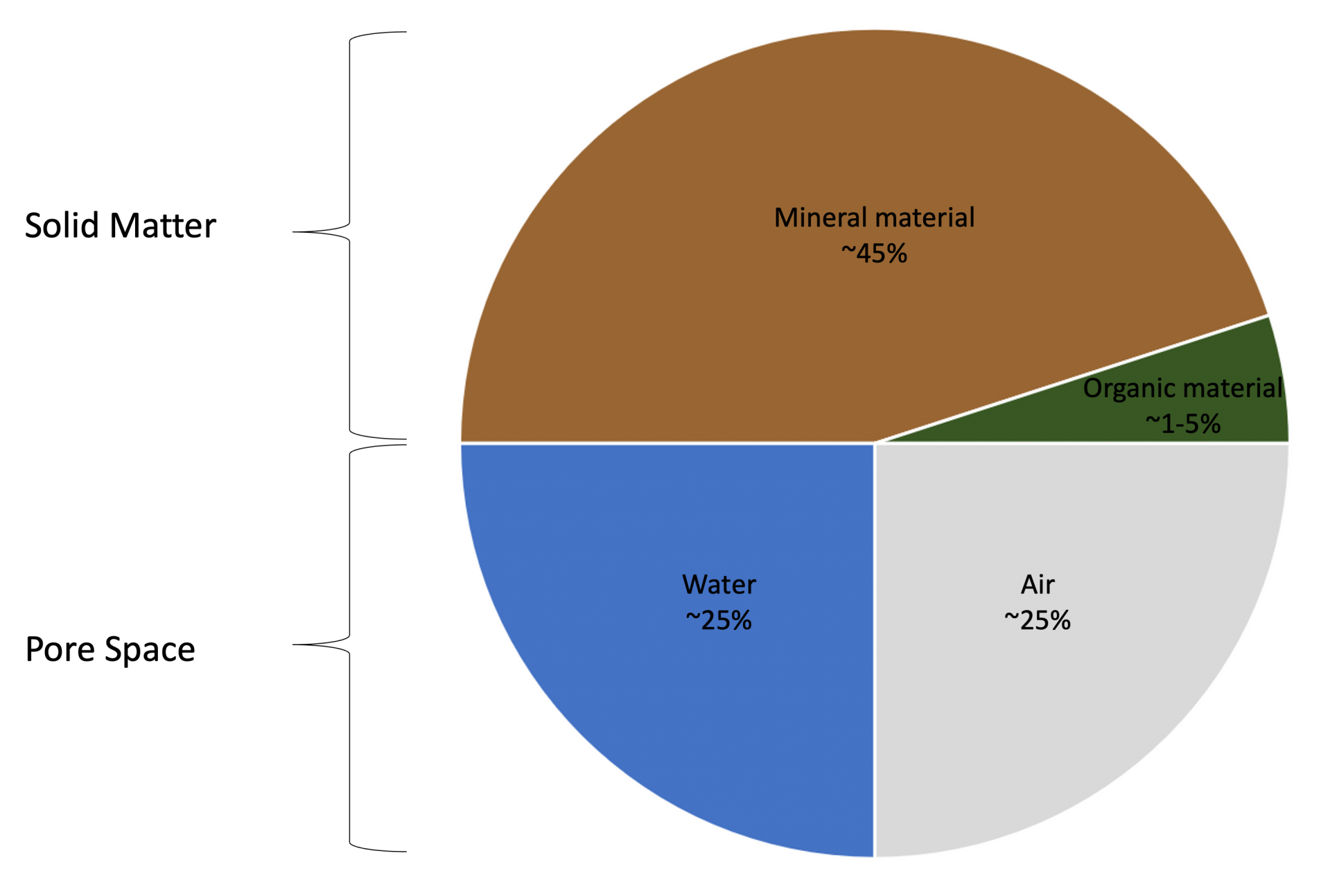
Figure 1. Pie chart showing soil components. Organic matter, although a smaller percentage of most soils, has a disproportionately large effect on soil health and function.
The addition of organic matter to soil has many positive effects that ultimately contribute to healthy plants and landscapes. This can be in the form of fresh plant residue, cover crops, compost, manures, or plant-based mulch. The key point is that by adding organic matter, we are feeding the soil, and the soil (and the microbes within it) then feeds the plants in our landscapes.
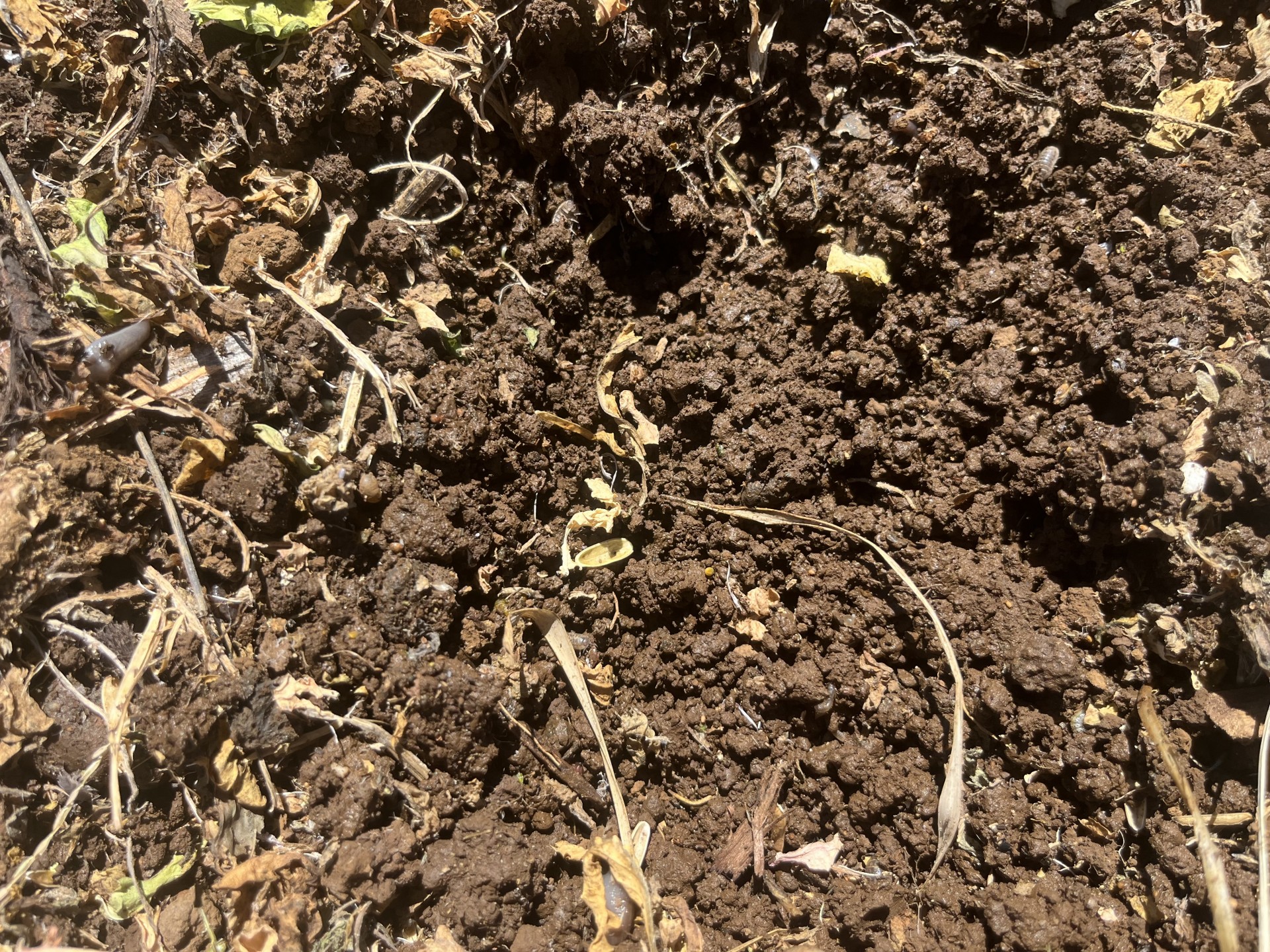
Figure 2. This image shows a Kula soil with organic matter in various stages of decomposition.
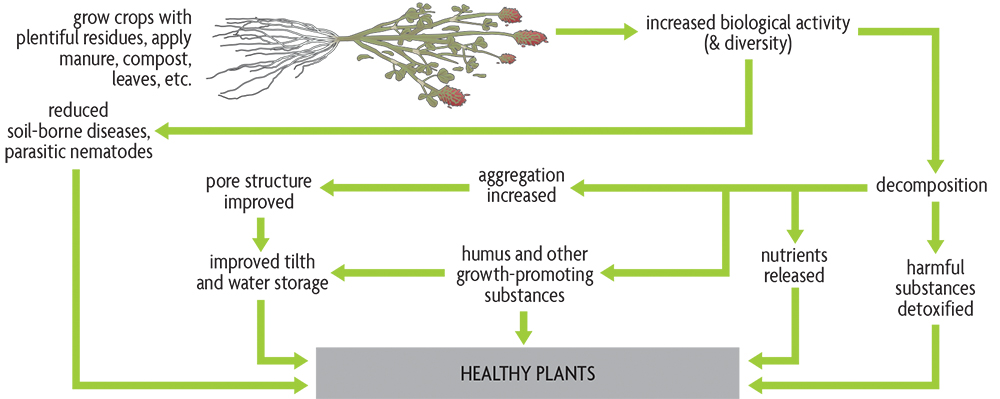
Figure 2: Adding organic matter to soil results in positive changes to soil structure and function. Adapted by Magdoff and Van Es (2020) and modified from Oshins and Drinkwater (1999).
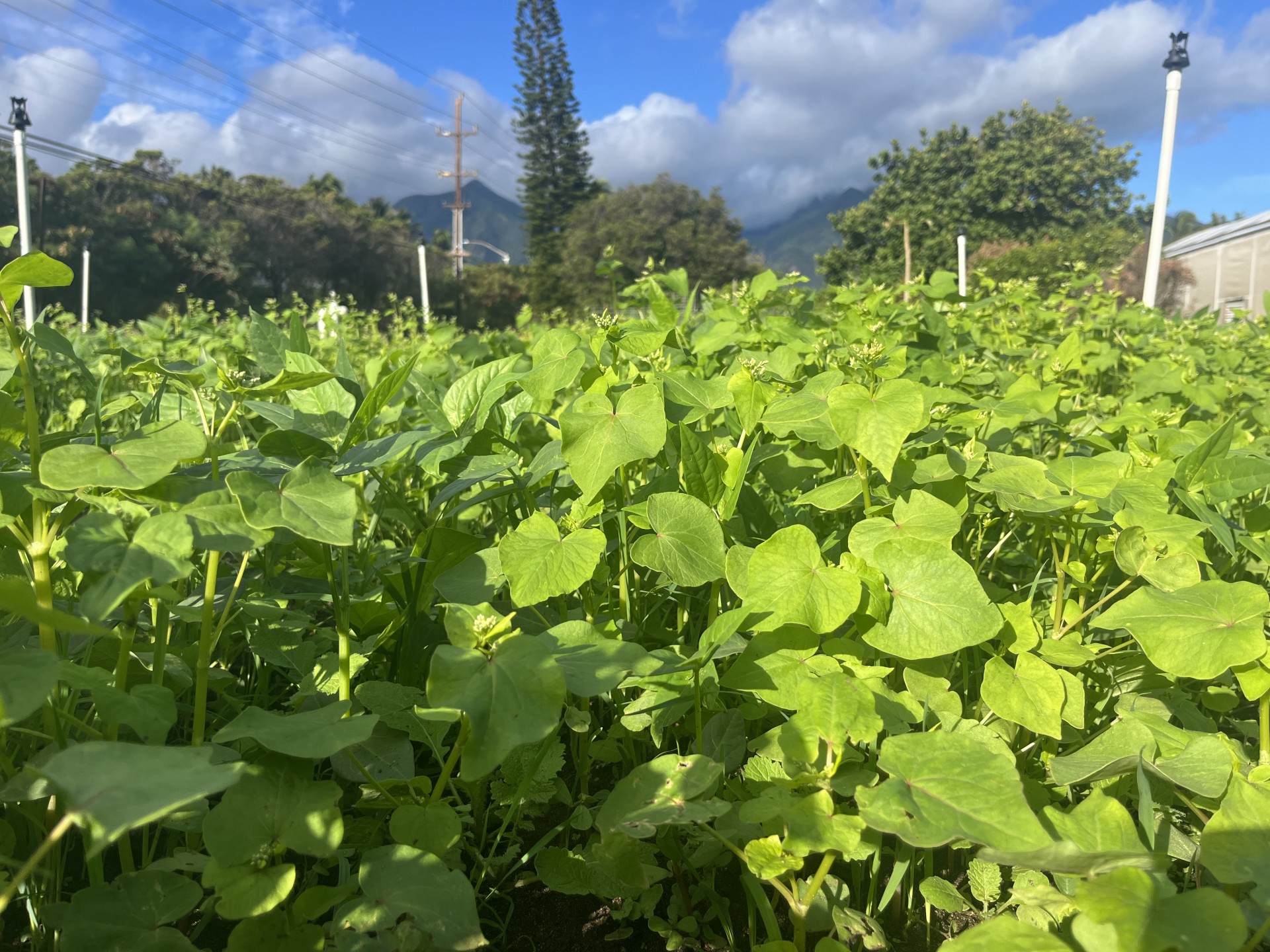
Figure 3. Another way of adding organic matter to the soil is through the living roots of plants, including cover crops such as the buckwheat (Fagopyrum esculentum), cow pea (Vigna unguiculata), black oats (Avena strigosa), daikon radish (Raphanus sativus) and brown mustard (Brassica juncea) pictured here.
Organic matter plays an important role in nutrient availability. It feeds plants directly as it’s decomposed, and 1% organic matter on 1 acre can release 20-30 lbs. of nitrogen (N), 5 lbs. of phosphorus (P), and 2 lbs. of sulfur (S). It also both stores (through cation exchange capacity) and physically protects (through chelation) nutrients. This ultimately leads to improved and sustained nutrient availability to plants, less nutrient loss, and reduced pollution in our waterways.
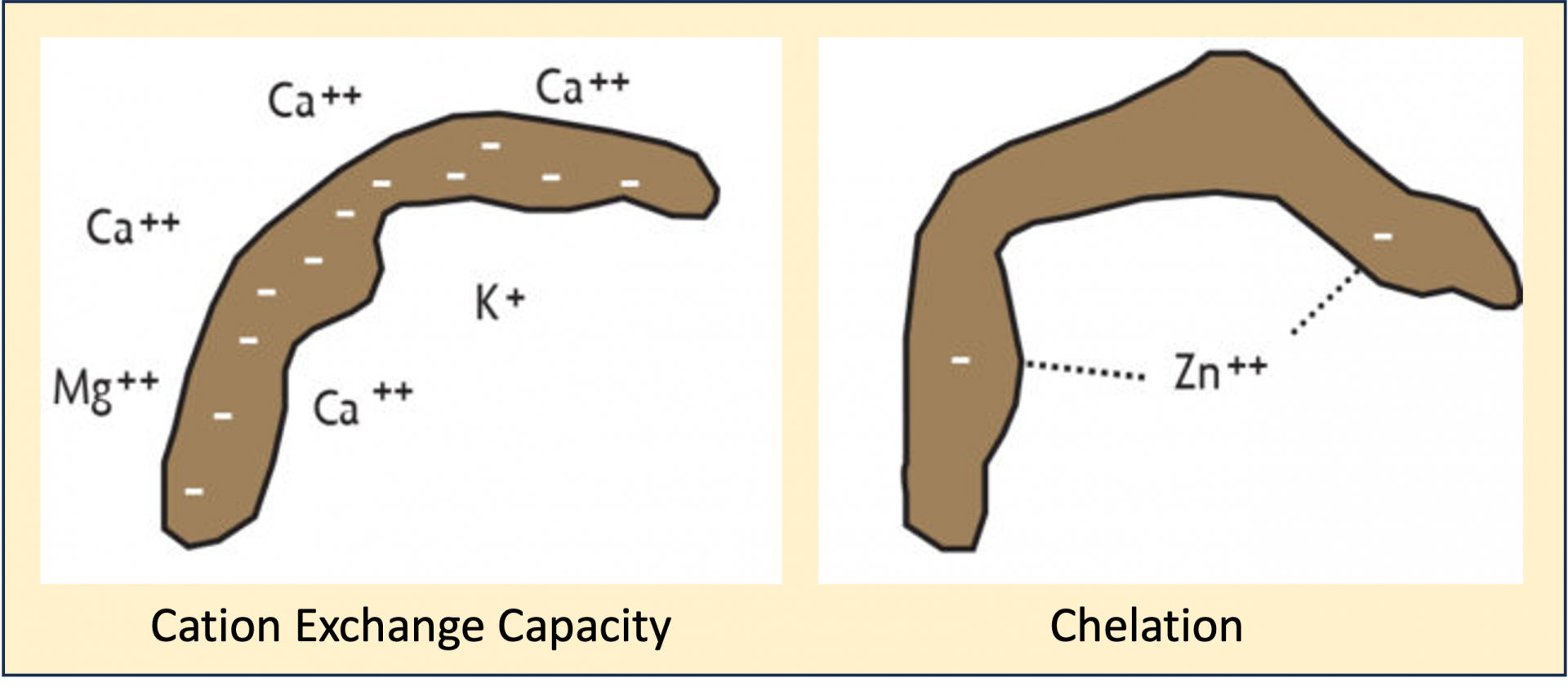
Figure 4. A negative charge on organic matter increases cation exchange capacity and chelation of positively charged micronutrients. Adapted from Magdoff and Van Es (2020).
One simple way of adding organic matter into landscape soils is by adding compost. Adding compost provides numerous benefits for soil health and plant growth. It helps to loosen clayey soils and aggregate sandy soils, thereby aiding in water infiltration and storage. By increasing the cation exchange capacity of soils, compost also helps soils hold onto more plant nutrients. Compost also helps to balance the pH of soil, bringing it closer to a neutral range, where the majority of plant nutrients are available. Compost also provides nutrients directly to plants. Those nutrients are mostly in organic forms, meaning that they are slowly released into the soil for plant uptake, and are less prone to leaching and loss than other fertilizers.
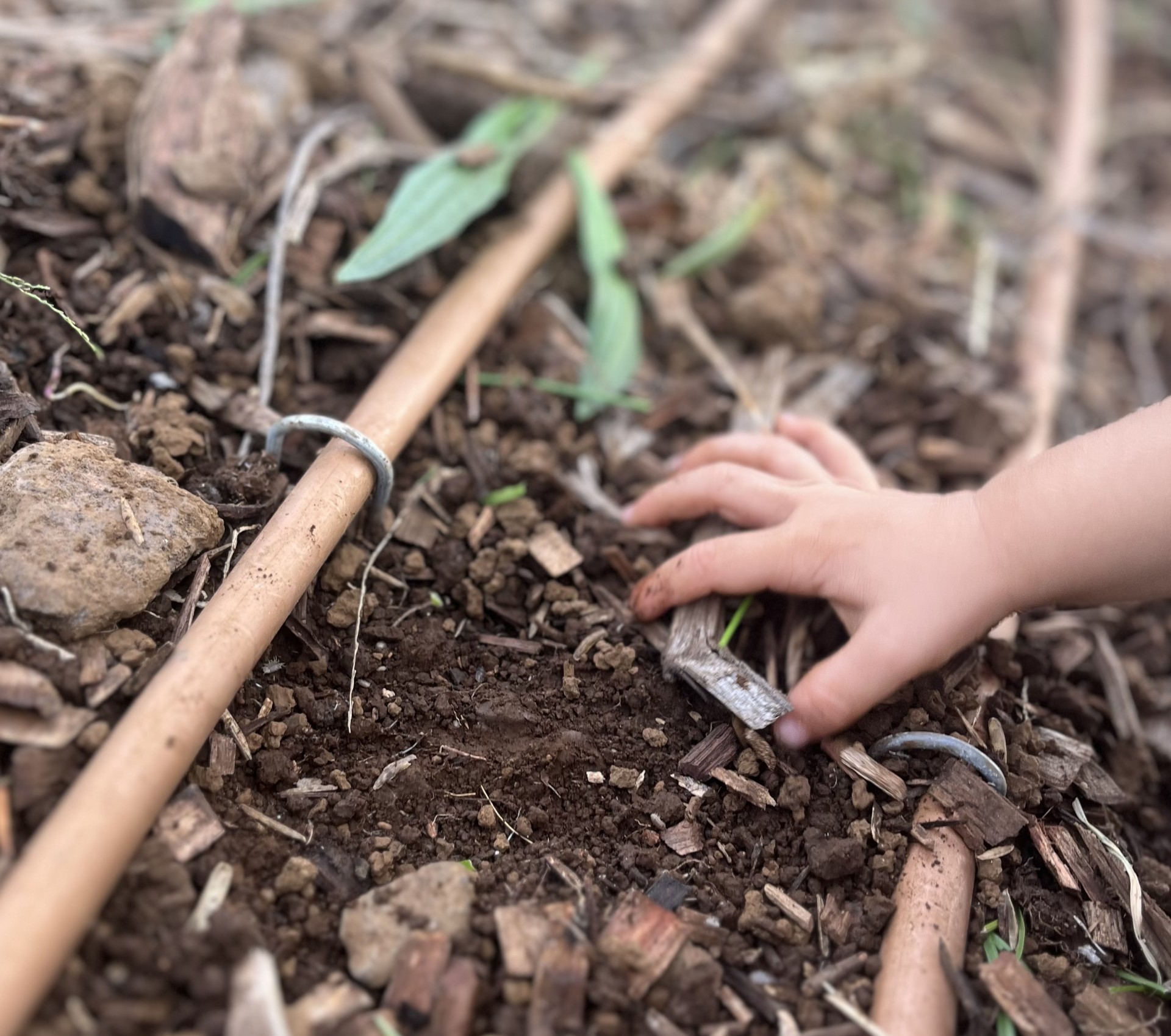
Figure 5: Soil after the addition of well-decomposed compost, showing dark color of organic matter and visible soil aggregates.
Another effective way of adding organic matter into the soil is by using plant-based mulches such as wood chips. Utilizing wood chips as mulch can help utilize a waste stream from tree trimming jobs while simultaneously providing a benefit to plants and soils. Plant-based mulches decompose over time, providing valuable organic matter to the soil as they do so, with all the benefits discussed above. In addition, by covering the soil, they help reduce evaporation and decrease the water requirements of landscapes, particularly important considering increasing drought conditions across the islands. They also reduce competition from weeds, reduce erosion, and help maintain lower soil temperatures. Lastly, they can provide an aesthetic benefit to the landscape.
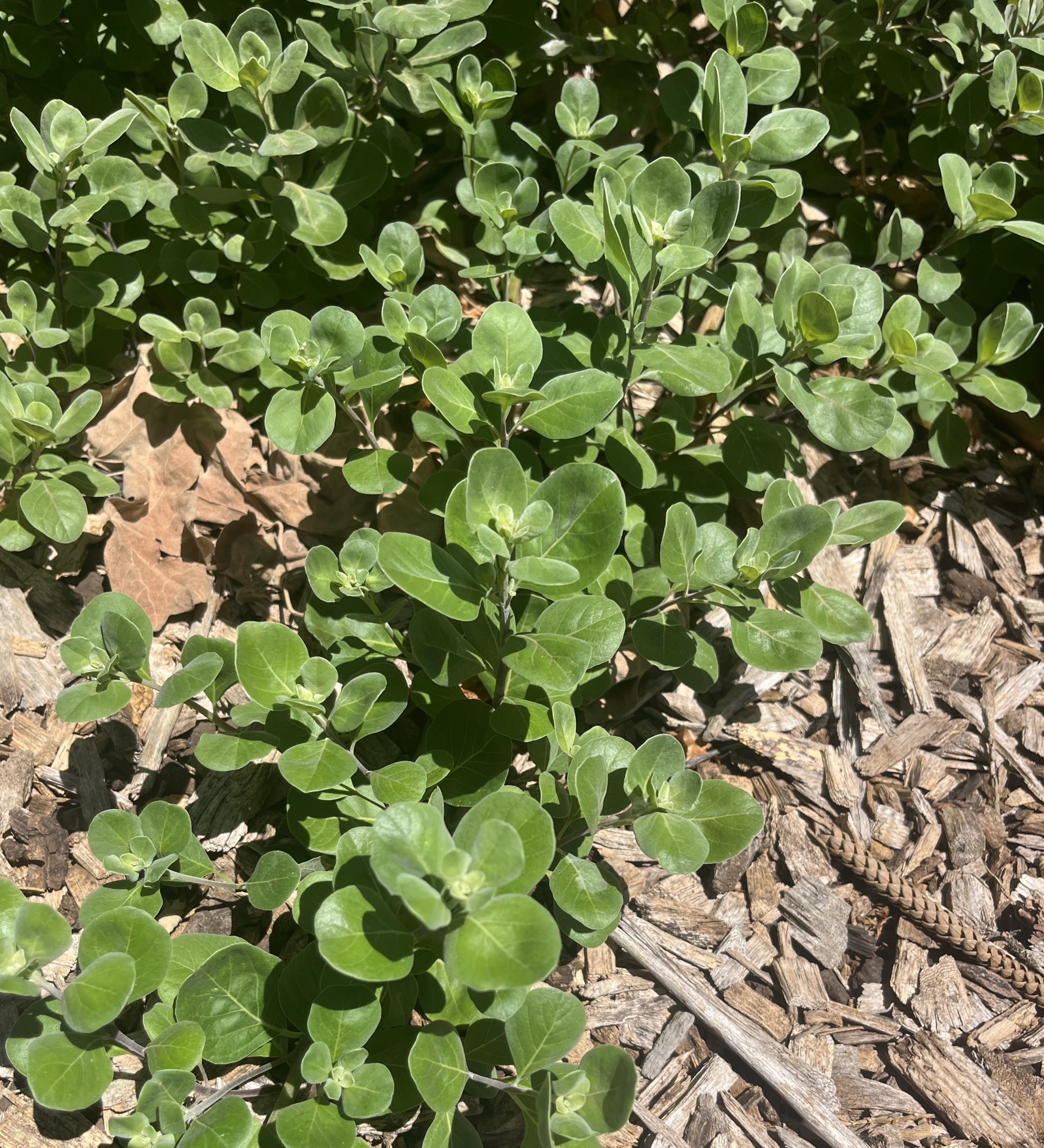
Figure 6. Pohinahina (Vitex rotundifolia) surrounded by wood chip mulch.
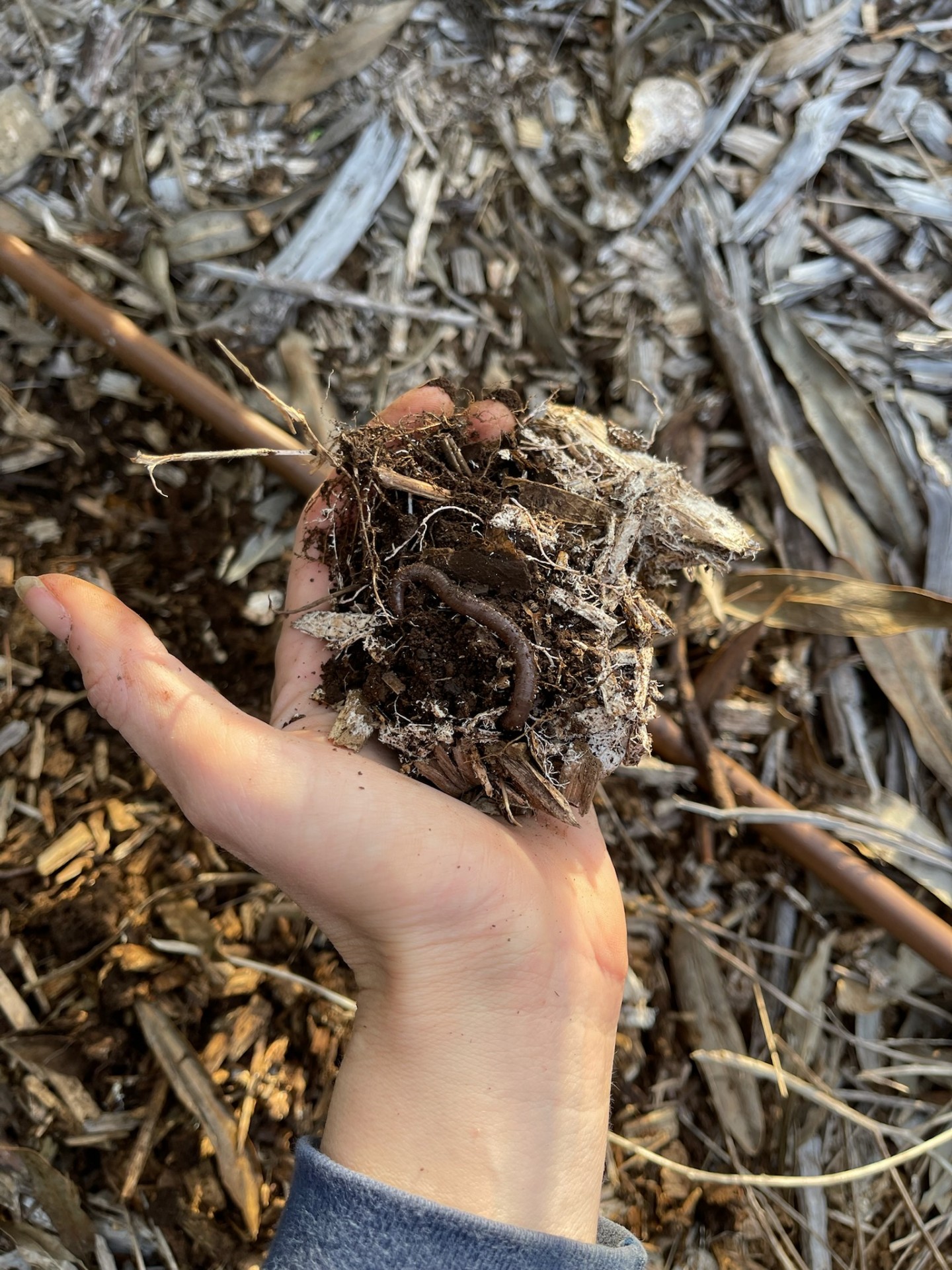
Figure 7. Partially decomposed wood chip mulch in the landscape, showing fungal hyphae and earthworms. Photo credit: Hannah Lutgen
References:
Magdoff, F. and Van Es, H. (2021) Building Soils for Better Crops. Sustainable Soil Management, IV Ed, Sustainable Agriculture Research and Education (SARE) Program, National Institute of Food and Agriculture, (USDA).
Oshins, C. and L. Drinkwater. 1999. An Introduction to Soil Health. A slide set previously available from Northeast SARE.
Jackie Jamison is an Extension Faculty Member in Urban Horticulture and the Master Gardener Program Coordinator at the University of Hawai‘i at Mānoa, College of Tropical Agriculture and Human Resources.
Irrigating a Dryland Soil Carbon Sponge
By: Sonny Gamponia & Barry Solomon
The classic Köppen System of Climate Classification revised its description of the area along the leeward coast of Maui in 2023. Previously classified as a Tropical Savanna Climate, it is now considered a Hot Semi-Arid Climate. The classification is based on rainfall data but can be affected by changes in the dominant vegetation in the area. Whatever the reasons for the change in classification, the seasonal transformations in the native dryland ecosystems are dramatic, especially under drought conditions.
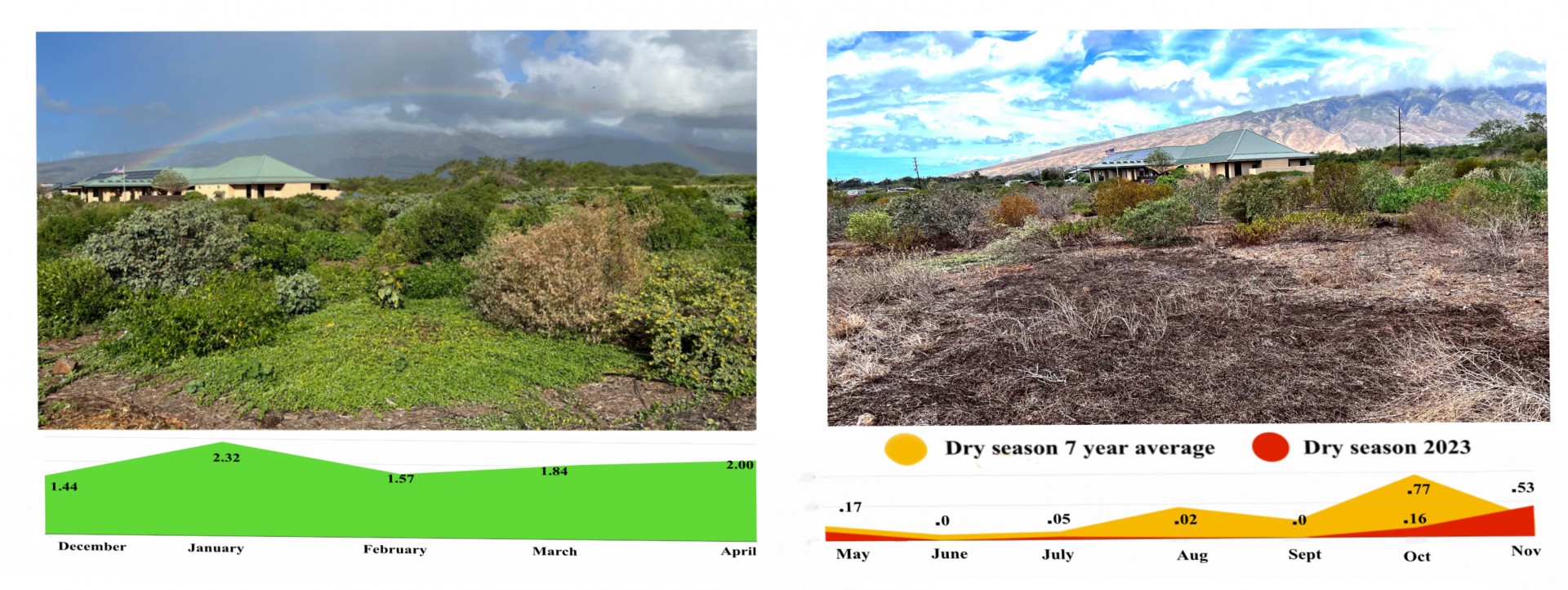
Figure 1. Left photo: Rainy season 2022-2023,
Maturing shrubs can change the structure of ecosystems, leaving bare areas vulnerable to invasive species when the rains return. Research studies on shrublands in the semiarid soils in New Mexico found that the moisture depth is held in the top 4 inches. Mulch, ground cover, and low canopies can help hold the moisture accumulated during the dry season.
Volunteers from ReTree Hawai’i are collaborating on a citizen science project at Keālia Pond National Wildlife Refuge. They are planting in bare areas along a proposed nature trail, creating a diverse plant community. This collection of native groundcovers and low shrubs serves as a “soil carbon sponge”, absorbing moisture, slowing evapotranspiration, and making the soil more absorbent during the rainy season.
The term “soil carbon sponge” comes from a concept proposed by Australian soil microbiologist and climate scientist Walter Jehne, who describes how the void between rocks and soil particles can be filled with roots, microbes, and humus to hold moisture. The idea is gaining traction, evidenced by the 2020 Netflix documentary Kiss the Ground, narrated by Maui resident Woody Harrelson. These soil carbon sponges can affect an underground microclimate, allowing roots and microbes to interact. Native roots and microbes are the keystone ingredients of a soil carbon sponge. It attracts a series of underground predators and prey, called the soil food web.
Photosynthesis needs to be active for roots to produce enzymes at their root tips. These enzymes (called exudates) attract bacteria and fungi. The microbes consume the sugars, which signals whether the plants need calcium, nitrogen, potassium, or zinc. The microbes harvest the minerals from the surface of the soil particles in exchange for more sugar. In this manner, roots can put moisture back into the soil even when there’s no rainfall. The Keālia Pond project uses historical native Hawaiian plants with the climate and local soil conditions on Maui.
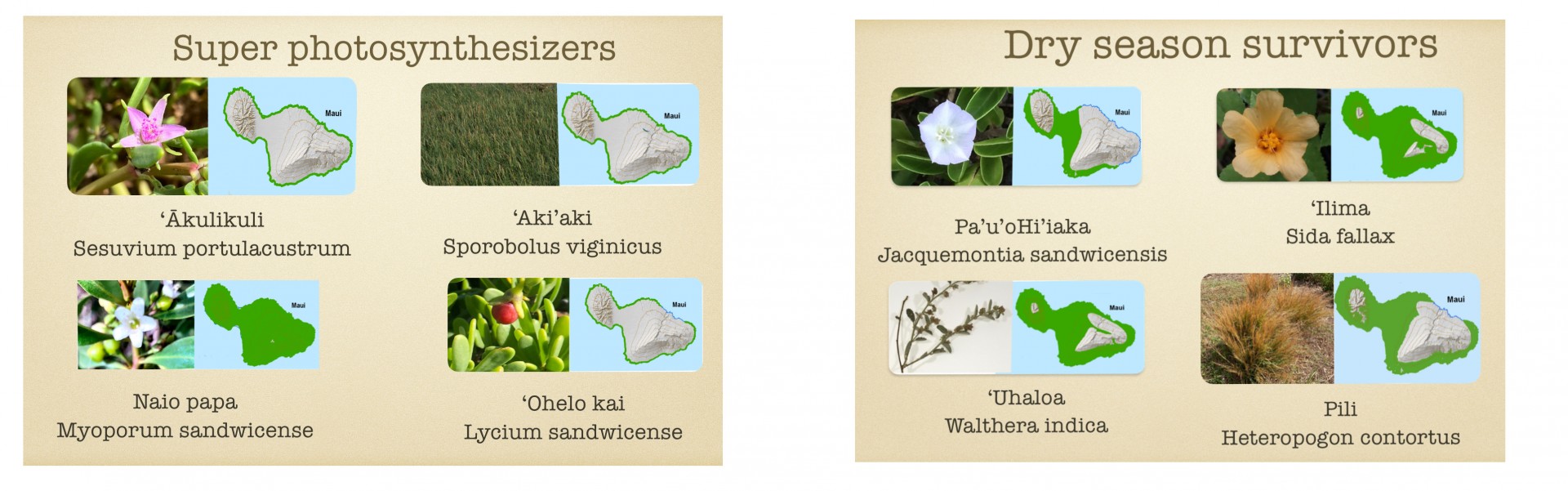
Figure 2. Left panel: These native plants remain green, even during a drought and low rainfall. ‘Akulikuli can photosynthesize at night. It also holds droplets from passing light showers. ‘Ohelo kai, also known as Hawai’i desert thorn, is a thornless endemic that is very adaptable in dunes, wetlands, and drylands. Right panel: These dry season survivors are some of the hardiest survivors in dryland soils. Their leaves shrink or hold moisture in their stems during the dry season and bounce back in the rainy season.
When feasible, the transplants are cultivated with compost tea to establish a microbial community. This miniature ecosystem is then transplanted within an irrigation frame to initiate the soil carbon sponge. Each soil carbon sponge is grown in a 4-foot-wide drip irrigation frame connecting inline drip irrigation tubing. Transplants consisting of 60% active photosynthesizers and 40% dry season survivors are irrigated over two growing seasons.
Traditional irrigation formulas are designed to optimize crop yield or maintain a consistent look for landscaping. The standard formula calculates gallons per day by assigning quotients for plant species in square feet, climate, and evapotranspiration efficiency. Habitat restoration irrigation demands a different approach to agriculture and landscaping. This irrigation plan is based on local rainfall targets. Rainfall in inches is converted to gallons per square foot. At Keālia Pond it rains once a week during the rainy season and every other week during the dry season. During a drought, there is only a trace of rain once a month or no rain at all. The irrigation amounts are applied to different stages of growth over two growing seasons.
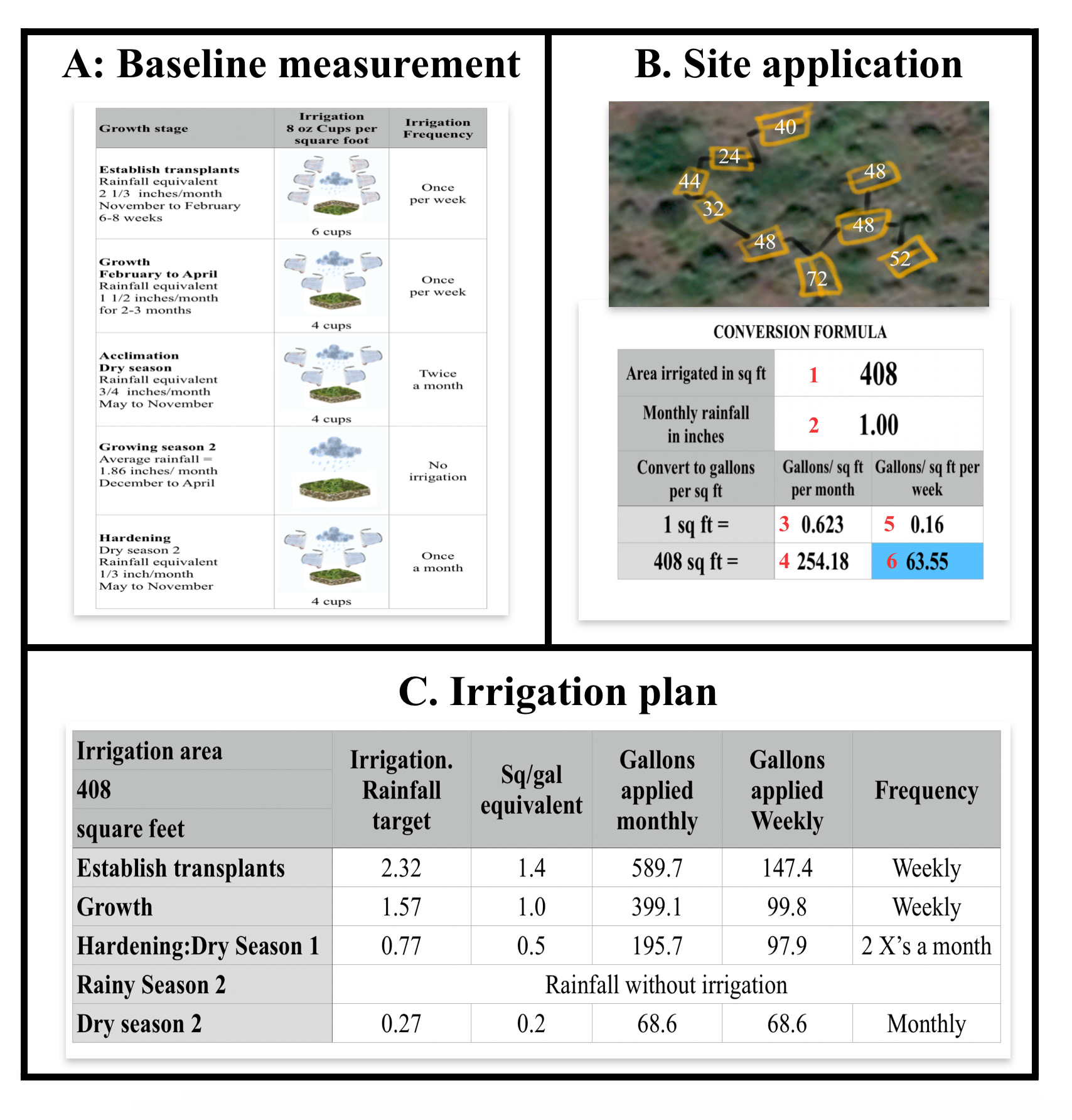
Figure 3. A: Baseline measurements: 1) Choose rainfall targets for each stage of growth; 2) Convert rainfall to gallons or cups per week; 3) Apply the calculations to 1 square foot. This plan shows how the irrigation is tapered as the soil carbon sponge matures.
Each irrigation area is connected to a flow meter and hose timer. Depending on water pressure, drip irrigation times may start at 20 to 30 minutes and taper to 10 to 15 minutes. By contrast, a 5/8-inch garden hose with a sprinkler covering a comparable area would use 1,020 gallons of water an hour.
Details for the calculations, spreadsheets, and photos of soil carbon sponges can be found in a photo journal for this citizen science project at the Kealia Restoring Soil website.
A USDA soil report states that 1% organic matter such as roots, microbes, and humus can hold up to 25,000 gallons of water. Replacing an acre of kiawe and buffelgrass with that much water can reduce the frequency and severity of wildfires. Expanding soil sponges along the leeward coast could increase soil moisture to a large enough scale, potentially transforming the current hot semi-arid climate back into a tropical savanna.
References:
Beck, H.E., McVicar, T.R., Vergopolan, N., et al. 2023. High-resolution (1 km) Köppen-Geiger maps for 1901-2099 based on constrained CMIP6 projections. Scientific Data 10: 724. https://doi.org/10.1038/s41597-023-02549-6
Jehne, W. 2015. Restoring water cycles to naturally cool climates and reverse global warming, paper presented at the Global Cooling Earth Org, Biodiversity for a Livable Climate’s Conference, Restoring Water Cycles to Reverse Global Warming. Medford, MA: Tufts University, October 16-18, 2015. http://www.globalcoolingearth.org/cooling/.
Kurc, S.A. & Small, E.E. 2004. Dynamics of evapotranspiration in semiarid grassland and shrubland ecosystems during under summer monsoon season, Central New Mexico. Water Resources Research 40(9): W09305. https://doi.org/10.1029/2004WR003068
Solomon, B.D. & Gamponia, S. 2023. Using native roots and microbes for local landscapes. Hawaii Landscape 74, https://hawaiiscape.com/blog/id/17
Solomon, B.D. & Gamponia, S. 2023. Restoring health to degraded soils with native plants and microbes. Hawaii Landscape 71: 22-24.
USDA Forest Service. 2015. Healthy soils: the promise for the future. Redding, CA: Soils Report, USDA Forest Service Shasta-Trinity National Forest.
Sonny Gamponia,
Proposal for a New Coconut Standard
By: Mark Fukui
La’au niu (Cocus nucifera), or coconut palm, has woven its way through Hawaiian and local culture with its many uses. From providing weaving materials to sustenance, it’s no wonder why this palm became such an iconic image of Hawaii. This image not only fills the daydreams of travelers but the minds of landscape architects.
La’au niu is commonly planted throughout hotels, commercial, and residential properties. It is typically specified in landscape plans to require brown trunk heights of eight to fifteen feet. Keep in mind that coconut palms, once established, grow an average of one foot of brown trunk per year. After taking into account an establishment period of two to three years, la’au niu will take roughly fifteen years to reach twelve feet brown trunk height.
Prior to the introduction of the coconut rhinoceros beetle (CRB) in Hawaii, growing time wasn’t a major consideration in the planting of coconuts. However, Oahu, and more specifically Waimanalo, became the newest front line for the battle against CRB. Keeping coconuts clean and free of CRB damage for fifteen years is a daunting task.
To produce a product free of CRB damage, la’au niu should be specified at six feet brown trunk height. While there are methods to prevent CRB spread and damage, it does not guarantee pristine coconuts. Preventing breeding sites can be done by paying to dispose of green waste to have it taken off-site for proper management. This is a costly measure and an uphill battle as the natural vegetation in Waimanalo already provides an excellent breeding site for CRB.
Sand and gill netting can be placed in the crowns of young la’au niu to trap and prevent burrowing damage from CRB. While the recommended gill net size is ½” inch, it is still illegal to purchase gill netting smaller than 1 1/2 inch stretched net on the island of Oahu (HAR 13-75, HAR 13-95). These measures have to be redone every quarter as new fronds become exposed, and it will become increasingly difficult as their crowns become out of ladder reach.
Tree injections, a costly treatment, can be done annually. This is the best solution for la’au niu with heights that can’t be easily reached with ladders. Please remember that CRB burrow with their legs and only start feeding from the palm once the center of the crown is reached. So, even with injections, CRB damage will still be present.
These treatments offer no guarantee, are time intensive, and costly. At the end of the day, it doesn’t matter how much effort or money is put in if a neighbor has an unattended mulch pile acting as a CRB breeding site. The expectations for la’au niu coming out of the nurseries need to change. It is much easier and practical to prevent CRB damage on la’au niu under six-foot brown trunk height, and the turnaround time of roughly nine years, instead of fifteen years, will expose the coconuts to much less risk in the nursery. As long as CRB is around, the days of pristine fifteen to twenty-foot clear brown trunk la’au niu might be over.
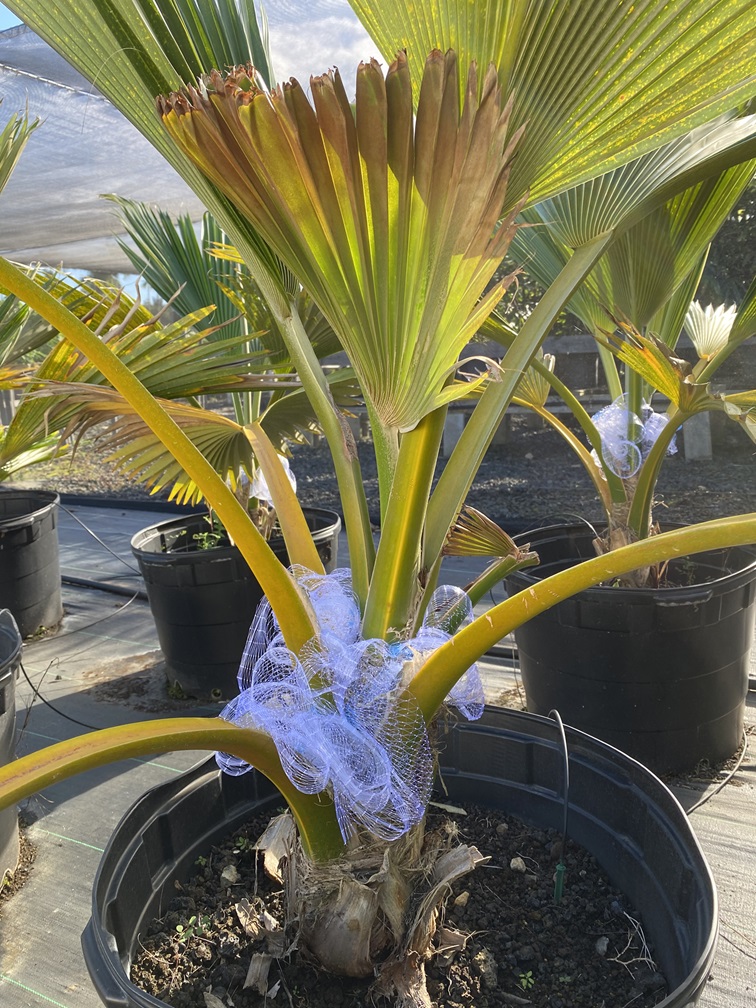
Figure 1. CRB damage on 25 gallon Martii.
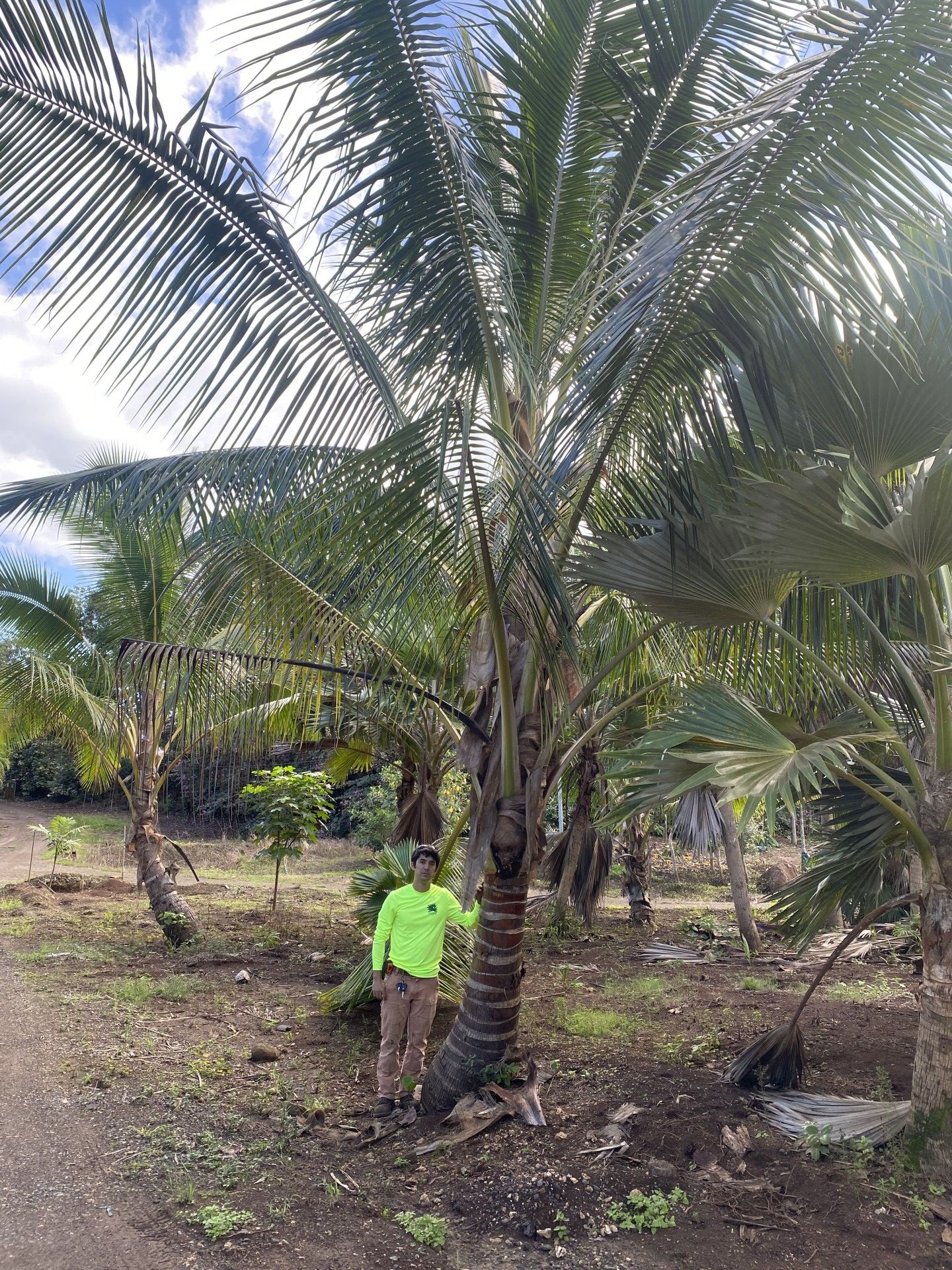
Figure 2. Mark Fukui standing next to a six-foot brown trunk-height coconut.
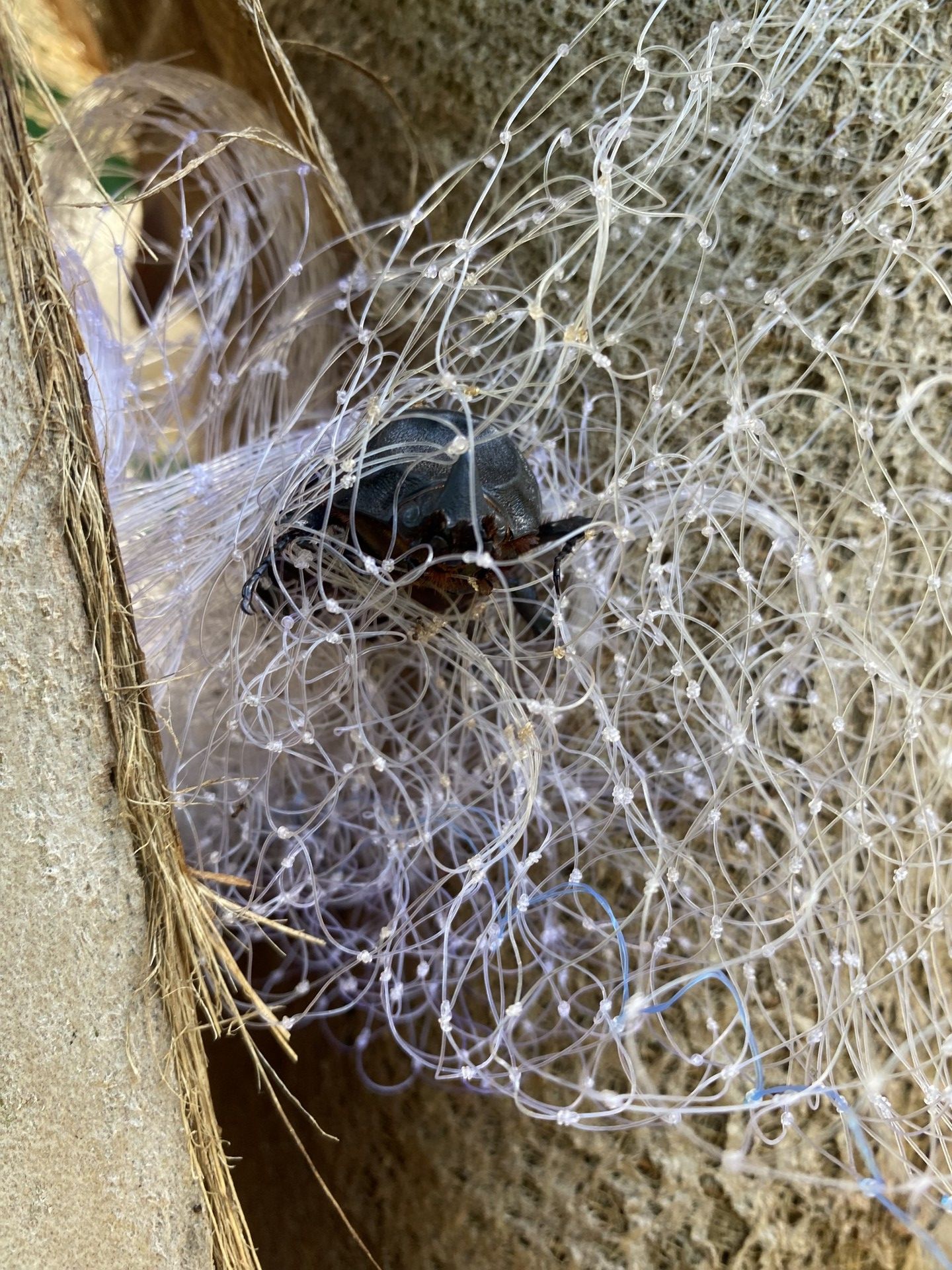
Figure 3. CRB trapped in gill netting.
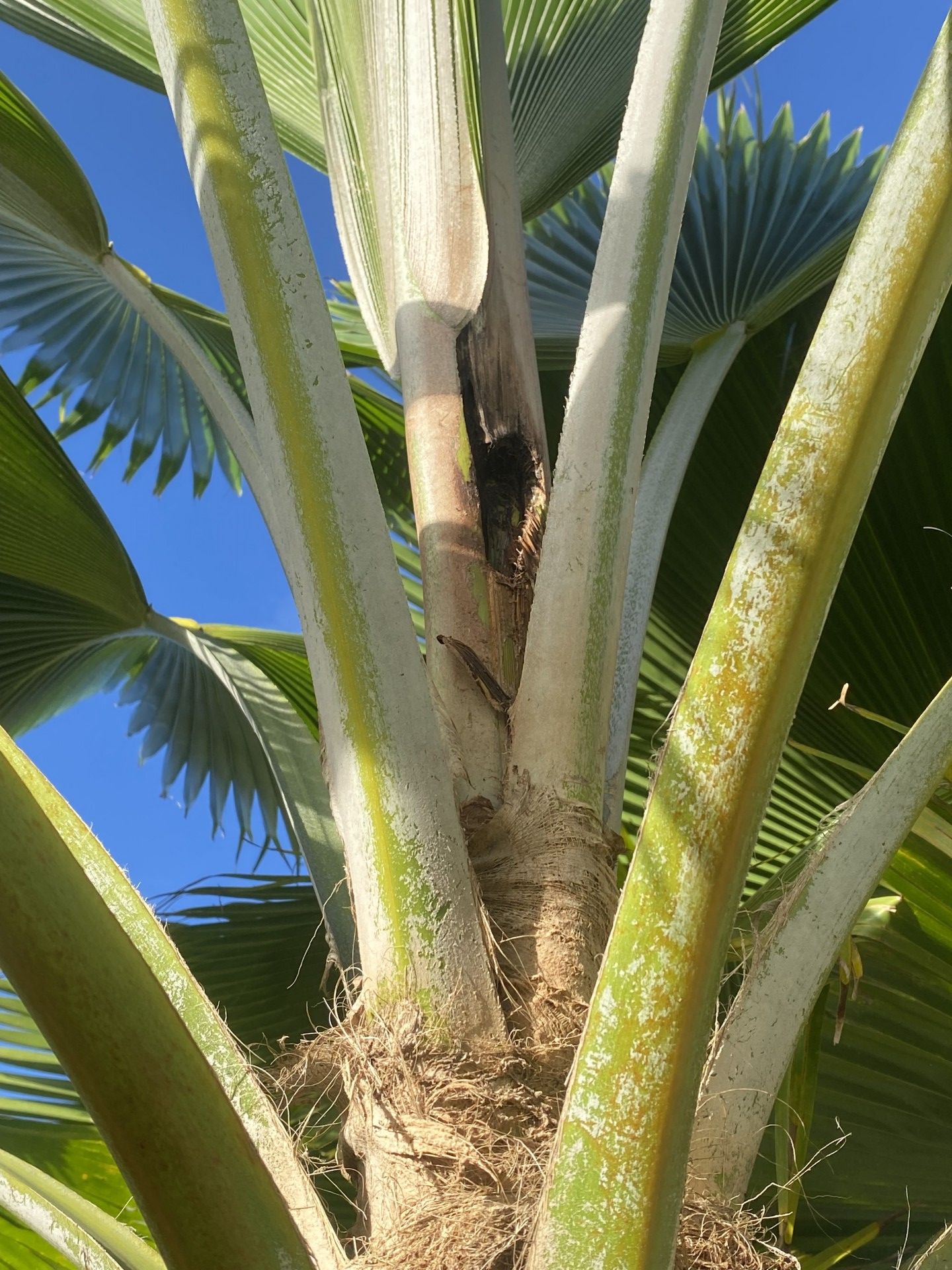
Figure 4. CRB damage in Fiji fan palm.
Mark Fukui, Owner and manager – Contemporary Landscaping LLC
Rain Sensors: Types, Uses and Maintenance

By: Alberto Ricordi
The rain sensors available in the market today have evolved over time. There are three main types of rain sensors: water collecting basin, electric conductivity, and hydroscopic disk. This article will describe each sensor type and their maintenance needs.
Water Collecting Basin
The water collection basin is one of the earliest types of irrigation rain sensors. It is based on a water collecting container that triggers a switch once it is loaded with a certain amount of water. It is the weight of the water that activates the switch. The problem with this design is that anything else that weighs as much as the pre-set amount of water will activate the switch, such as: a bird standing or nesting on the sensor, dead insects, fallen leaves and fruits, etc. This will cause unwanted interruptions in the watering cycle and landscape damage. On the other hand, wider basin types may allow wind to blow rainwater out of the container, which in turn delays the shut-off.
The water weight concept can be used for mist systems for plant propagation. It works on the principle of evaporation. The weight of mist on a metal screen makes it swing up or down, controlling the solenoid, and simulating the leaf surface getting wet and dry.
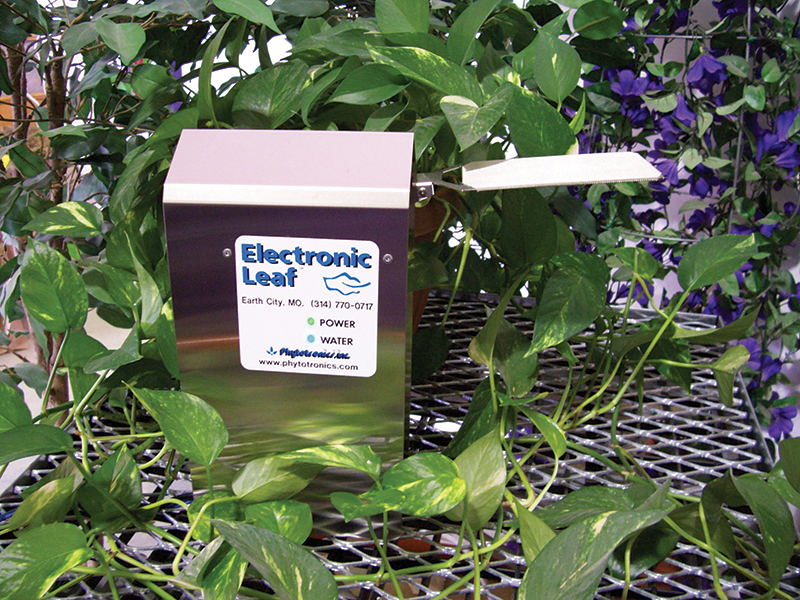
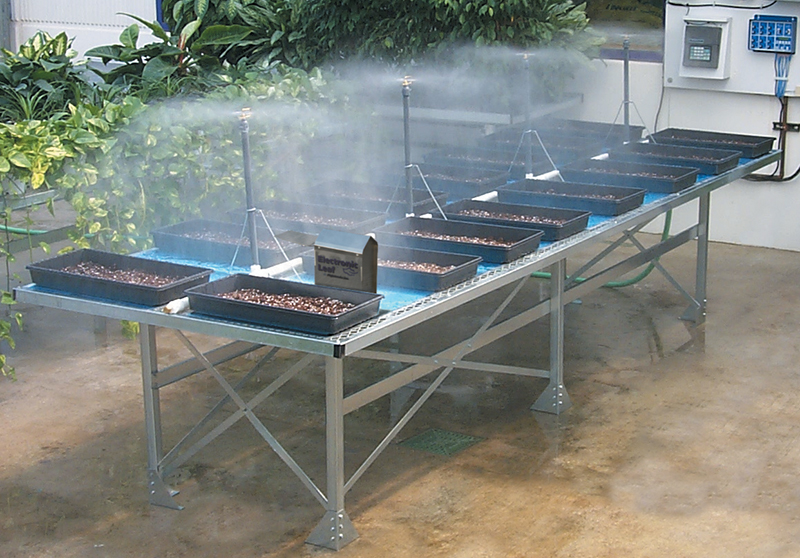
Figures 1 and 2. A sensor that works on the principle of evaporation. (Image source: Electronic Leaf.)
Conductivity
The second generation of rain sensors works on the principle of electrical conductivity. This method also uses the amount of water accumulated on a basin to trigger the sensor. However, instead of measuring water weight, this method measures water height. There are two electrodes set at a specific distance from the bottom of the cup. Once water accumulates to a certain level, it touches the electrodes and activates the sensor. This allows the electrodes to identify a pre-set amount of water, based on rainfall precipitation. Unfortunately, this system is also subject to interference from unwanted debris in the basin. The volume of debris accumulated in the basin will displace water, causing the water level to rise faster and trip the sensor prematurely during short rainfall, resulting in potential damage to the landscape from unwanted interrupted irrigation.
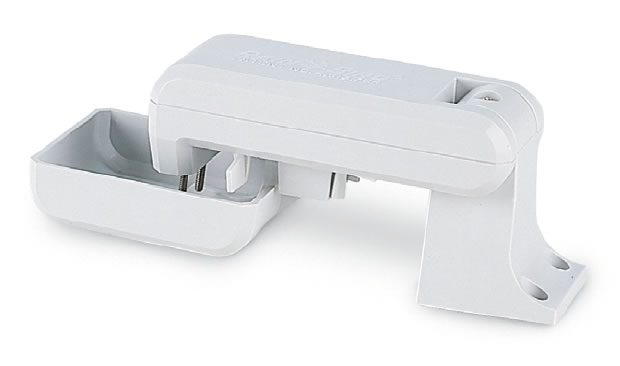
Figure 3. Rain sensor based on conductivity, with a small basin to collect rainfall and electrodes to activate the sensor. (Image source: Gotcher et al. 2014)
Hygroscopic Disk
This is currently the most common type of rain sensor. It eliminates the water reservoir component, therefore eliminating the risks of unwanted debris interfering with the rain gauge component of the rain sensor, making it low maintenance and more reliable when compared with basin sensor types. This type of sensor uses Hygroscopic disks, which are made of a synthetic material similar to cork and expand when wet. The expanded disks trigger the switch after a preset amount of rain falls into the disks’ receptacle. The sensor will disable the controller as long as the disks remain wet and expanded. Once the disks dry out, they will shrink back to their original size, deactivate the sensor, and resume scheduled irrigation.
The sensors will fail if the disks lose their shrinking capacity, are unable to return to their original size, or if there is debris between disks or in the switch mechanisms, such as animals nesting in the sensor. Therefore, the sensors should be inspected regularly to avoid unwanted interruption of the automatic irrigation.
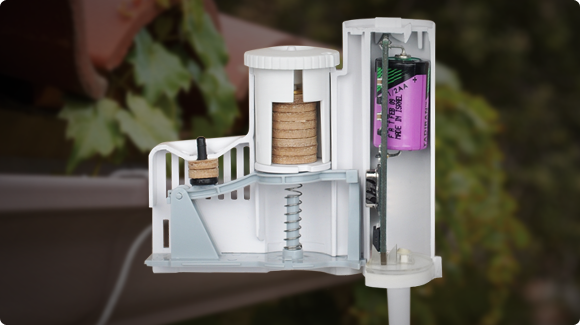
Figure 4. Inside of an expanding disc rain sensor. Image source: Gotcher et al. 2014 (Photos courtesy of Hunter Industries).
Rain sensor “Bypass” at the controller
Controllers may have a “bypass” switch or option at the front panel. This allows the user to bypass the sensor signal and resume the irrigation schedule, regardless of the rain sensor reading. This is a useful function when the rain sensor is not operating properly, or if automatic irrigation is wanted regardless of the weather.
Product selection and proper installation
Always check your irrigation controller’s manual and specifications to ensure compatibility with the rain sensor and proper wiring.
Wireless sensors are a convenient option because they eliminate the need for wires between the sensor and the controller. Instead, the sensor communicates with a receiver wired to the controller (Figure 5). Make sure to check the reach of your rain sensor to ensure it is installed within range from the receiver. Wireless sensors require batteries, and therefore, need to be checked regularly to have batteries replaced as needed. Wired sensors do not require batteries.
Verify the mounting options and requirements. Each model has its own unique mounting hardware, such as rain gutter and flat surface mounts. Most manufacturers have installation manuals available online.
Common issues related to rain sensors are irrigation systems that keep running after a rain period, when the system is expected to be interrupted; or, an irrigation system that takes too long for the irrigation to resume after a rain event. This could be due to several reasons, such as:
-
Improper location installation. Ensure the sensor is exposed to rainfall for proper function, and not blocked by any structure or vegetation above or adjacent to the sensor location.
-
Strong wind may blow water away from the sensor and interfere with its capacity to identify rainfall.
-
delay between rainfall and disk expansion to trigger the sensor, since the disks need to absorb water to expand, and that can take several minutes;
-
lifespan of the sensor or disks. Previous research showed that different models presented varied levels of accuracy, depending on how long they had been installed in the landscape (Meeks et al, 2012a).
-
Variation in disks’ drying time (Meeks et al, 2012b).
In summary, always make sure the rain sensor is compatible with the irrigation controller and suitable for the location and installation conditions, plan for regular cleaning and maintenance, and observe its behavior to adjust the controller program accordingly based on how long it takes for the sensor to dry out and resume irrigation after a rainfall event.
References:
Electronic Leaf: https://www.phytotronics.com/product/electronicleaf/
Gotcher, Malarie; Taghvaeian, Saleh; Moss, Justin Quetone Smart irrigation technology: Controllers and sensors , Oklahoma Cooperative Extension Service, HLA-6445, 2014
Meeks, Leah & Dukes, Michael & Migliaccio, Kati & Cardenas, Bernard. (2012a). Long Term Expanding-Disk Rain Sensor Accuracy. Journal of Irrigation and Drainage Engineering. 138. 16-20. 10.1061/(ASCE)IR.1943-4774.0000381.
Meeks, Leah & Dukes, Michael & Migliaccio, Kati & Cardenas, Bernard. (2012b). Expanding-Disk Rain Sensor Dry-Out and Potential Irrigation Savings. Journal of Irrigation and Drainage Engineering. 138. 972-977. 10.1061/(ASCE)IR.1943-4774.0000487.
Alberto Ricordi, Landscape and Ornamental Crops Asst. Extension Agent - Oahu County, Cooperative Extension, CTAHR, University of Hawaii at Manoa
Disclaimer: Mention of a trademark or proprietary name does not constitute an endorsement, guarantee, or warranty by the University of Hawaiʻi Cooperative Extension or its employees and does not imply recommendation to the exclusion of other suitable products.
Community News
PARTICIPATE IN THE PACIFIC FIRE EXCHANGE SURVEY
Pacific Fire Exchange is conducting a survey among professionals to develop a list for the coastal low elevation zone (approximately sea level - 2,000 ft) of easy-to-maintain trees and shrubs in Hawaii urban and wildland-urban-interface areas.
Understanding how well these plants do in the urban and near-urban environments can help plan for "greenbreak" out-planting zones and can help homeowners know which species can survive and not become a fire threat themselves. In turn, this helps communities consider how they might reduce the potential threat of wildfire spread across the landscape.
You are invited to participate in the survey.

Participants will rate the 30 plants for tolerance to specific environmental stressors based on your experiences. Completion will take 30 to 45 minutes. Surveys are being accepted through February 28, 2023.
Please contact Pacific Fire Exchange with any questions.
Contributed by Clay Trauernicht and Melissa Chimera, Pacific Fire Exchange
LANDSCAPING CERTIFICATION PREP
Registration is open now for 100% sponsored registrations for this course. Accepted students will attend online training and field classes to prepare for the NALP certification exam. The cost of the exam will be included in this registration. Don't miss the opportunity to expand your (or your workforces') development.
February 13 - March 23, 2024
5:00 PM - 8:00 PM on Tuesday and Thursdays
Saturday, March 2 & 23 from 8:00 - 5:00 PM
This 6-week program includes 12 online Zoom sessions on Tuesdays and Thursdays, 5:00 pm - 8:00 pm and two in-person sessions on Saturday, March 2nd and Saturday, March 23rd from 8:00 pm - 5:00pm (locations for Saturday sessions will vary according to island).
COURSE DESCRIPTION
COURSE OUTLINE
Sponsored by grants through Good Jobs Hawaii, these classes are only available through scholarship ($4010 value) and limited to only 25 students per island. Classes may not be held if minimums are not met.