In this issue
Hannah Lutgen
Alberto Ricordi
#81: Contracting & Arboriculture (November December 2024) 
Endangered Species Act: How it is Going to Change How We Care for Landscapes and Hawaii's Leading Role
By: Matt Lyum
Bob Mann, the Senior Director of Technical and Regulatory Affairs for the National Association of Landscape Professionals (NALP), made his first-ever trip to Hawaii to be the keynote speaker at this year’s LICH conference.
With over 15,000 pesticides in active use, the EPA is now under the gun to review them again utilizing opinions from the “Services”. Unfortunately, there are many problems with this.
Staffing.
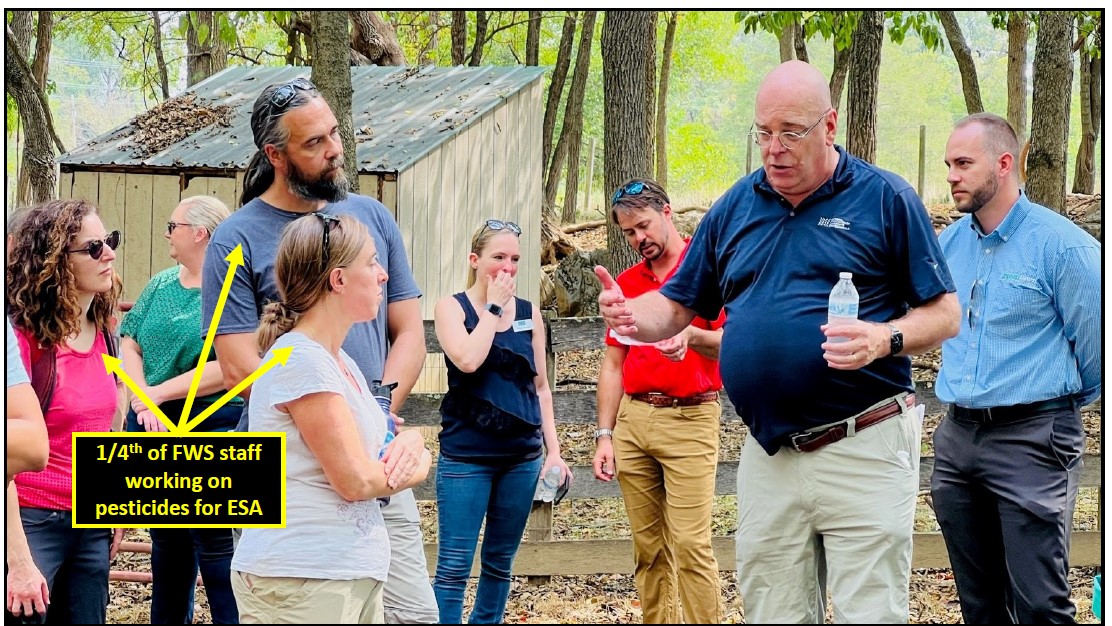
Figure 1. Bob Mann educating USFW at a workshop
Modeling
The pesticide evaluation model looks at the agricultural applications of pesticides. This is with high-volume equipment, sprayed with high pressures in large open areas. This has a much bigger effect on the off-target environment than the landscape or golf industry which is using low-volume sprayers in much more localized applications.
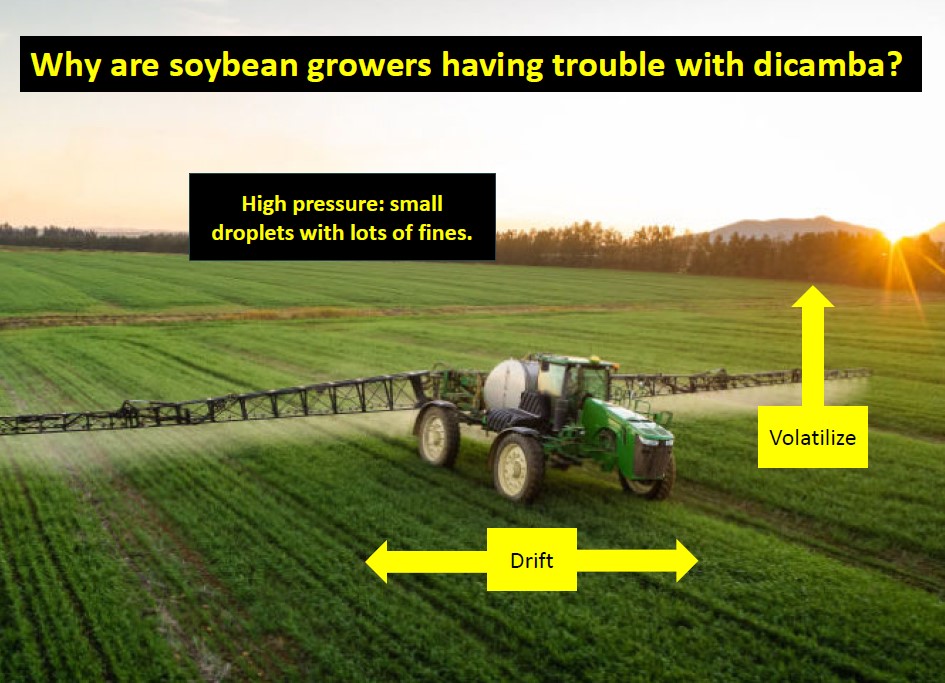
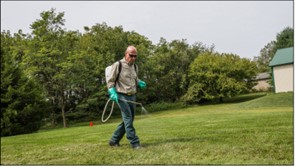
Figures 2-3. Agricultural Pesticide Spraying vs. Landscape Spot Spraying
A New Strategy
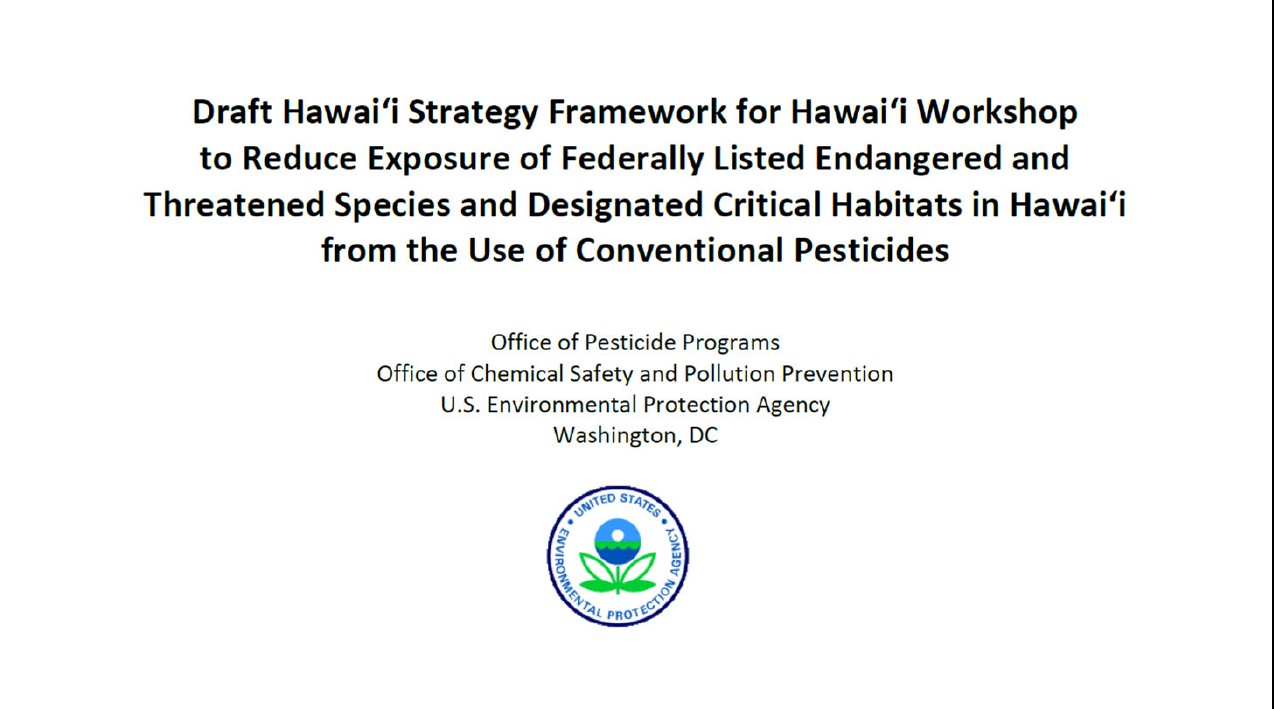
Figure 4. The EPA intends to use the Hawaii Strategy and Framework to inform ESA mitigations in future registration decisions both here and on the mainland.
What can the Landscape Industry Do?
We need to be proactive and show the EPA and Services that we have thoughtful guidelines, and that we train and police our industry. Former LICH President, Chris Dacus, had the forethought to create a Best Practices Manual for the DOT back in 2011. LICH organizational member, the Hawaii Golf Course Superintendent’s Association also came up with a BMP manual recently.
Figure 5. Best Practices Manual for the DOT created by Chris Dacus in 2011.
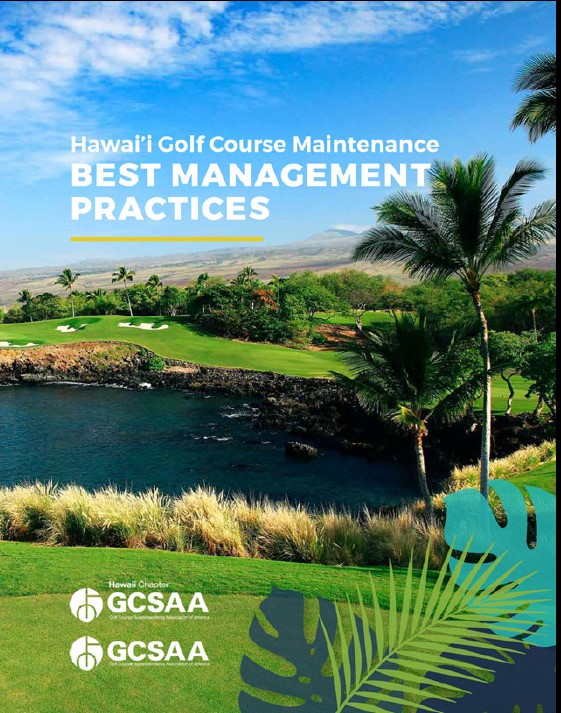
Figure 6. Best Management Practices (BMP) created by the Hawaii Golf Course Superintendent’s Association.
As Bob said, “Business as usual is over”. If we don’t get ahead of this, our toolbox could have many useful tools removed right when we need them more than ever to fight CRB, LFA, and whatever new invasive species are establishing in Hawaii as we speak. We can collaborate in this fight with allies at the Farm Bureau, GCSAA, ASLA, U.H., and other industry and government groups. But we need to take control of our destiny. And maybe Hawaii can be a leading example in the nation for a change.
Matt Lyum, Founder of Performance Landscapes and ECS Environmental. Lyum holds a Restricted Use Pesticide Applicator Certificate, a is a Landscape Contractor RME. He is a member of the Hawaii State Farm Bureau, and the Governor’s Advisory Committee on Pesticides. He graduated from Punahou School and has a Bachelor of Science Degree from the University of Washington.
After a Devastating Loss - Newly Refreshed Palolo Triangle in Kaimuki
By: Brandon Au
The iconic Chinese Banyan tree that shaded Waialae and Palolo Avenues had been targeted by the stem and leaf gall wasps and the lobate lac scale over many years. The Department of Parks and Recreation (DPR), Division of Urban Forestry (DUF), and Horticulture Services Branch have been maintaining and treating this banyan. It was observed that this tree was showing signs of weakening and needed additional care. Late in 2023, DUF’s Nursery and Landscape Section treated the banyan tree with a systemic insecticide, fertilized it, and provided additional watering.
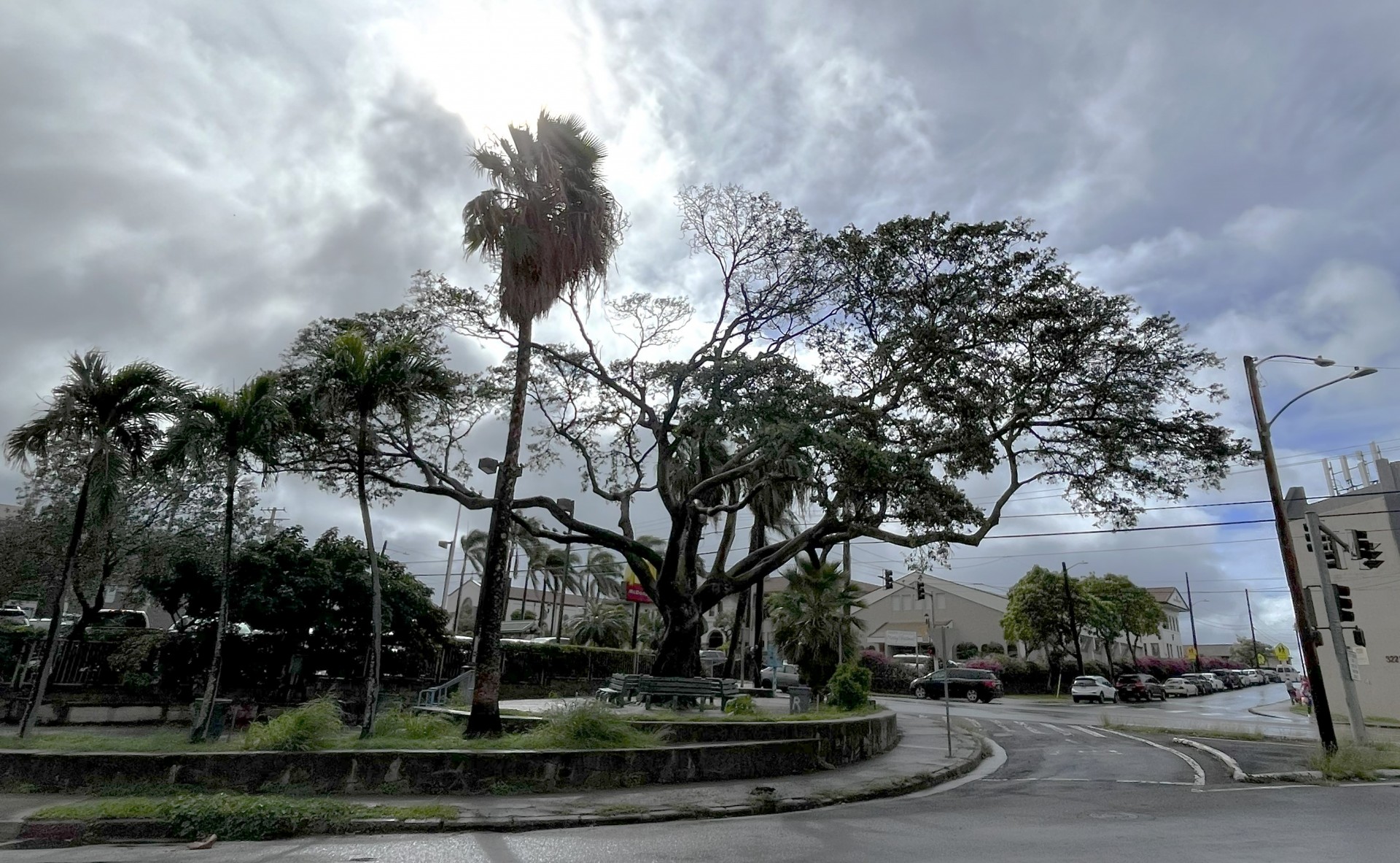
Figure 1. The iconic Chinese Banyan tree showing signs of weakening and needing care.
However, in February 2024, a major limb snapped and fell onto Palolo Avenue in the early morning prior to the morning traffic without incident. DUF’s Arboriculture Section addressed the emergency and later returned to remove the entire tree due to extensive rot that compromised the integrity of the tree. It was unfortunate to see how a once heavily-shaded area, where the community waited for the bus, hung out, and enjoyed the area, was now completely open with no shade at all.
The Nursery and Landscape Section quickly designed a tree replacement plan but also redesigned the entire park. The existing landscaping dates back to the early 1970s, and needed a refresh. DUF coordinated with DPR’s Park Maintenance and Recreation Services (PMRS) Division, which maintains the grounds, the litter and debris, and landscaping, and also with PMRS’s Maintenance Support Services (MSS) Branch, Plumbing and Irrigation Section, who replaced the backflow preventer and repaired and restored the existing irrigation system. An Ali‘i Banyan replaced the Chinese Banyan, and Weeping Bottlebrush trees, Mame and Norma Croton shrubs, Natal Plum groundcover, and El Toro grass were planted.
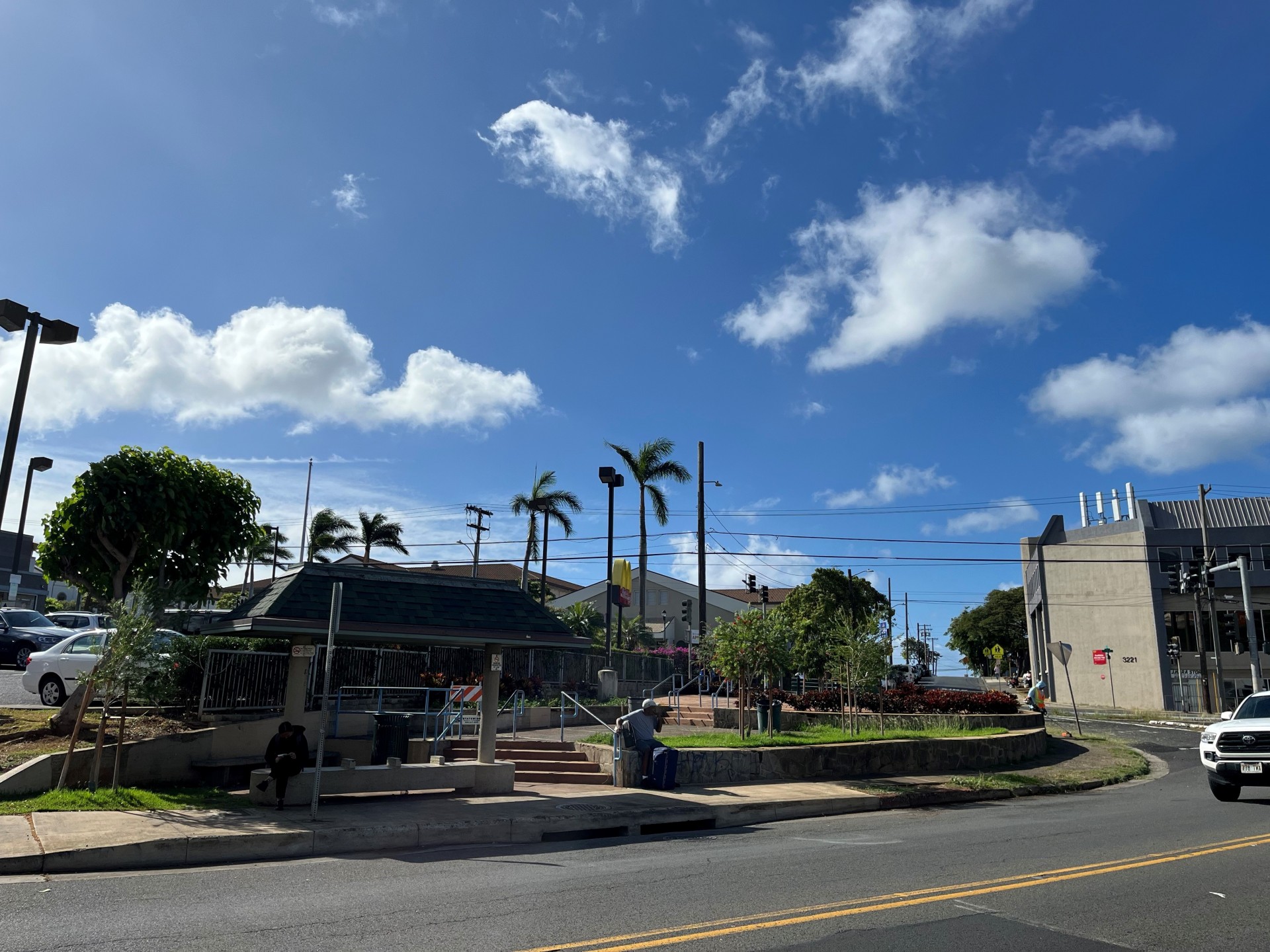
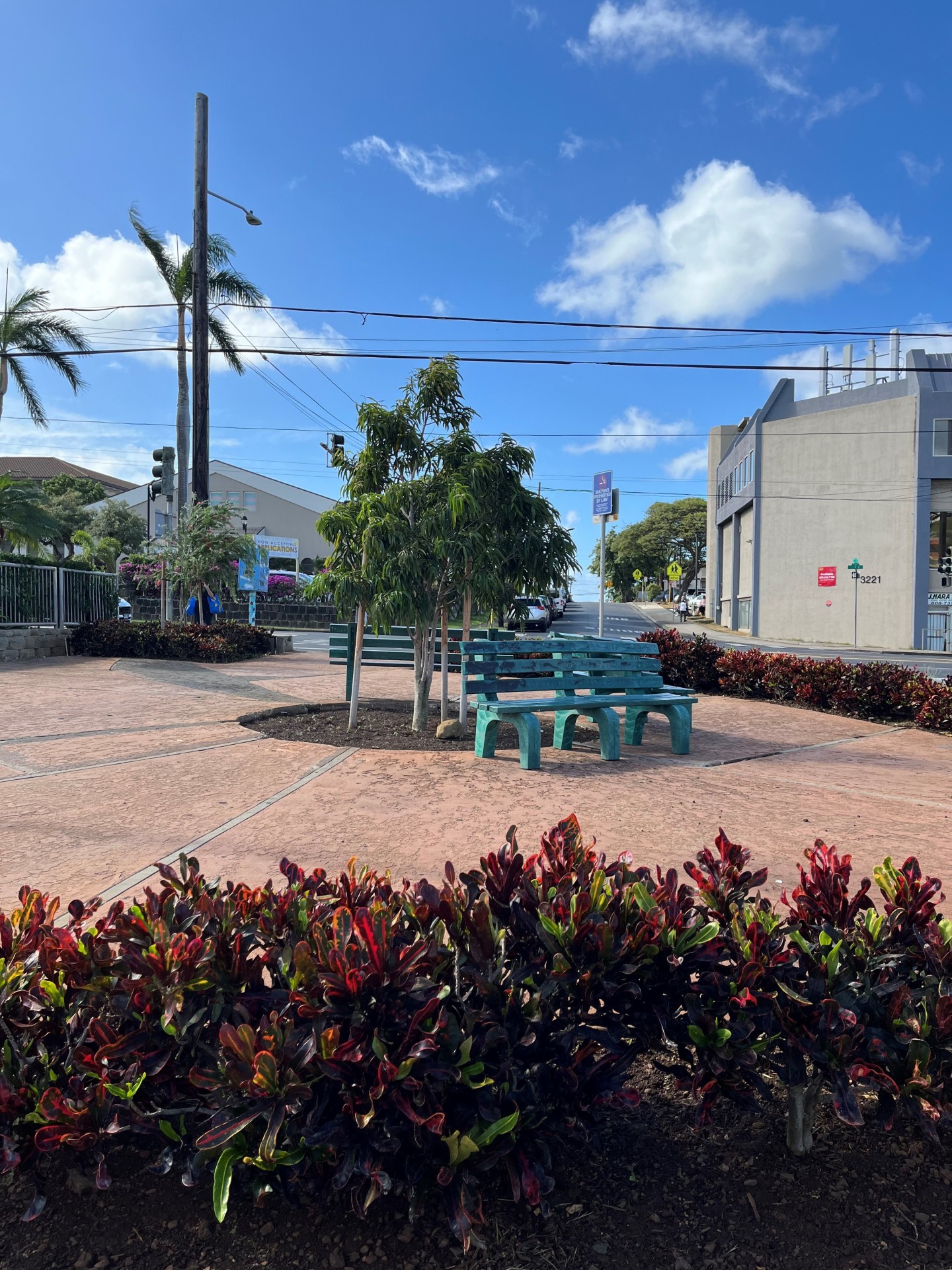
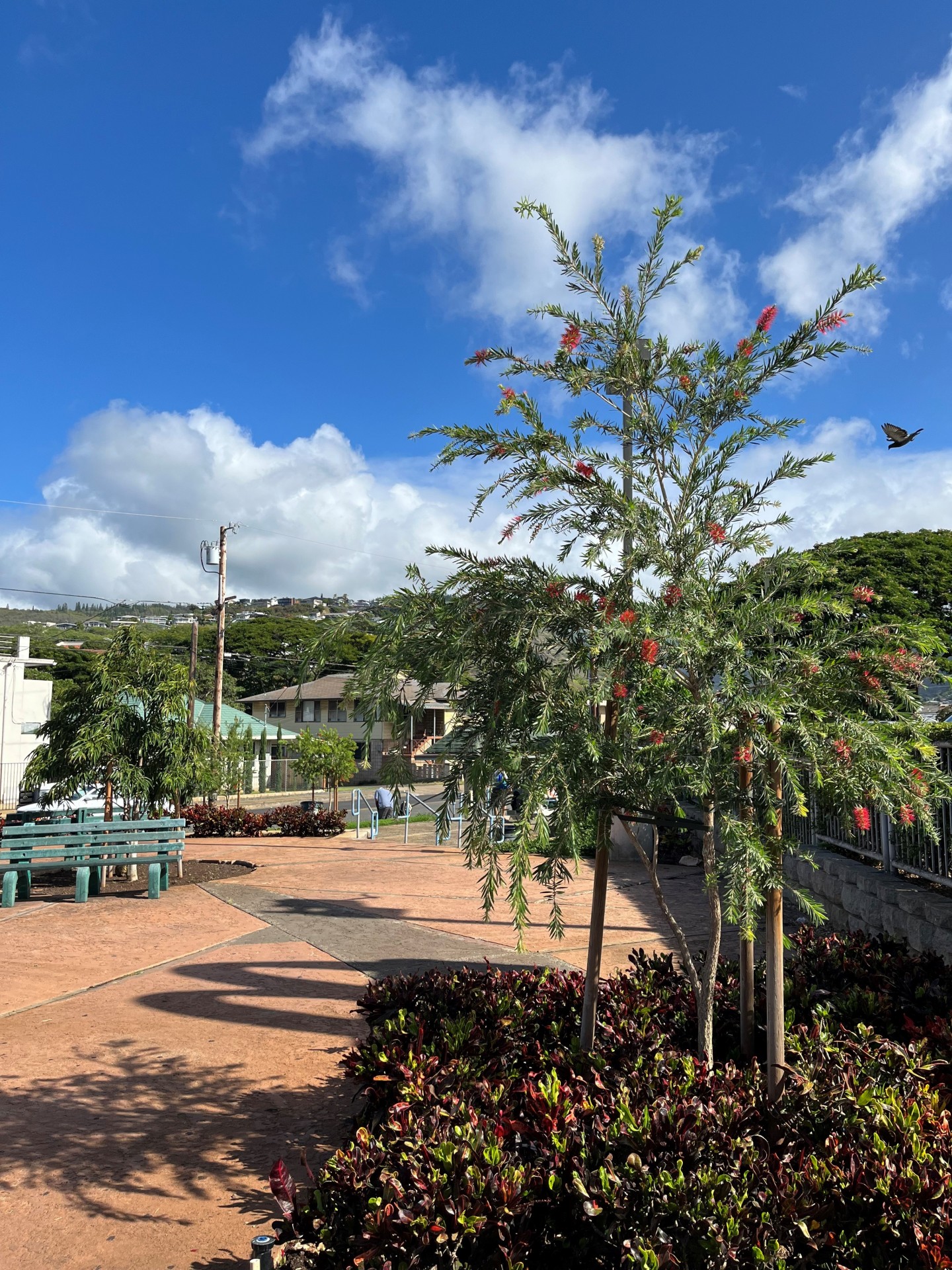
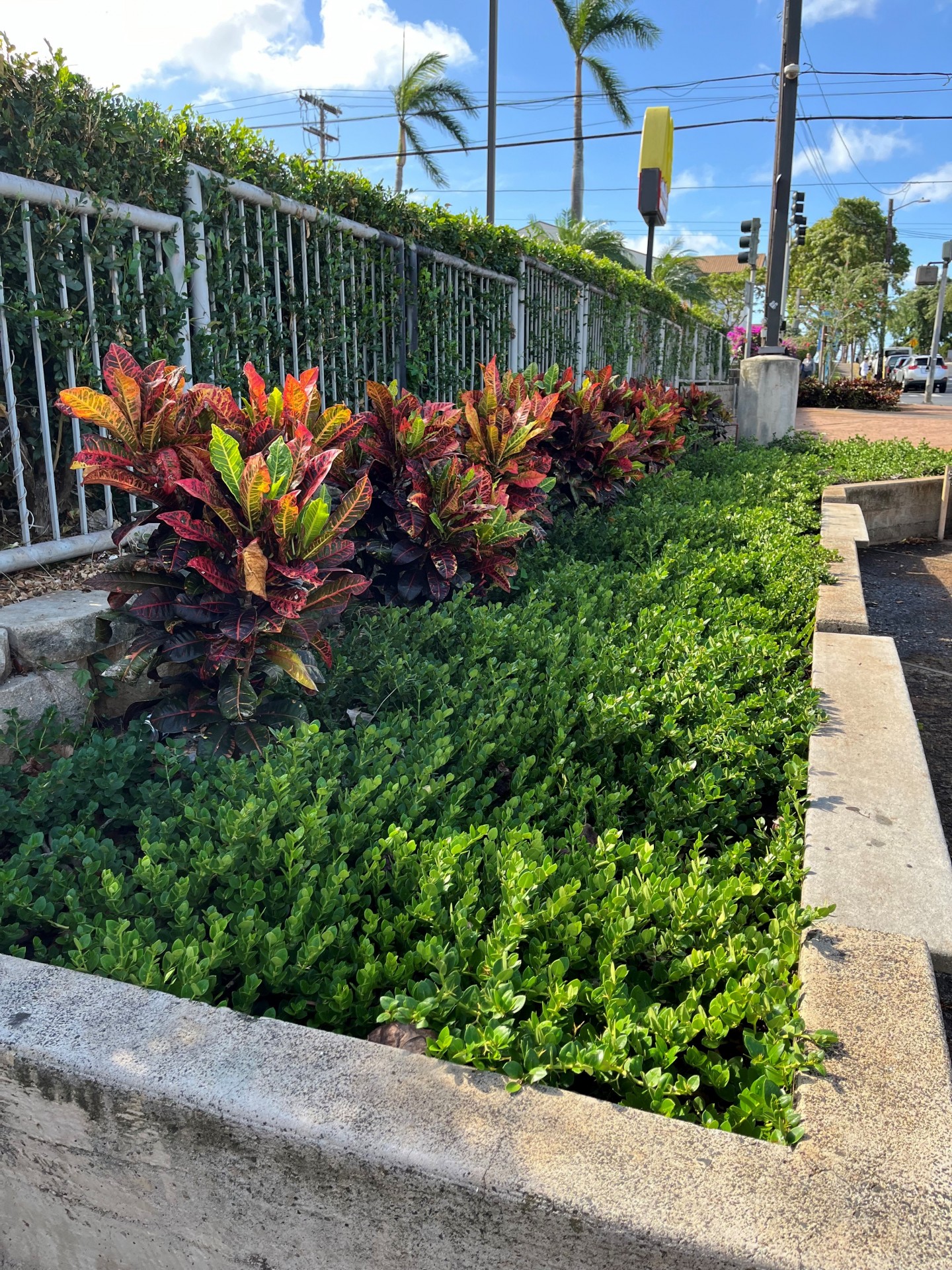
Figures 2-5. The refreshed landscape at the Palolo Triangle in Kaimuki was planted with Ali‘i Banyan which replaced the Chinese Banyan, Weeping Bottlebrush trees, Mame and Norma Croton shrubs, Natal Plum groundcover, and El Toro grass.
As mentioned in a press release, DUF’s Administrator, Roxanne M. Adams, hopes the replacement tree and landscaping will create a new sense of place and community for the neighborhood. She stated, “I refer to trees like these as ‘sentinels’ because they watch over our neighborhoods and provide a myriad of benefits and protections. We very much understood the impact the loss of this tree had on the community, and wanted to replace it as soon as possible.”
DUF, PMRS, and MSS were recognized by the Department for their hard work and dedication in revitalizing the Palolo Triangle and were presented with the Department’s Parks Pride Award.
This tree planting project was completed on National Love a Tree Day on May 16th which was celebrated with Trees for Honolulu’s Future and Smart Trees Pacific.
Brandon Au, Vice President of LICH, is the head of the Nursery and Landscape Section for the City and County of Honolulu’s Department of Parks and Recreation, Division of Urban Forestry.
Awawalei Agroforestry Connects Community to Aina
By: Ilana Nimz & Heidi Bornhorst
Tucked away in Kunia, just on the other side of the H1 onramp, is a glimmer of hope. Driving on the freeway during traffic, it’s hard to imagine that a small oasis is hidden amongst the invasive koa haole brush and dry clay soil. A healthy koa stands tall, surrounded by young ‘ulu trees, loulu palms, and puakenikeni. This is Awāwalei, a proof-of-concept that 2 acres of former sugar land can become productive again with dedication and community involvement.
A group of us from Scenic Hawaii visited the Awāwalei site on a sweltering morning in mid-October. Scenic Hawaii is a non-profit that supports programs that protect Hawaii’s natural beauty, and preserve and enhance landscapes, cultural resources, and scenic views. The non-profit was in a fortunate position to disperse funding, and MLC was a perfect organization to receive support. Grant writing is very hard work, especially with all the important work taking place in MLC’s various field sites. Sometimes it is great to just be given some funding as a reward for all the great work with plants, food forests, and our community.
We had greetings and exchanged lei in the shade of the Research Center parking lot with fellow volunteers from First Insurance Company of Hawaii, and several dedicated community members who were excited to get their hands dirty. We met Pauline Sato, the MLC Executive Director. Pauline radiates passion, optimism, and dedication to her organization and community. Her excitement about the Awāwalei site and the other MLC projects was palpable and established good vibes for the work day. Pauline warned us the site would be loud, because of its location next to the freeway. But, this site would be otherwise unused, proving even undesirable locations can be productive.
We carpooled to Awāwalei, where three chipper wahine from MLC lead us to the shaded pavilions and picnic tables for our site orientation. The pavilions were funded by the Scenic Hawaii grant! The freeway is indeed loud, but it’s easy to tune out the noise being in the shade and surrounded by interesting fruit trees. Pauline explained our plan for the day, which was an educational guided tour of the site, followed by weeding, spreading mulch, and planting a fruit tree. We learned Awāwalei refers to the view over Pu’uloa, or the lei of bays that we now call Pearl Harbor. Four years ago, the two acres were dominated by invasive grasses and brush. While clearing is always ongoing, much of the site has been now planted and young trees are beginning to bear the fruits of hard work and dedication. The site is an AgroForest in progress, and a site for trial and error.
An agroforest mimics a natural ecosystem by integrating a diversity of crops into an agricultural system. Woody trees, perennial plants, short-term crops, and native species grow together to create a forest of useful plants. The ecosystem benefits are numerous, including water conservation, improved soil health, increased biodiversity of plants and animals, and habitat restoration. Awāwalei is set up as an orchard-style system, and combines native species with Polynesian-introduced plants, and classic food crops. Lei plants, such as crownflower, are also important to include in Awāwalei. MLC grows lei plants show abundance and aloha to the community that cares for this place.
Our guide Aiko Kawakami begins our site tour with the newest addition to the agroforest, young citrus trees nestled amongst 15-ft. tall Madre de Cacao and surrounded by native ʻAʻaliʻi
Our tour of the agroforest passes a variety of native plants. Aiko teaches us that the native Hawaiian cotton, ma’o, saved the American cotton industry. An invasive boil weevil was attracted to the cotton flowers and damaged American cotton plants by laying eggs on the cotton flower buds. The infected buds stopped developing, which reduced the yield of cotton. Ma’o flowers are less attractive to the weevils, but the plant is not a productive cotton producer. The ma’o were hybridized with American cotton to develop a pest-resistant variety. Your cotton shirt likely has the genetics of the native Hawaiian cotton in it! This story not only shows the value of maintaining a diversity of plants, but the ingenuity of people and the power of collaboration.
The value of diversity is evident in the kalo patch. The Awāwalei site is a repository for several kupuna varieties of dryland kalo. Many people are familiar with the flooded lo’i kalo in lowland waterways, but not all kalo varieties need that amount of water. The kalo here are thriving in the hot and dry Kunia environment, and perpetuate the legacy of cultivars brought to Hawaii by the first settlers of the islands.
Throughout the site, we noticed ornaments hanging in the trees- crumpled paper balls and cardboard. These simple contraptions turned out to be ingenious wasp deterrents! The decoy nests look like wasp nests, which repel real wasps and protect keiki and staff.
After the tour, the groups split into two teams. One team pulled weeds off the native and food plants in the garden. Invasive Spanish Needles (Bidens pilosa) and Passiflora spp. vines were tangled in the plants. We were able to expose an ‘ihi (Portulaca molokiniensis) hiding beneath the invasive plants. The second group spread fresh mulch around the newly planted citrus grove. The mulch will help with water retention and provide nutrients to the soil.
While the agroforest itself was impressive, I was more captivated by the intangible aspects of our tour. Community volunteers were able to see the lush liliko’i vines that were laden with round green fruits. Several people didn’t know that liliko’i grew on vines, as they just pick the ripe fruit up from the store or farm stand, or eat the tangy pulp on top of a cheesecake. Native koa trees are becoming rarer to observe nowadays, especially on the densely urbanized island of Oahu. We were able to go up to the koa tree, touch its bark, and feel the texture of its phyllodes, or the secondary leaves that make koa more drought tolerant. We rubbed the bright red seeds from the achiote (lipstick) tree between our fingers and streaked our faces with the pigmented powder. We saw the cassava plant, which is the foundation of the beloved boba drinks. It's these connections to food and plants that make Awāwalei such a special place.
If you want to visit Awāwalei, contact Malama Learning Center or follow @malamalearningcenter on social media. They put out calls for community volunteer workdays at Awāwalei and their other sites.
Mahalo to Malama Learning Center staff: Pauline Sato, Aiko Kawakami, Mariah Gaoiran, Sasha Giron, and to our other Scenic Hawaii board members for visiting Awāwalei: Scott Fujii, Cicely George, Carl Kim, and Jason Umemoto.
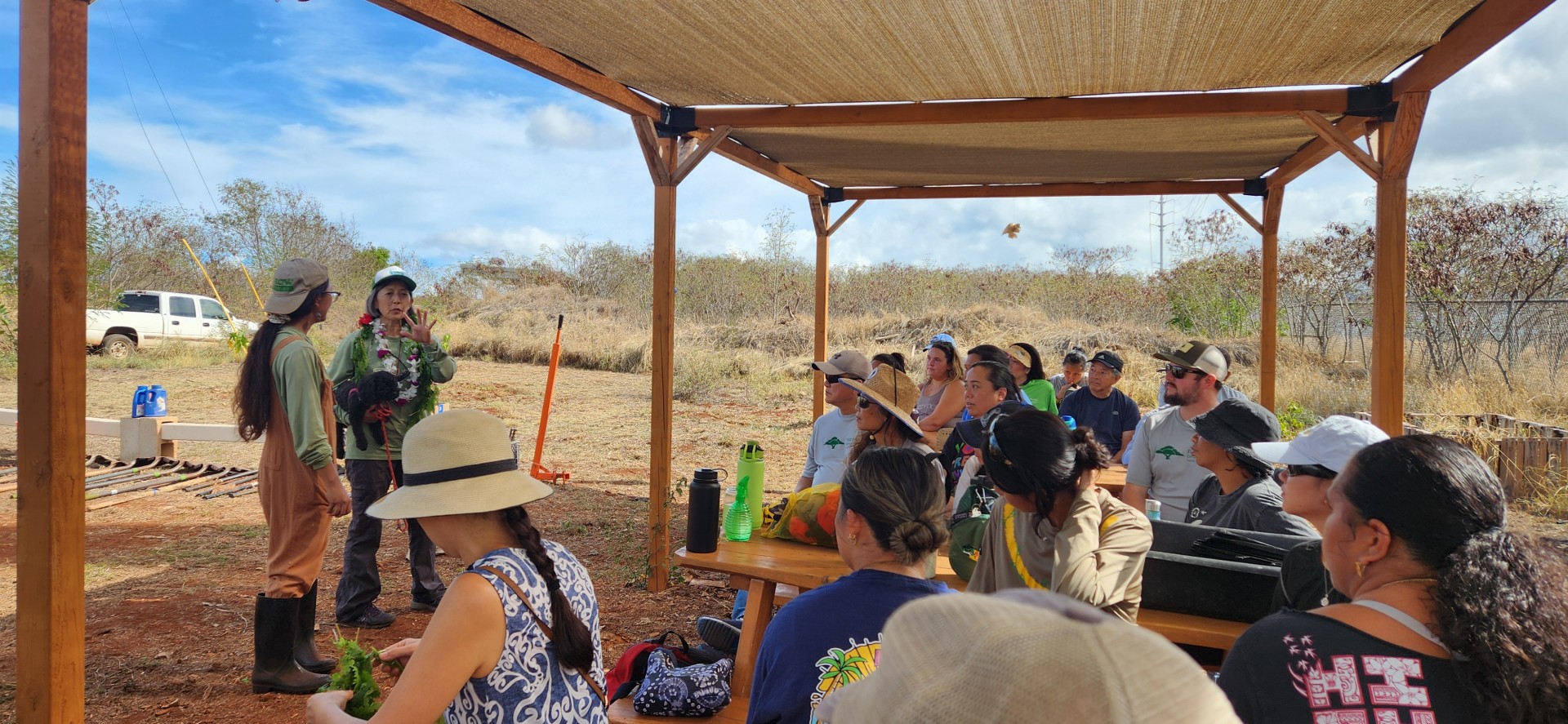
Figure 1. Community volunteers learn about the history of the Awawalei site from Malama Learning Center staff and executive director Pauline Sato. The site is hot, dry, and full of invasive shrubs, so the shaded pavilions are the perfect learning spot.
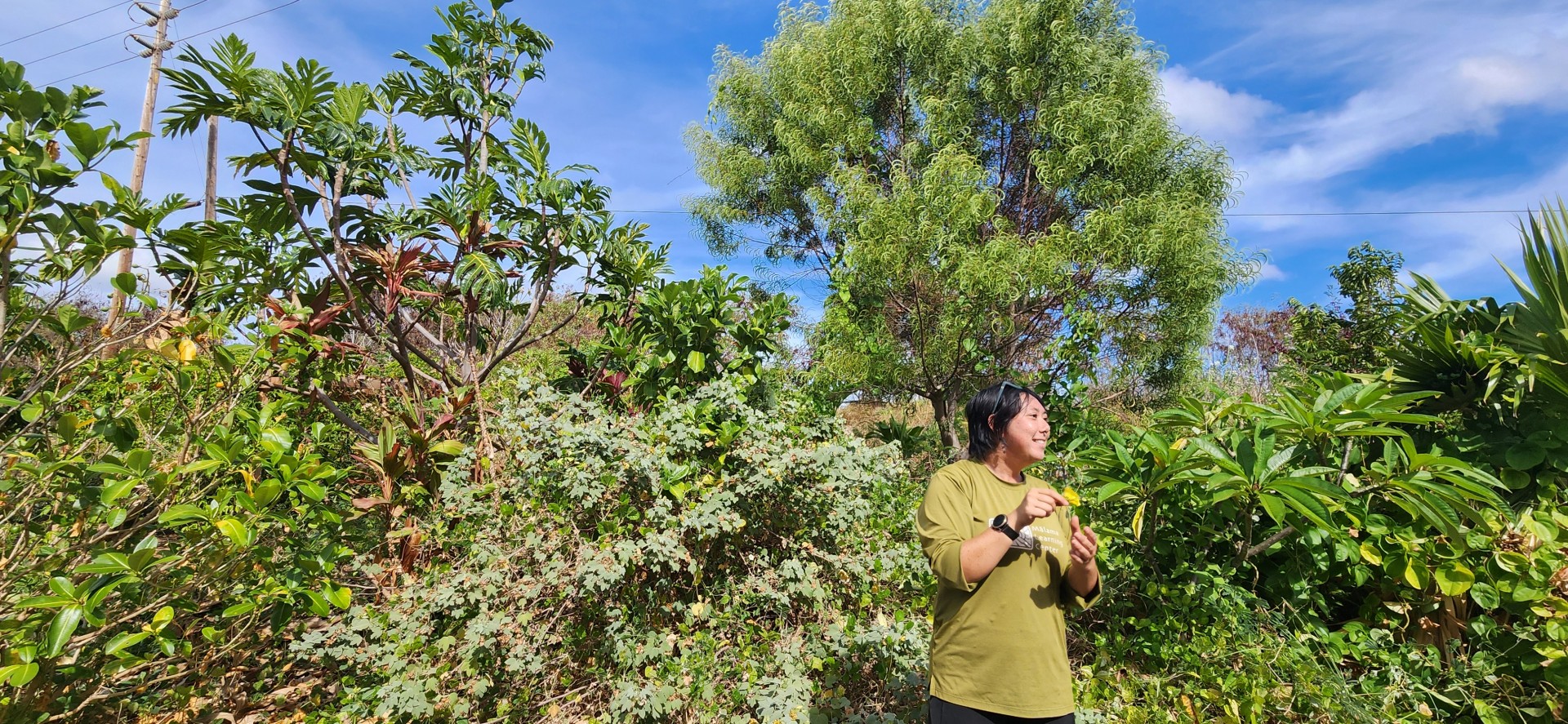
Figure 2. Malama Learning Center staff Aiko tells us the story of the Ma’o, Hawaiian cotton plant. Behind Aiko, the lush agroforest hosts numerous species, including koa, ulu and puakenikeni.
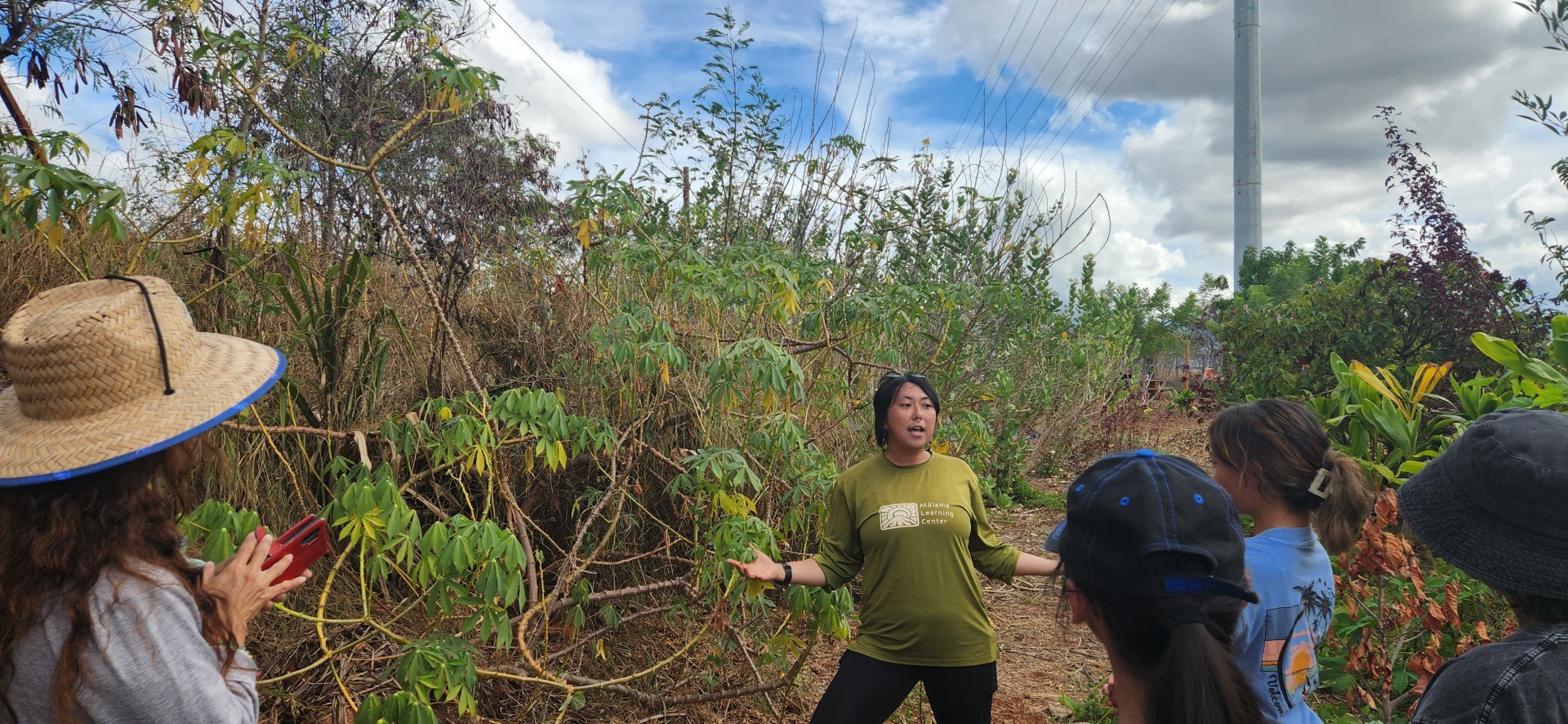
Figure 3. Aiko shows us the origin of boba- the cassava plant! While there is still area to be cleared and cultivated, usable space is in production and teaching the community about where food comes from.
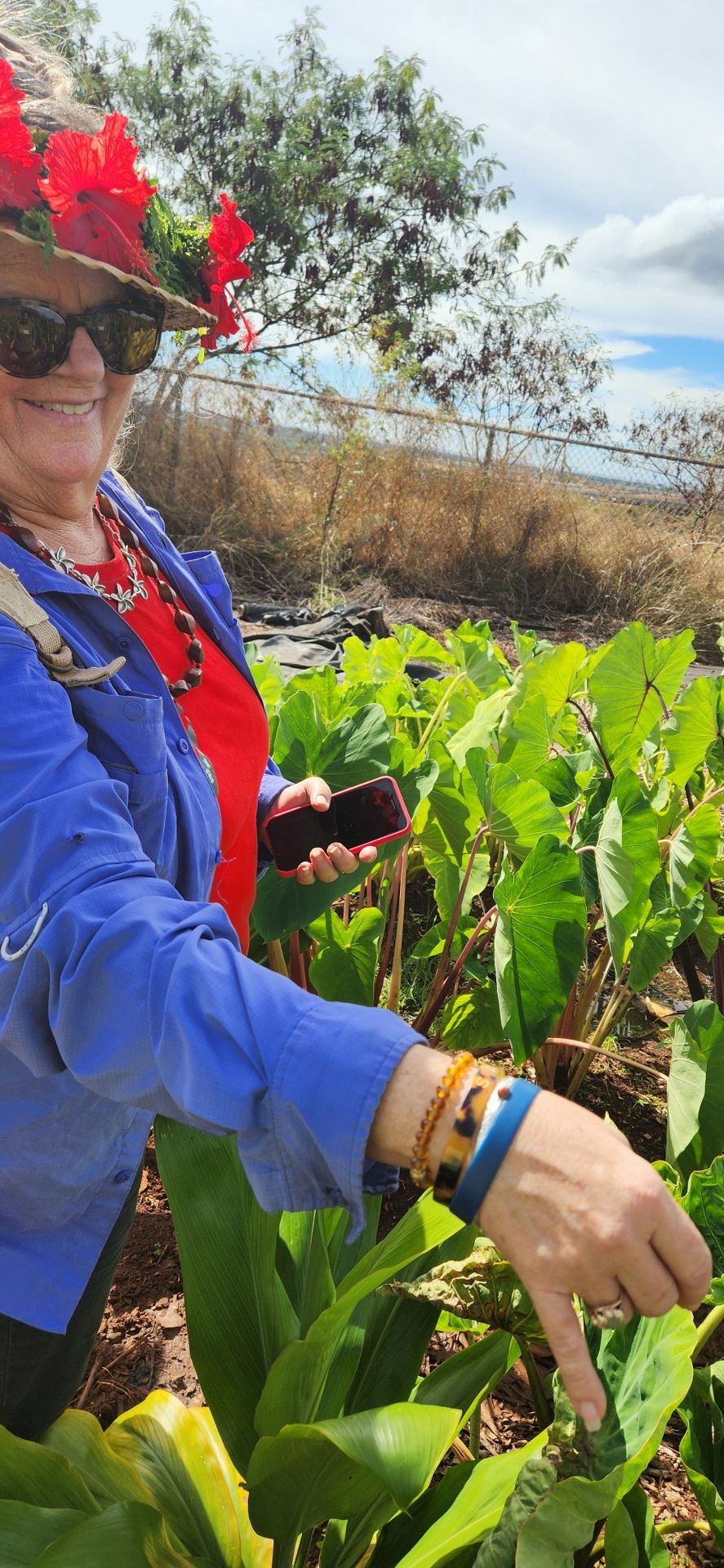
Figure 4. Master horticulturist, Heidi Bornhorst, shows off a ladybug- a predatory insect that reduces pest populations in the agroforest. The food forest supports a diversity of insects, which is a healthier and more productive ecosystem. The kupuna dryland kalo plants are lush and thriving behind Heidi. Beyond the fence is the H1 Freeway.
Leveling the Playing Field: How Small Hawaii Businesses Can Compete for Federal and Corporate Contracts
By: Mari Villa
Across Hawaii, talented small businesses and skilled professionals provide high-quality services and products. Yet, a recurring scenario plays out in the contracting market: mainland companies with federal or corporate certifications arrive and bid on lucrative federal and corporate Hawaii-based contracts.
They often win them due to their certification credentials and experience in federal or corporate contracting. They may hire a few local employees to conduct the work, but they then take most of the contract’s revenue back to their home state.
While this setup is financially beneficial for these mainland firms, it leaves Hawaii’s small businesses at a distinct disadvantage. Despite being well-qualified, and having “boots on the ground,” local businesses often lose out on these contracts, not due to lack of skill but due to a lack of awareness of small business certifications that could enable them to compete effectively.
The federal government is the largest consumer of goods and services in the world. In 1978, the federal government decided to level the playing field for underrepresented and underserved businesses in its contracting systems. It set aside 23% of all federal government contracts for groups, including: Minority-Owned; Women-Owned; and Veteran-Owned businesses.
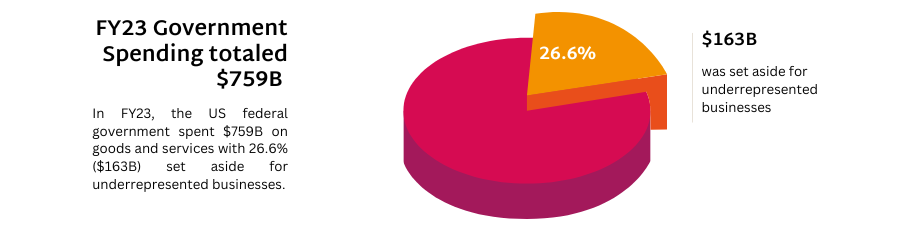
That set-aside amount was raised in 2022. As a result, in FY23, the federal government spent $759B on goods and services, and 26.6% ($163B) were set aside for underrepresented businesses.
Certifications like the Small Business Administration’s (SBA): 8(a) Business Development Program; HUBZone (Historically Underutilized Zone); Service-Disabled Veteran-Owned Small Business (SDVOSB), and Woman-Owned Small Business (WOSB) are structured to provide small businesses fair access to federal contracts.
As a result of the federal government’s encouragement, many corporations dealing with the federal government are also mandated to set aside a portion of their contracts for underrepresented businesses. That led to the creation of a parallel corporate small business certification system. As a result, many corporate procurement processes favor certified small businesses, including: MBE (Minority Business Enterprise); WBE (Woman Business Enterprise), and VBE (Veteran Business Enterprise).
Regrettably, many Hawaii-based companies are not aware of these certifications or how they can use them to strengthen their competitive edge — not only in Hawaii but across the United States and its territories.
To level the playing field for Hawaii businesses, it is crucial that they understand the certifications available, and how to leverage them, for their company’s growth.
The Current Landscape: Why Mainland Firms Succeed in Hawaii Contracts
In industries ranging from construction and information technology to consulting and healthcare, Hawaii’s small businesses provide the expertise needed to meet local demands. But mainland companies understand the certifications that provide them a “foot in the door” and access to set-aside contracts or preferential treatment in the federal and corporate procurement systems.
The Value of “Boots on the Ground”
One advantage that Hawaii’s small businesses inherently have is their physical presence and intimate knowledge of the local landscape. This “boots on the ground” positioning is a significant asset. Local companies understand Hawaii’s culture, logistical challenges, and specific needs better than any mainland firm could. This advantage is not simply theoretical; it translates into more efficient service delivery, fewer delays, and the ability to adapt to local client needs more effectively.
Mainland companies, while capable, often face steep learning curves and logistical challenges that local businesses can navigate with ease. Hawaii’s small businesses can offer solutions that are more targeted, sustainable, and relevant to Hawaii’s communities. However, to capitalize on this advantage, they must be able to bid on these contracts - something that certifications can facilitate.
Certification Programs: Opening Doors for Hawaii Businesses
Federal and corporate certifications were created to level the playing field for small businesses, including those in Hawaii. They recognize that small businesses face unique challenges when competing against larger firms and therefore provide avenues that help bridge this gap.
Here are some of the federal certifications:
- SBA 8(a) Business Development Program: Provides business development assistance, mentoring, and the opportunity to compete for set-aside and sole-source contracts.
- HUBZone (Historically Underutilized Business Zone) Certification: Helps spur economic development in historically underrepresented communities by directing federal dollars to them.
- Service-Disabled Veteran-Owned Small Business (SDVOSB) Certification: Supports veterans who have served the country and now plan to grow their businesses.
- Woman-Owned Small Business (WOSB) Certification: Helps women entrepreneurs break into traditionally male-dominated industries.
Here are some of the corporate certifications:
- Minority Business Enterprise (MBE) Certification: Helps minority-owned businesses gain access to supplier diversity programs, networking, and contract opportunities.
- Women’s Business Enterprise (WBE) Certification: Enables women-owned businesses to participate in supplier diversity programs, giving them access to potential business partnerships; contracts; and training resources.
- Veteran Business Enterprise (VBE) Certification: Provides veteran-owned businesses access to corporate supplier diversity programs and contracting opportunities, facilitating partnerships.
These certifications create set-aside opportunities and sometimes sole-source contract awards, meaning only businesses with specific certifications are eligible to bid. For Hawaii companies, obtaining these certifications opens doors to contracts that mainland companies might already be competing for, while also allowing local firms to compete for contracts on the mainland, expanding their potential market.
The Challenge: Awareness and Understanding of Certification Benefits
For many Hawaii small businesses, certifications can seem like a confusing, or unnecessary step, especially if they are unfamiliar with the contracting process. However, it is critical to understand that these certifications are powerful business leveraging tools. They provide Hawaii businesses the opportunity to build relationships with federal agencies and large corporations, proving their capabilities and growing their contracting portfolios.
Additionally, many federal contracts require contractors to hire local workers or subcontract with local businesses. Certifications can help Hawaii-based firms position themselves as primary contractors, instead of subcontractors, ensuring that more contract dollars stay within the islands. Without certifications, local businesses may struggle to meet eligibility requirements and can miss opportunities.
Leveraging Certifications to Compete Nationally
Once certified, Hawaii businesses are not limited to competing for contracts within the islands—they can also bid on contracts throughout the nation and its territories. The same certification that helps a Hawaii business win a contract in Honolulu could just as easily help them secure work in California or Texas. This not only diversifies revenue streams but also builds resilience, as companies are not solely dependent on the local economy.
For example, Hawaii businesses that specialize in areas like renewable energy, construction, or consulting-which have high demand across the U.S.-can use their certification as a springboard for expanding their business. Companies from the islands have successfully competed on the mainland, proving that geographic location is no barrier when paired with the right certifications.
Next Steps for Hawaii Small Businesses
To take advantage of federal and corporate certification benefits, Hawaii businesses need to start with education. Understanding the application process, eligibility criteria, and benefits of each certification is the first step. Working with local business organizations, SBA offices, and consultants who specialize in federal and corporate contracting can make the certification process smoother and more efficient.
Once certified, businesses should actively pursue federal and corporate contract opportunities, beginning with smaller contracts and building their reputation over time. Participating in government contracting workshops, networking with procurement officers, and joining organizations that support certified small businesses will also increase visibility and competitiveness.
Leveling the Playing Field for Hawaii’s Future
The federal and corporate certification landscape is a game-changer for Hawaii’s small businesses. By becoming certified, local companies can go toe-to-toe with mainland firms, both in Hawaii and across the nation. Certifications were designed to create a fair and competitive contracting environment, allowing small businesses to thrive.
With local expertise and a true understanding of Hawaii’s unique landscape, Hawaii businesses can not only compete but excel, keeping more of the contract dollars within the islands and fostering economic resilience for future generations. Embracing these certifications will empower Hawaii’s small businesses to take control of their economic destiny, building a stronger, more self-reliant community.
Mari Villa is the CEO of Villa Business Consulting, Inc. She has been helping Hawaii businesses get certified for more than 15 years since she got her training from Disney.
ASLA announces 2024 award recipients
By: Nancy Cassandro
The American Society of Landscape Architects, Hawaii Chapter (ASLA Hawaii), announced the winners of their 2024 Design Awards at their Awards Gala, on September 26, 2024, at the Pacific Club in Honolulu. The Triennial Awards Program recognizes excellence in Landscape Architectural design.
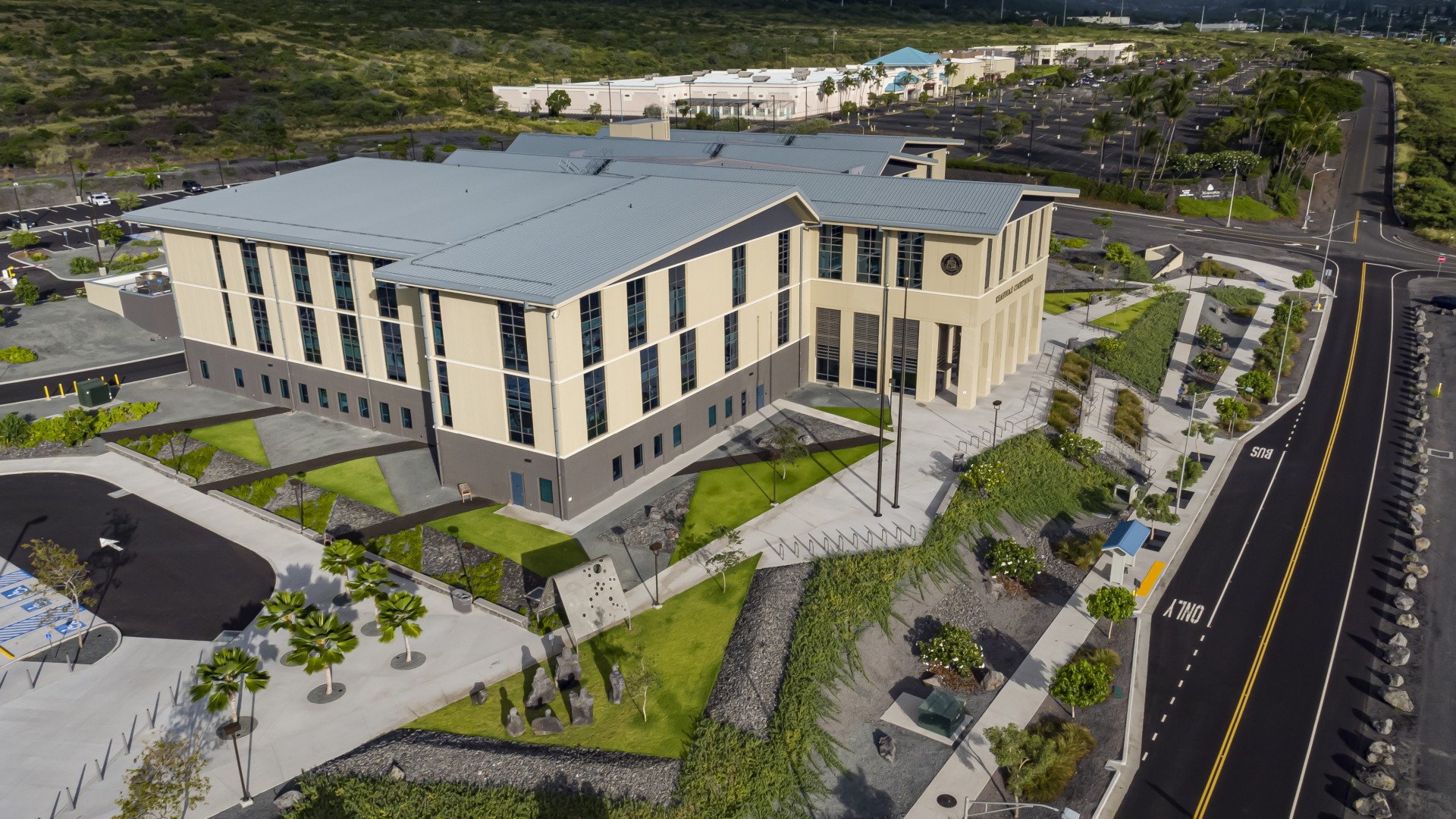
Figure 1. ASLA Hawaii 2024 General Design-Award of Excellence, Keahuolu Courthouse, Kona, Hawaii. Landscape architects Ki Concepts. Photo courtesy of ASLA Hawaii.
General Design Award of Excellence: Keahuolu Courthouse, Kona, Hawaii.
Client: Hawaii State Judiciary and Department of Accounting and General Services.
Architect: Architects Hawaii, ltd.
General Contractor: Nan Inc.
Landscape Contractor: Resort Management Group, LLC.
General Design Honor Award: Honouliuli Middle School, Oahu.
Landscape architect: Ki Concepts.
Client: Hawaii Department of Education.
Architect: Ferraro Choi & Assoc., LTD and Miller Hall Partnership, LLP.
General Contractor: Nan, Inc.
Landscape Contractor: Island Landscape (Phase1) Green Thumb Inc. (Phase 2 & 3).
General Design Merit Award: Manoa Marketplace Refresh, Oahu.
Landscape architect: Walters, Kimura Motoda, Inc.
Client: Alexander and Baldwin.
Architect: JPRA Architects.
Landscape Contractor: Progressive Landscaping, Inc.
Planning and Analysis Merit Award: Waikiki Resilience and Sea Level Rise Adaptation Project (WRAP).
Investigators: University of Hawaii Community Design Center.
Client: State of Hawaii Office of Planning and Sustainable Development (OPSD).
Research Merit Award: Building Urban Tree Resiliency: Below Ground Root Mitigation.
Investigator: Dr. Andrew Kaufman, ASLA, MLA, PhD., Associate Professor, University of Hawaii, TPSS & CTAHR.
Client: City and County of Honolulu, Hawaii Nursery and Landscape Professionals: ASLA, AAA, LICH.
Communication Honor Award: Aala Park: Community Participatory Proof of Concept Design. Investigators: The University of Hawaii Community Design Center.
Client: The Trust for Public Land (TPL).
ASLA Hawaii Student Design Awards: A total of 4 awards were given to the students of the Master of Landscape Architecture program at the UH Manoa School of Architecture. One Student General Design Award of Excellence, One Student Honor Award and 2 Student Merit Awards were presented.
View ALL 2024 Design Awards Videos at: https://www.hawaiiasla.org/awards
The awards celebration also recognized recipients of its Hawaii Chapter Recognition Awards, which are nominated by ASLA Hawaii members and selected by its Executive Committee. There are three Awards:
The Kupukupu Award, was presented to Matthew Higa, landscape designer at Ki Concepts for his outstanding contribution in leadership as an emerging professional in landscape architecture. The Kupukupu Award, named after the native Hawaiian fern, recognizes someone new and young who is breaking through the profession as an exemplary emerging professional.
The Malama Aina Award recognizes individuals or organizations outside of the field of Landscape Architecture for distinctive efforts in promoting the preservation and enhancement of the landscape in Hawaii. This year’s Award recipient is Lea Hong of the Trust for Public Land (TPL). Lea Hong is the national Vice President and Hawaii State Director for the Trust for Public Land. Under Lea’s leadership, the Trust for Public Land established TPL’s Aloha Aina program and TPL’s Sustainable Hawaii Program, which protects food, forests, and drinking water sources. Notable land protection completed projects include Ka Iwi Coast Mauka Lands, Kahuku Kawela Forever Turtle Bay Makai), and the Lands of Lihue (the Galbraith Estate). Visit Hawaii Land Conservation: Trust for Public Land
The Po okela Award means “striving for the best, commitment to excellence, champion, or pinnacle of excellence.” This award recognizes local landscape architects who have made significant contributions to the profession and our community in Hawaii. This year’s recipient, Lester Inouye, FASLA is recognized for his over 40 years of practice and volunteer contributions to ASLA, LICH, The Outdoor Circle, and many volunteer positions. See the full article.
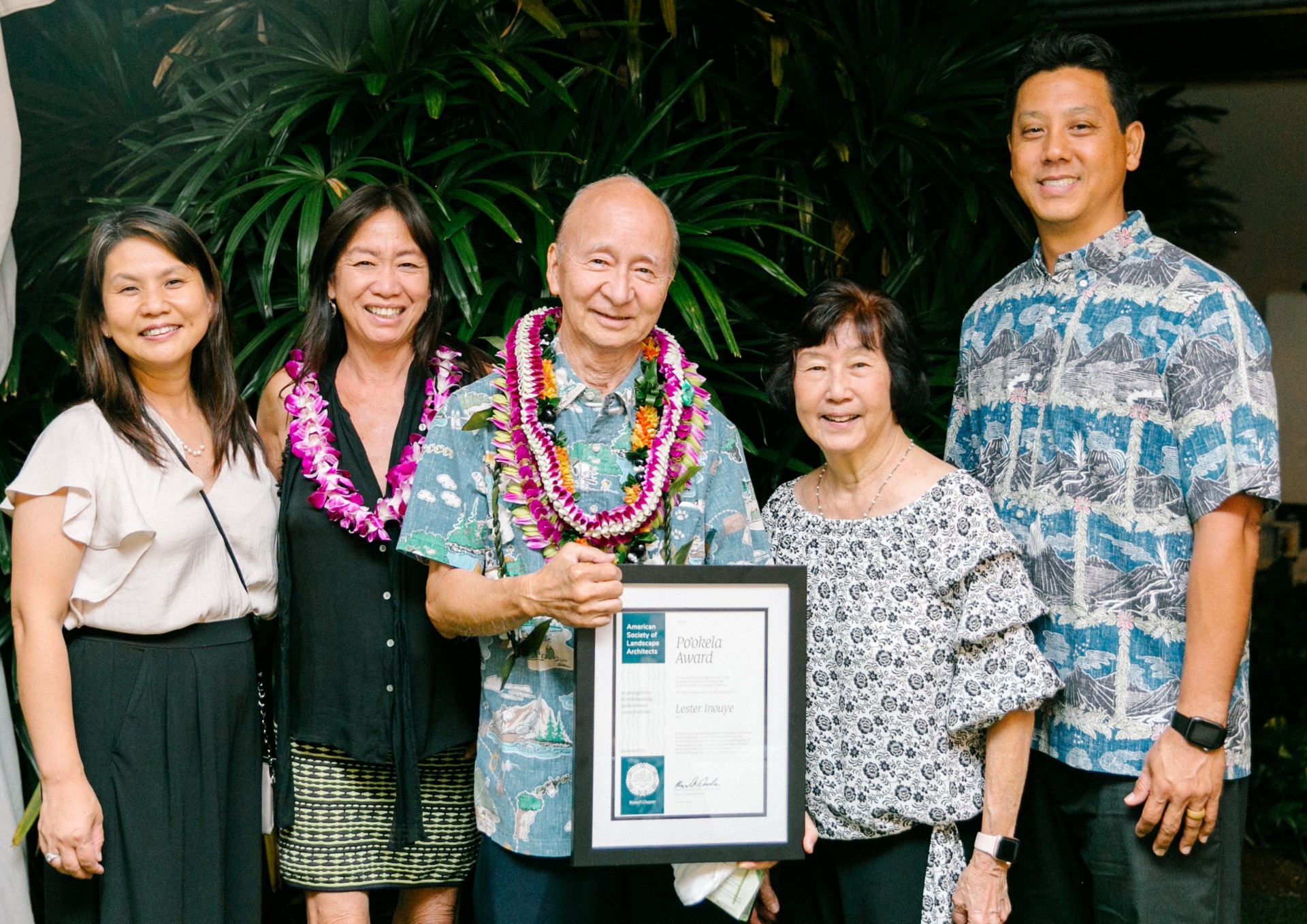
Figure 2. From left to right: Tomoko Naka, ASLA, Dana Anne Yee, FASLA, Lester Inouye, FASLA, Carolyn Inouye, and Brandon Au, LICH Vice President.” Photo by Aria Studios, courtesy of ASLA Hawaii.
The ASLA Hawaii Chapter recognized Lester Inouye, FASLA, as its 2024 Po okela Award recipient for his long-standing commitment to the Landscape Architecture profession and the broader landscape industry in Hawaii. His early leadership reached out to landscape contractors, Danny Nakamura and John Okamura, and Professor Fred Rauch at the University of Hawaii College of Agriculture. They sowed the seeds to bridge the profession to our related landscape industry trades, advocates, and educators. This began the foundation of the Landscape Industry Council of Hawaii. What began as a few landscape contractors meeting at Lester’s office for pau hana, is now LICH; an organization of more than 250 members including landscape architects, landscape contractors, nursery growers, academic researchers, and invasive species specialists. The purpose of LICH was the sharing of information, conflict resolution, and advocacy. The LICH magazine, CLT (Certified Landscape Technician) program, and annual trade show were born from the early leaders of LICH. Landscape architects and contractors met to revise and update planting specifications. LICH was instrumental in bringing about the invasive species coalition to join in a coordinated effort to confront the challenge of invasive species. Lester recognized early on that we all have important roles to play in the betterment of Hawaii’s landscape.
Lester also served as the first male and first Asian president of The Outdoor Circle (TOC). TOC is a 100-year-old organization, with over 3500 members and 13 branches throughout the Hawaiian Islands. As president, Lester formed a committee of architects, engineers, and landscape architects to help TOC understand and work with the design industry. Landscape architects share TOC’s common goal of advocating for trees and keeping “Hawaii Clean Green and Beautiful”. Under the umbrella of the TOC, Lester began advocating to the Governor and Hawaii state agencies the importance of tree planting and landscape in the DOT and DOE properties.
As a landscape architect, his project works include some of Hawaii’s iconic places visited by thousands of people every day including the Honolulu Zoo Entry and Children’s Zoo, Waikiki Aquarium, Kuhio Beach Park, Kalakaua Avenue Streetscape renovation, Sea Life Park and the beautiful Waimea Falls Park Restoration. Internationally, Lester has worked on projects in Tahiti, California, Vancouver BC, and Japan.
For over 40 years, Lester has been a member of ASLA Hawaii. He was elevated to the ASLA Council of Fellows in 2021. In addition to serving for LICH, TOC, and ASLA, he has served on the Hawaii State Licensing Board and the City and County of Honolulu Design Advisory Committee. Lester generously gave his time and expertise.
Po okela means to strive for the best. This award recognizes Hawai`i landscape architects who have made significant contributions to the profession and our community. Lester is interested in the landscape industry as a whole and all its moving parts. He graciously accepted the Po okela Award hoping that “it will inspire other landscape architects to get involved in the landscape industry.”
Nancy Cassandro, PLA, ASLA, CLARB,
Conference News
By: Alberto Ricordi
The Landscape Industry Council of Hawaii (LICH) 2024 Green Industry Conference was a success, with a roster of over 20 presenters during 16 sessions, and 17 sponsors and exhibitors (including outdoor equipment demos). The Conference was held on Thursday, October 10, at the Ko’olau Ballrooms, and included three tracks: Pests, Arborists, and Nursery & Design. Attendees could choose from 15 ISA, 12 HDOA, and 15 LICT opportunities for CEUs.
The Conference kick-started with keynote speaker Bob Mann, Senior Director of Technical and Regulatory Affairs for the National Association of Landscape Professionals. Bob explained the Endangered Species Act, the expected profound changes to the regulatory framework for pesticides, and how each and every user of pesticides in the United States will feel these effects (Figure 1).
As the invasive species situation is top-of-mind for all islands, the Conference featured 8 sessions specific to coconut rhinoceros beetles (CRB), little fire ants (LFA), and other invasive pests, invasive plants, or plant diseases (Figures 2 and 3).
Pesticide education was a major component of the Conference, with 3 sessions presented by the Hawaii Department of Agriculture Pesticide Branch and the University of Hawaii at Manoa College of Tropical Agriculture and Human Resources Cooperative Extension.
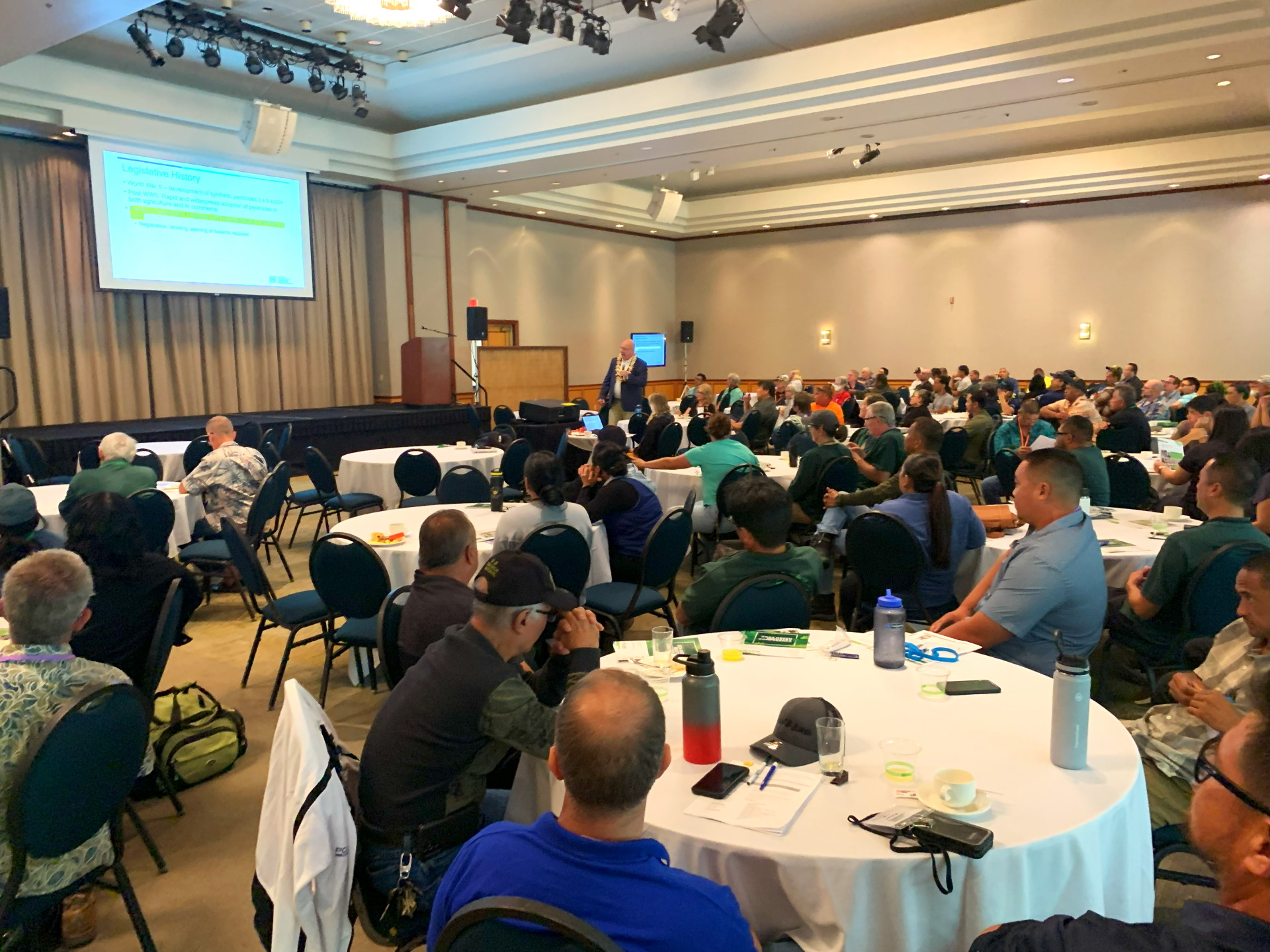
Figure 1. Bob Mann was the 2024 Green Industry Conference’s Keynote Speaker.
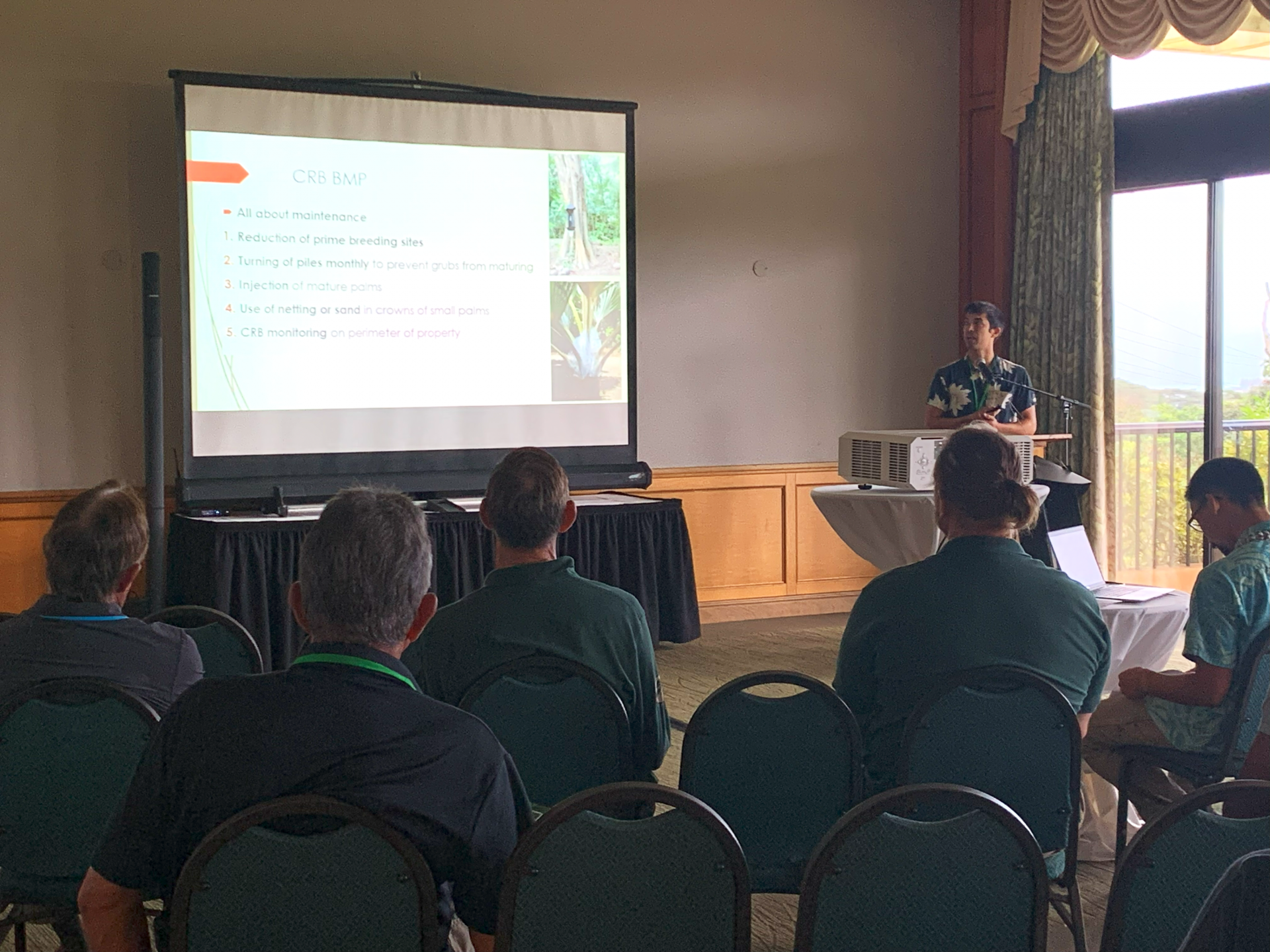
Figure 2. Mark Fukui shared his recent experiences with Hawaii's new invasive species and how these have shaped his outlook on the industry.
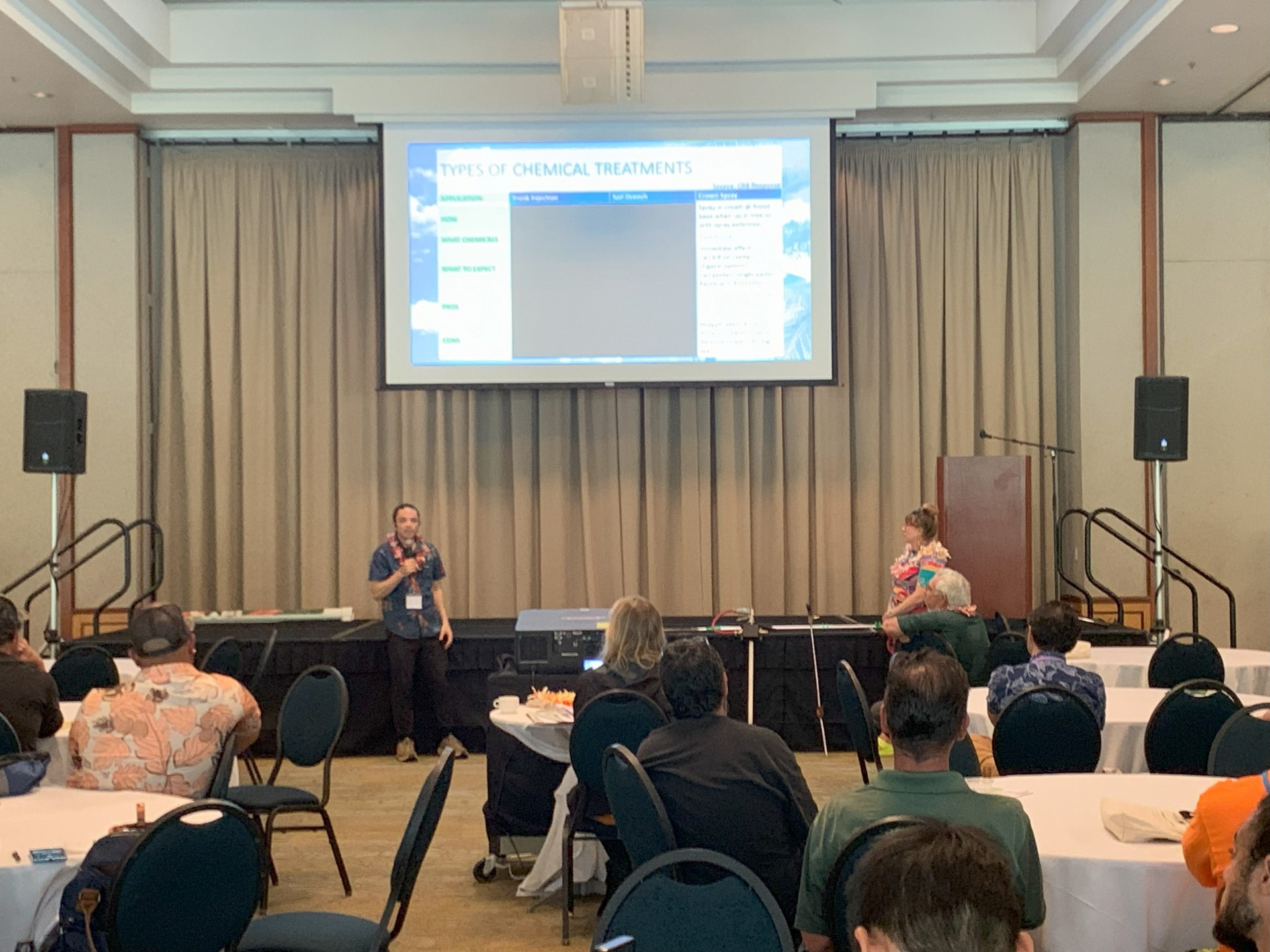
Figure 3. David Golden and Ilana Nimz presented a Best Management Practice approach to reduce the establishment of and damage by CRB in the urban forest.
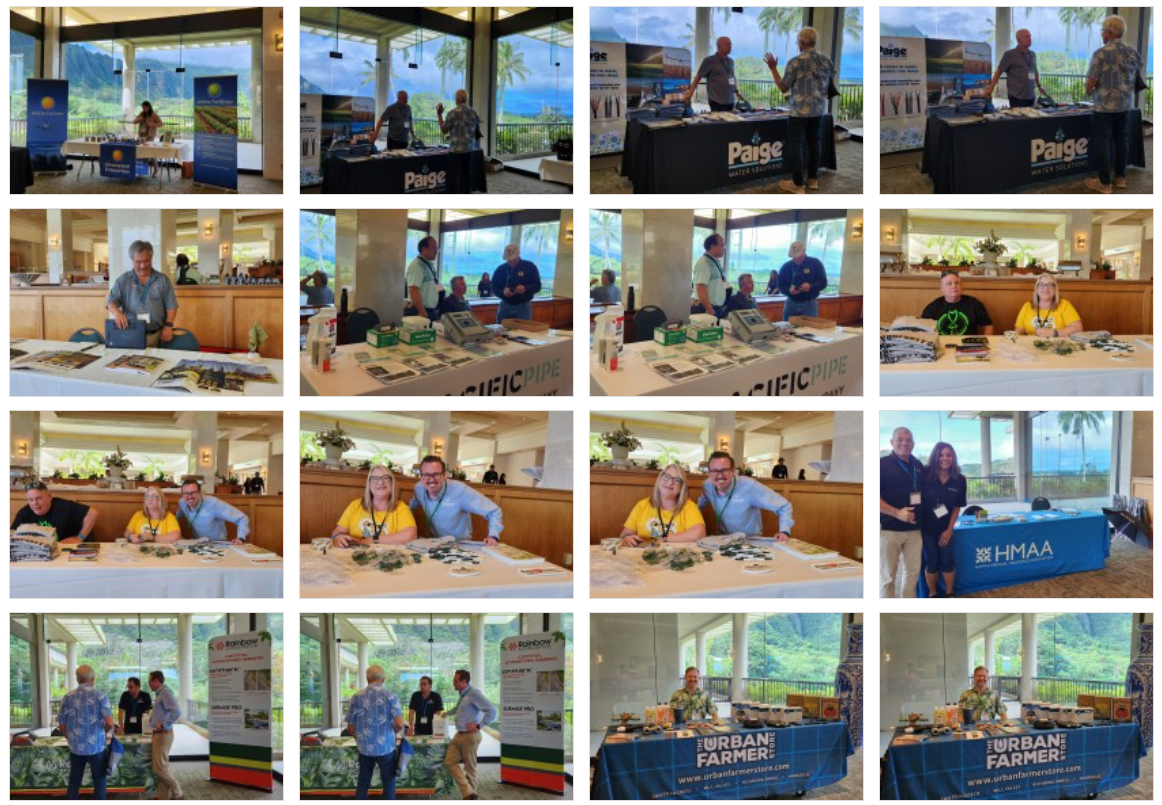
Mahalo to our Sponsors and Exhibitors:
Sponsors:
- Good jobs Hawaii
- Pacific Pipe
Exhibitors:
- Aloha Fertilizer
- Arborjet
- B. Hayman Co.
- Barnel (By Henry Lamond Co)
- Good Jobs Hawaii
- Hawaii Dept Of Transportation
- Hawaii Medical Assurance Association (Hmaa)
- Hui Ku Maoli Ola
- Jj Mauget
- Ness
- Pacific Golf & Turf
- Pacific Pipe Co
- Page Electric Co.
- Rainbow Ecoscience
- Simplot T&H
- The Urban Farmer Store
- Victor Stanley, Inc.
The 2024 Green Industry Conference was only possible because of guest speakers, exhibitors, sponsors, and LICH’s staff, Board of Directors and volunteers (Figure 4). Please contact us as [email protected] if you would like to be involved in the planning of next year’s conference, participate as a presenter, or volunteer in a session. We will appreciate your feedback or any suggestions on how to improve the conference.
Mahalo!
The LICH 2024 Green Industry Conference Committee
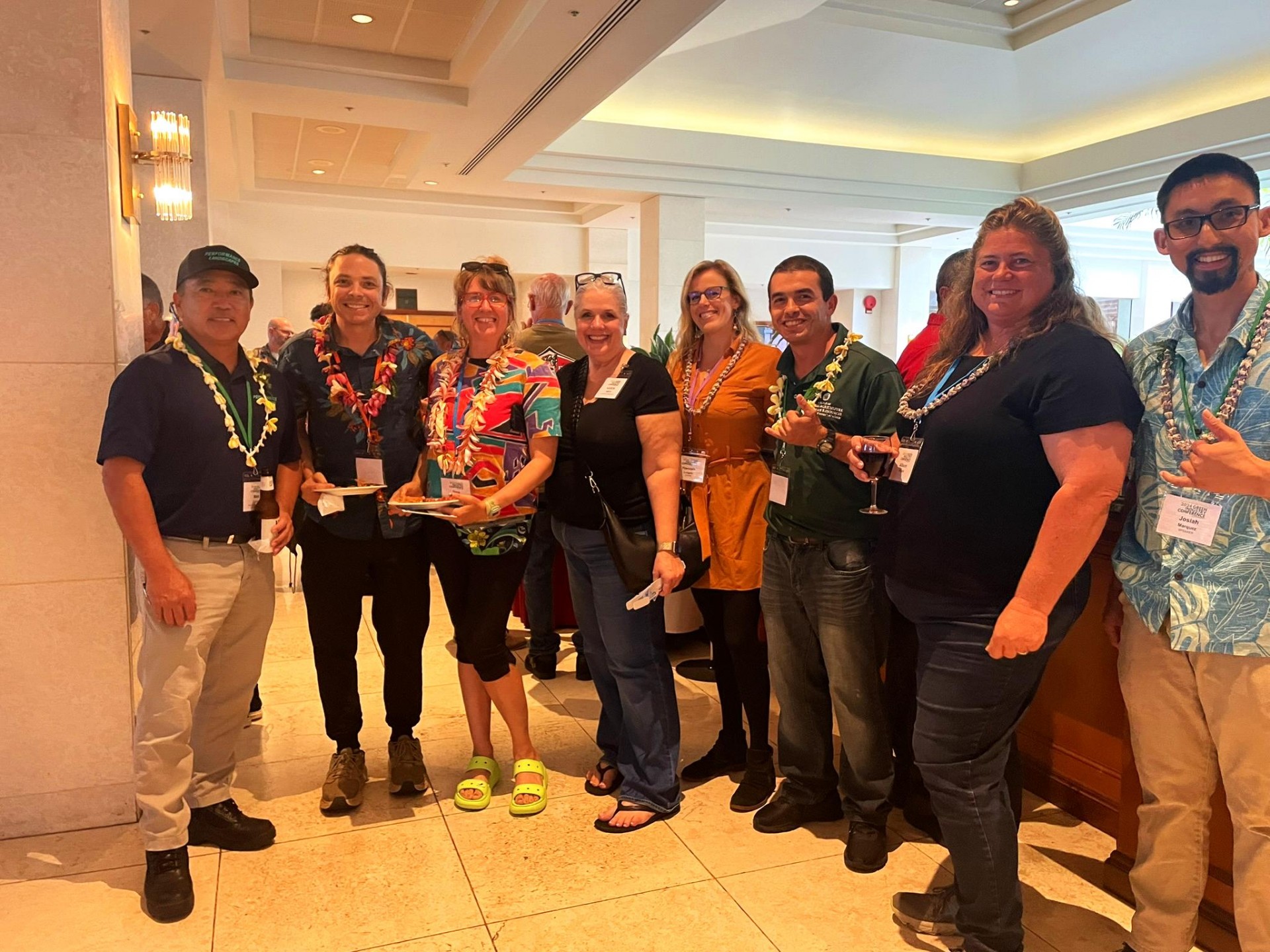
Figure 4. LICH 2024 Green Industry Conference Committee and Volunteers. From left to right: Matt Lyum, LICH President; David Golden, LICH Treasurer and Arborist Session’s moderator; Ilana Nimz, CEU’s coordinator for Arborist Track; Karen Smith, LICH’s Manager; Hannah Lutgen, Program Co-Chair and Pest Track’s moderator; Alberto Ricordi, Program Chair; Allison Wright, CEU’s coordinator for Pest Track; Josiah Marquez, Nursery and Design Track’s moderator and CEU coordinator.
View more photos of the day.
Alberto Ricordi, D. Arch., Oahu County Ornamentals & Landscape Assistant Extension Agent, College of Tropical Agriculture & Human Resources (CTAHR), University of Hawaii at Manoa, and served as Program Chair for LICH’s 2024 Green Industry Conference.
Disclaimer: Mention of a trademark or proprietary name does not constitute an endorsement, guarantee, or warranty by the University of Hawaii Cooperative Extension Service or its employees and does not imply recommendation to the exclusion of other suitable products. Pesticide use is governed by state and federal regulations. Read the pesticide label to be sure that the intended use is included on it and follow all label directions.
